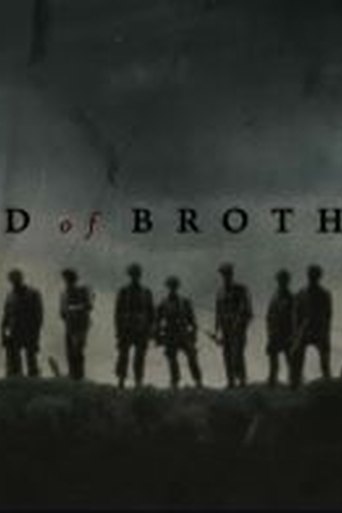
Band of Brothers · Season 1 · Episode 10 · 4 November 2001
S1E10 Points
A disciplined finale that makes peace feel delayed, procedural, and earned through restraint rather than spectacle.
The hour opens with the war looking finished on paper, but not inside the men who fought it. Easy Company rides the last lines of conflict like they are still bleeding somewhere offscreen. The episode narrows its attention from maps and movements to faces and choices, letting exh
Full episode analysis below. Spoiler-light verdict above.
Updated
The order sounds like another dangerous job. Major Winters lays out the route through Obersalzberg, Easy Company in the lead, the Eagle's Nest waiting above them, and one blunt principle guiding the plan: no one gets hurt. Then the message arrives: "The German Army surrendered." The finale's smartest move is refusing to treat peace as instant release. The hour studies the ugly pause after victory, when the war has ended on paper but the men remain trapped inside its habits, paperwork, anger, and luck.
The War Ends Before the Orders Do
The first quarter works because bureaucracy and danger share the frame. A meeting with Colonel Sink opens a different future for Winters: staying in the Army as a career. That possibility matters because the hour is already looking beyond combat. It asks what a soldier becomes once the job that defined him starts disappearing.
Then the plot pivots to Berchtesgaden. General Leclerc wants to be first in, Sink responds by ordering an outflanking move, and Easy Company takes the lead. The assignment has the shape of one more wartime test. Route. Objective. Chain of command. Risk. Winters answers with control. His plan through Obersalzberg to take the Eagle's Nest is defined by restraint, with the dossier's blunt phrasing, a no-one-gets-hurt plan. That is the finale's first argument in miniature. After everything, command means getting men through the last door without losing them on the threshold.
The surrender message cuts across the machinery. The hour does not turn it into fireworks. It lands as information that changes the meaning of the previous minutes. The men have been ordered toward a symbolic prize at the exact moment the enemy's formal collapse arrives. That timing is the craft. Victory feels less like a climax than an interruption. A war can end while the muscles of war keep moving.
Training as a Refusal to Float
Winters' clearest contradiction comes after the surrender notice. A request is made to tell the men right away. The human impulse is obvious. Say it. Let them breathe. Let the fact pass through the company. Winters moves into preparation instead. Rifle ranges. Close-order drills. Troop reviews. Physical training. He presses the NCOs to get it going.
That choice could play as coldness if the hour framed it lazily. It does not. Winters wants veterans and replacements ready to fight despite war-ending uncertainty. The contradiction is the point. He is commanding men in the strange fog between declared endings and lived endings. The German Army has surrendered, but nobody here is fully free yet. Orders still exist. Bodies still have to be accounted for. Discipline has to hold because discipline is the only language the unit can still share.
This middle stretch is procedural, which gives it texture and creates drag. The rifle ranges and drills show peace arriving as a schedule rather than a feeling. At the same time, the rhythm flattens. The early dialogue has sharper character exchange, while the training block leans on process. Some of that flatness is intended. It still costs the episode some charge. The men are waiting for release, and the viewer is made to wait with them. Smart design. Dry execution.
A Lottery Is a Cruel Kind of Mercy
The D-Day anniversary gives the hour one of its cleanest structural ideas: a lottery that sends one man home. The timing carries a sting. D-Day marks the day that began one kind of ordeal for these men. Here, it becomes the day a mechanism of escape is announced. Sergeant Darrell C. Powers wins, and the simplicity of that outcome is exactly what makes it feel severe.
A lottery is fairness stripped of comfort. It avoids argument, rank, and pleading. It also makes survival feel dependent on a draw. That fits the episode's wider design. The finale keeps replacing battlefield causality with administrative causality. Earlier, success depended on routes, orders, and fire. Now it depends on points, lists, and authorized mechanisms. The danger has changed shape, but the men are still waiting on systems larger than themselves.
This is where Harry Welsh gives the homecoming thread its ache. He wants to tell Kitty how he finally had a chance to come home, but he hides the truth and plans what to do with himself offscreen. The line about having the points and going back to Kitty crystallizes the personal stakes. Home is no longer an abstract reward. It is a person waiting outside the frame, and Welsh's silence makes that promise more complicated than the paperwork suggests.
The episode understands that going home does not guarantee arriving whole. It does not overstate the idea. It lets the lottery sit there, merciful and brutal in the same breath.
Proof, Revenge, and the Thing Left Burning
The confrontation gives the finale its roughest moral edge. The argument erupts over identifying a man, with anger tied to slave-camp allegations and guilt. The hour shifts out of procedure and into accusation. After the rigid calm of training and the lottery, this scene matters because it restores heat to the episode. Peace has arrived, but the evidence of what happened during the war has not become manageable.
The question underneath the confrontation is practical and ugly. What do soldiers do when guilt feels obvious but proof is unstable? What happens when rage has a target but identification demands care? The episode plants that open loop directly: in the wake of slave-camp accusations, how will Winters' unit handle proof versus revenge? That is a sharp finale question because it refuses to let surrender clean the table. The war's formal end does not settle the moral mess left behind.
This section gives Winters' command posture a harder test than the drills do. Training men after surrender is about order. Handling allegations and guilt requires restraint under pressure. The episode's best idea is that restraint keeps returning in different forms: a no-one-gets-hurt plan, training before release, a lottery instead of personal petition, proof before revenge. The hour is structured around men being forced to wait when every instinct tells them to act.
The confrontation works because it punctures the calm without turning the finale into a new combat story. The danger here is moral velocity. Once anger starts moving, someone has to slow it down.
The Last Surrender Is Quiet
The final resolution arrives through another message: Japan's unconditional surrender. The war is over, and each man in the 101st Airborne would go home. The episode's closing power comes from how declarative that beat is. After an hour of partial endings, possible careers, delayed announcements, training routines, point systems, and unresolved guilt, this is the clean sentence the men have been waiting for.
The finale still does not erase the earlier complications. Welsh has the question of what to tell Kitty. The point-based discharge process has turned homecoming into a calculation. The slave-camp confrontation has left proof and revenge hanging in the air. Winters' instinct for readiness has shown how hard it is for command to stop commanding. When the final surrender arrives, it opens the door without pretending every burden has been dropped.
That is why the episode's time-compressed stretches make sense. The hour moves through the afterlife of combat, where huge historical facts arrive as short messages and the lived experience between them is filled by waiting, drilling, arguing, and hoping your number comes up. The line density drops in places, the narrative breathes in longer stretches, and the quiet becomes part of the design. The finale avoids one last set-piece. It lets the end of the war feel procedural, delayed, and human.
The Verdict
"Episode 10" is a strong finale because it treats victory as a process rather than a pose. Its best craft choice is refusing instant catharsis: Germany surrenders, but Easy Company still trains; men can go home, but chance and points decide who moves first; anger seeks revenge, but proof complicates the release. The middle procedural stretch loses some dramatic snap, and the episode's quieter design can feel dry beside its sharper confrontational beat. Still, the argument holds. The hour closes the season by moving Easy Company from combat into consequence, with Winters' restraint as the governing idea and the men's delayed release as the emotional core.