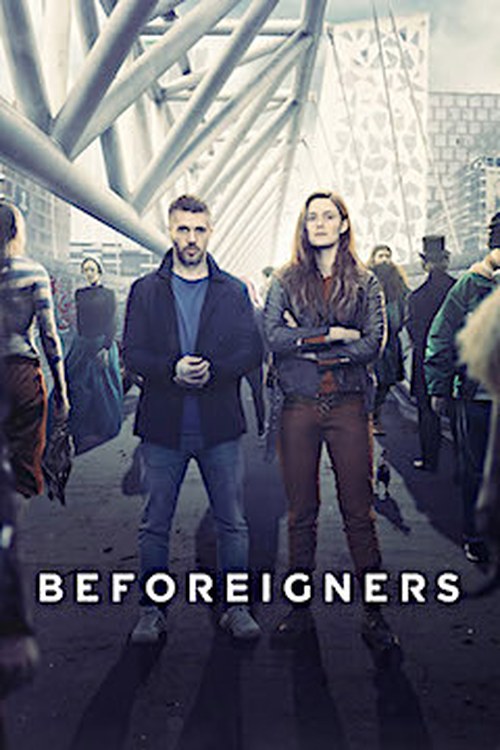
Beforeigners · Season 1 · Episode 1 · 21 August 2019
S1E1 Episode 1
A sharp pilot that turns arrival chaos into paperwork, then lets one impossible body break the file open.
THE MOMENT The first glimpse of an integration camp for historical arrivals - the show's central metaphor made literal in a single image.
The premiere establishes its world with admirable economy - Oslo has built refugee-style processing centres for time-displaced arrivals, and the show treats the bureaucratic normalisation of the impossible as both comic and pointed. The murder investigation begins with a victim whose origin defies standard forensics.
Full episode analysis below. Spoiler-light verdict above.
Updated
A police unit answers a call, and the impossible arrives with radio etiquette. “Sierra two-zero” says “Excuse me” while responders try to confirm who called it in and where the people appeared. The first instinct is crowd control. Then the scale widens: reports confirm the same phenomenon is happening all over the world. The pilot’s strongest move is right there. It treats the unbelievable as an operational problem, then lets one death expose how fragile that system is. BollyAI’s read: the episode works because it turns apocalypse into paperwork before making the paperwork bleed.
The Miracle Gets a Case Number
The opening crisis cluster runs on short, practical exchanges. Someone has called it in. Someone else confirms the people appeared nearby. A responder tries to keep the situation calm. The scene has the shape of emergency services doing what they do: establish location, reduce panic, create a procedure before the facts have caught up.
That restraint is the pilot’s cleanest choice. The global event could have swallowed the episode whole. Instead, the hour narrows its lens to people with radios, forms, and an immediate obligation to respond. Even “Sierra two-zero” grounds the strange in institutional routine. The impossible arrives as a call-out.
Then the episode jumps forward a few years, and the shock has already become admin. Night arrivals are reported as “nice and quiet.” That line does more work than a speech. It says the world has adjusted enough to rate miracles by workload. Calm is now a metric. The pilot’s argument starts here: society files the impossible, schedules it, and uses acronyms until fear sounds professional.
A Body Refuses the Form
The Tjuvholmen death gives the pilot its engine. At first, the question is procedural: should the case be logged as Deceased During Arrival or as a jumper? That choice matters because it shows how quickly the system reaches for categories. A person is dead, but the first pressure is classification. If the body fits the form, the institution can move.
Then the episode snaps the label in half. Forensics think the cause of death is strangulation. That is the hour’s central turn because it forces the show out of premise mode. A death during arrival would belong to the phenomenon. A jumper would belong to despair or accident. Strangulation belongs to another person.
The pilot understands that a high-concept world needs a grounded crime to keep it honest. The arrival phenomenon gives the series scale, but murder gives this hour direction. The body challenges every comforting shortcut around it. The episode does not need to explain the whole world yet. One official explanation only has to feel insufficient.
The slight weakness is coolness. The few-years-later move is efficient, but it skips the messiest period of adjustment. That keeps the pilot lean, though some emotional fallout stays off-screen.
Lars Gets the Mascot Problem
The murder investigation gains another useful pressure point when a plan forms to team Lars with the department mascot. That phrase, “department mascot,” lands with an ugly little bite. It suggests an institution trying to display adaptation while still reducing a person to symbolism. The case is already fighting the limits of procedure. Now the staffing choice does the same.
This is where the pilot moves from world-building into workplace drama. The department is not a neutral machine. It has optics. It has habits. It can turn social change into a personnel decision. Pairing Lars with the mascot for a murder case is practical on the surface, but the wording carries discomfort. The episode knows integration can become performance when an office wants credit for it.
The character work here is more functional than rich. Lars is defined mainly by assignment and case mechanics in the provided beats, which keeps the hour from landing a sharper personal charge. Still, the setup has bite because it turns a broad social idea into an awkward professional arrangement. A staffing decision reveals the room.
Hafgufa Breaks the Rational Frame
The witness interrogation brings in the strangest claim of the hour: the sea monster Hafgufa took the woman. A lesser version of this setup would use that only as color, a weird line to make the beforeigners’ beliefs look antique or irrational. This episode makes a better move. It lets the claim complicate the investigation without replacing evidence.
That balance matters. Forensics point to strangulation. The witness insists on a monster. The case now sits between two systems of explanation: police science and lived belief. The investigators want a scientific frame, yet the alternative theory receives enough attention to be brought forward after evidence is presented. The show is not asking the police to believe in Hafgufa immediately. It is asking whether dismissal can become bad police work.
This is the episode’s most promising seam. The monster claim is strange enough to risk silliness, but the hour protects it by tying it to a body, a witness, and an official case. The question is not whether the creature is real in this moment. The sharper question is whether a system built for modern evidence can hear testimony from people whose reality is organized differently.
Pacing as Assimilation
The pilot’s rhythm mirrors its premise. The first crisis cluster moves through dense, short dialogue, creating the feel of responders trying to stabilize chaos in real time. Then the hour slows into updates, annual-report energy, and case paperwork. The world has not become less strange. The people inside it have learned how to sound bored by strangeness.
That middle stretch gives the episode its texture. The quiet plays as normalization. Long pauses and transitions suggest shock settling into systems. Then the murder assignment and witness interrogation raise the pulse again, because a body and a monster claim are harder to domesticate than arrival numbers.
The structure is smart, but it shows the episode’s limits. The procedural spine is sturdy, and the bureaucratic deadpan has flavor, but the hour sometimes prioritizes mechanism over character interior. The result is a pilot with a strong engine and a slightly withheld heart. That is a fair trade for an opener, as long as the next chapters put more flesh on the people carrying the case.
The Verdict
“Episode 1” is a sharp, controlled pilot that trusts process to sell the impossible. Its best idea is simple: once the world changes, someone still has to answer the radio, fill the form, and decide what to call a corpse. The Tjuvholmen death gives the hour focus, the strangulation finding gives it teeth, and the Hafgufa claim opens a stranger door without knocking the police story off its feet.
BollyAI’s read: this is strong setup television, cooler than emotional, but confident in how it converts premise into casework. As a season opener, it plants three useful loops: whether the death becomes murder officially, whether Hafgufa matters, and how beforeigner belief will challenge modern procedure.