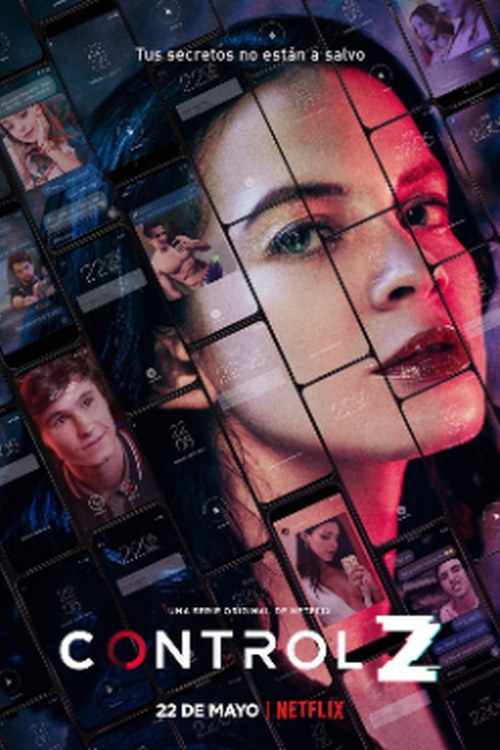
Control Z · Season 1 · Episode 1 · 22 May 2020
S1E1 Birthday Girl
A sharp privacy panic pilot where every denial spreads the damage, even when the character work still needs cleaner edges.
THE MOMENT The first secret goes public on the school screen - the show's premise made visceral and social-media immediate.
The premiere drops the hacker's first revelation into a school assembly, establishing Sofia's observational edge and the show's commitment to social chaos over procedural mystery. The Mexico City elite school setting is rendered with enough specificity to carry the familiar premise.
Full episode analysis below. Spoiler-light verdict above.
Updated
A classroom screen starts playing sexual content, and the room stops being a room. It becomes a trap. Students demand it be turned off. The teacher demands the same. Nobody can put the image back where it came from, because the damage has already changed form. What began as private fear is now public evidence, and the pilot understands that exposure is a chain reaction.
BollyAI's read: Control Z opens with a clean, nasty engine. Every denial, excuse, and attempted rescue makes the secret travel faster.
The Video Turns the Classroom into Evidence
The premiere's best beat is the classroom video, because it turns the school's normal order against itself. A classroom should be controlled by the teacher, the timetable, the seating arrangement. Here, a screen hijacks that order. Sexual content plays in front of students and faculty, and the first reaction is practical panic: stop it, turn it off, make it disappear.
That is where the episode gets its hook right. The scandal does not drift through corridors as gossip. It arrives through a school mechanism, inside a formal space, with authority present and useless. The teacher's demand carries no power once the video has been seen. The students' shock becomes part of the event. Everyone in the room is forced into witness status.
The writing makes the exposure stick through a simple digital detail. Isabela learns that the account carries only that video. That matters. This is a focused public wound, designed to send viewers back to the same humiliation. The premiere does not need a long explanation of the upload chain yet. Its sharper move is showing intent. Someone wants the damage searchable, repeatable, and easy to point at.
That gives Episode 1 its best shape: panic with a system behind it. The hour gets messier when people talk around the event, but when it locks onto how a secret becomes infrastructure, it finds its bite.
Javier Walks In as the School Starts Cracking
Javier Williams arrives as the new student, introduced by a teacher before the school erupts into accusation and damage control. The timing helps. His entrance gives the episode a fresh set of eyes while the rest of the school carries old tensions. The premiere does not overplay him in the provided beats. He is placed in the room, then pulled into the logic of the incident.
His key function comes later, when he tells Natalia that Isabela's phone was stolen and that Isabela never made it to the nurse's office. That is a useful investigative hinge. The line connects a personal excuse to a larger pattern: missing phone, false movement, exposure, extortion. It gives the episode a path out of pure reaction. Somebody can start arranging the facts.
Natalia sharpens alongside him. She wants the truth about the extortion and the video to surface, but the situation forces her into confrontation rather than clean discovery. She confronts Sofia and Javier, and she invites Isabela to come out for help. That tension works. Natalia has to push people while claiming she wants to help them, and those are different energies.
The pilot's dialogue density can crowd the tension. Confrontations arrive fast, and reaction sometimes blurs into more reaction. Still, Javier's arrival works because the hour immediately tests what a newcomer can learn, what he can miss, and who will use him as a witness.
Sofia Tries to Shrink a Fire That Keeps Changing Rooms
Sofia is the pilot's key pressure point. Her central problem is clear: she wants to keep the crisis manageable and prevent harm from escalating, but she becomes framed as someone who posted or handled the situation. She says she did not do what she is accused of. That is enough to make her position unstable.
The episode gives her a good trap. If she stays quiet, the damage spreads. If she intervenes, her intervention becomes suspicious. This is the hour's smartest character logic, because it matches the structure of the leak. Every attempt to contain the scandal creates another route for suspicion. Help begins to look like access. Curiosity begins to look like guilt.
The home beat adds a colder layer. Sofia says school was good and not as boring as usual. On paper, the line is ordinary. In context, it is a mask. The school day has included public exposure, confrontation, missing information, and an unresolved accusation. Her answer at home compresses all of that into casual normality. It is a small beat, but it tells the truth about her survival method. She does not explain the chaos. She files it down until it can pass through the front door.
That is where the premiere earns its mood. It understands teenage secrecy as logistics. Who saw what? Who had the phone? Who went where? Who said they were sick? Who gets blamed for trying to connect the facts? Sofia sits at the center because the show makes problem-solving look dangerous.
Luis Carries the Bruise the Plot Cannot Explain Yet
The episode begins with Luis walking away toward the classroom while someone calls out and insists they are friends. It is a loaded image. Friendship is being declared at the exact moment the body language says distance. The pilot does not need to explain the entire relationship immediately. It plants a social wound before the digital one arrives.
Later, Luis is confronted about what happened to him. He claims it was an accident. He says, "I fell, Mom." The line is devastating because it is so plain. It is the kind of answer designed to end a conversation, and the episode uses that plainness to keep the question open. If he fell, why does the confrontation carry such charge? If it was an accident, why does the denial feel protective?
Gerry is tied into that uncertainty. His contradiction is built on avoidance. He wants to deny involvement and escape blame, yet he is accused and later confronts Luis's so-called accident. The pilot does not resolve that knot, and it should not. The unresolved Luis thread gives the premiere a second kind of threat. The video shows how fast exposure can spread. Luis's injury shows how easily harm can be renamed.
That pairing gives Episode 1 more than a leak plot. It has a school where people are already practicing cover stories. The person behind the extortion may be the biggest question, but Luis's lie suggests the environment was sick before the account appeared.
The Premiere's Best Trick Is Its Chain Reaction
Control Z's first episode works because it follows fragments rather than treating the scandal as a single blast. A classroom video becomes an account. An account becomes a public identity. A stolen phone becomes a clue. A nurse's office excuse becomes a route that does not hold. A fall becomes a story no one should accept too quickly.
The open loops are effective because they are specific. Who uploaded and circulated the video? How did it get shown to everybody? What messages were used in the extortion? How did Luis end up hurt? What does Quintanilla already know? These questions are attached to objects and movements the episode has already placed on the table.
The weakness is clarity. The premiere thrives on friction, but its quick confrontational rhythm can make some emotional turns feel like collisions before they feel like choices. Isabela's terror lands because the account detail is clean. Sofia's suspicion lands because her helpfulness carries risk. Natalia's push for truth lands because it creates conflict. Some surrounding beats need sharper spacing.
Still, the hour has a strong pilot engine. It chooses a school, a screen, a stolen phone, and a cover story, then lets each one contaminate the next. BollyAI's read: the episode's craft is strongest when it behaves like an investigation and meanest when it remembers these are teenagers trying to survive the evidence.
The Verdict
Episode 1 is a solid, tense opener with a nasty understanding of how public shame travels. The classroom video is the pilot's defining set-piece, but the better writing sits in the aftermath: Isabela's fear of becoming a monster, Sofia's attempt to help while being framed, Natalia's confrontational search for truth, and Luis turning pain into a cover story.
The hour is not fully clean. Its dense run of confrontations can crowd character texture, and some beats would hit harder with more air around them. The trade works because the chain reaction has momentum. As a season starter, it plants the right questions and gives the school a credible atmosphere of suspicion. The score reflects a sharp premise, strong incident design, and uneven but promising character control.
"There's potential in Control Z - a sense of escalating despair and believable chaos that erupts once the secrets start to spill out."
Ready Steady Cut