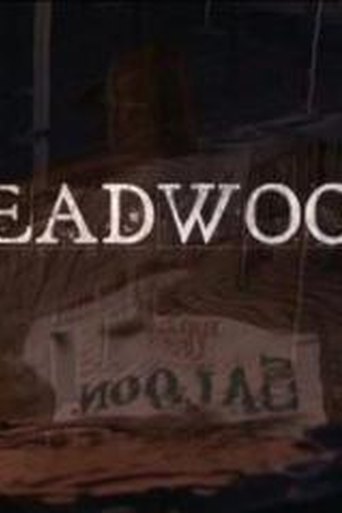
Deadwood · Season 1 · Episode 1 · 21 March 2004
S1E1 Deadwood
A brutal, talk-heavy pilot where law fails, money talks, and every bargain starts looking like a threat.
THE MOMENT Swearengen delivering orders from the balcony of the Gem Saloon - the town's true power structure visible in his posture and everyone else's deference.
The pilot drops Bullock and Sol Star into Deadwood a day after Wild Bill Hickok's arrival, establishing the town as a place where every transaction is also a negotiation for survival. Milch's dialogue announces itself immediately: dense, foul-mouthed, and oddly musical. The power geography of the camp is mapped in a single episode.
Full episode analysis below. Spoiler-light verdict above.
Updated
Deadwood begins with a legal idea already rotting in public. A conversation turns on whether the camp has law, while a hanging is carried out under its color. The gap between the word and the act is the pilot’s whole territory. Men speak in prices, threats, accusations, and rules they can enforce only if enough other men stand close by. The premiere is strongest when it treats civilization as a receipt. Someone pays, someone signs, someone bleeds, and everyone pretends the order of those events makes the place respectable.
Law Arrives Wearing a Bad Mask
The episode’s opening move is blunt: Deadwood is introduced through absence. The phrase “no law” frames the camp before the viewer has settled into its routines, and the hanging that follows complicates that absence. Violence can still borrow legal language. It can stand upright, announce itself, and call the performance official.
That is the pilot’s central trick. Chaos here has procedure without legitimacy. The hanging under “color of law” matters because the hour keeps returning to that split between form and authority. A marshal can be discussed. A shooting can be discussed. A man can be put to death in a way that resembles order. None of that proves order exists.
The line identifying the man on the wagon tightens the scene’s ugliness. The episode needs only one sentence to mark who is visible, disposable, or targetable in public. Deadwood’s first moral weather report is blunt, and the bluntness helps. The camp is a place where identity, accusation, and force meet fast.
The pilot states the operating condition early: law is absent, borrowed, or weaponized. After that, every deal and every argument tests who can make his version of reality stick.
The Camp Keeps Its Books in Blood
The lot-rental scene is the episode’s cleanest piece of world-building because it turns arithmetic into character pressure. The detailed gold and credit math tells the viewer how power moves in Deadwood: through debt, account, access, and the ability to make everyone else accept the terms. The demand to inform dealers and whores of credit is crude, but it is also administrative. Even vice needs a ledger.
This is where Al Swearengen enters the episode’s contradiction. He wants the camp manageable. The dossier frames him as a figure trying to control internal stability through deal-making and escalation management. Yet the system he tends is built on combustible materials. Every exchange carries insult. Every number contains a challenge. Every drink can become a contract with witnesses.
The writing gives these scenes their bite by keeping business and menace in the same frame. A lot is rented, but the transaction does more than move property. It establishes hierarchy. It tells everyone who may speak, who must pay, who is being tolerated, and who can turn irritation into punishment.
The downside is density. The dialogue arrives thick, and the pilot occasionally makes the viewer work through the math before the dramatic shape fully clicks. Still, the choice suits the material. Deadwood is introduced as a cash box with mud on it, and the cash box has teeth.
The Goose Looking Man Buys Trouble
The claim sale gives the pilot its best example of comedy curdling into danger. Brom Garrett wants to close and secure a gold-claim deal at a high price, and the escalation to 20,000 makes the scene feel like a public dare. By the time the sale lands on the “goose looking man, in the shiny suit,” the insult has already done its work. The transaction is completed, but the room has registered the buyer as prey.
That is sharp writing. The sale becomes a machine that produces incentive and grudge. Brom’s desire to own the claim is simple enough. The episode makes it unstable through behavior: bidding, money-handling disputes, and the spectacle of being seen paying too much or paying wrong. In Deadwood, the crowd is part of the contract. Humiliation signs as a witness.
The pilot understands one of the great pleasures of frontier drama: a deal can be as violent as a gunshot if the room knows what the deal means. The scene has swagger because the price is absurdly concrete. 20,000 has enough weight to bend the next hour around it.
The card confrontation later works in the same register, though less cleanly. The misunderstanding over the third eight turns play into dispute, and dispute into another social test. The sequence adds texture to the camp’s gambling economy, but it lands with less force than the claim sale. The claim has a clearer fuse. The card beat has heat, then moves on.
A Massacre Story Becomes a Weapon
The Spearfish massacre argument is where the pilot’s thesis hardens. A claim that no one was alive sparks immediate dispute over whether a child might have survived. That small uncertainty changes the moral temperature of the camp. If a child is alive, action becomes urgent. If the claim is false or shaped, then the camp is being pushed toward blood on bad evidence.
This is also where Al’s contradiction stops being background and starts doing damage. He wants control, but his response to the massacre story helps inflame the camp. His personal bounty for “every decapitated head,” as Al puts it, turns rumor, grief, and rage into a payment structure. That is the pilot in one brutal motion: violence becomes a job posting.
The scene works because the episode has already trained the viewer to hear money as power. A bounty is policy from a man with resources. It answers uncertainty with a rate. The camp does not need a court when a price can send men riding.
The massacre thread can feel crammed into an already crowded pilot. The hour is setting up law, property, gambling, credit, and racialized violence, then adding a contested atrocity narrative near the end. It is potent, but packed. Still, the final shape holds because the massacre story fuses the pilot’s concerns. Evidence is shaky. Speech is dangerous. Payment creates action.
Tim Driscoll and the Lie That Will Not Sit Still
Tim Driscoll becomes the episode’s pressure point in the closing stretch. His insistence that “it was them Indians” is never allowed to settle the matter. The confrontation around him keeps pushing at the practical holes in his account: what happened, who ran, who bears consequences, and whether blame is being used to outrun responsibility.
This is the strongest final beat because it explains Tim through pressure rather than speechmaking. The dossier’s contradiction is enough. He wants to frame the deaths as caused by Indians, but the interrogation around him exposes the weakness of certainty when certainty arrives too useful. His story answers the camp’s need for a target. It does not answer the episode’s questions.
The long silence windows noted around the later scenes matter here. After so much verbal combat, silence gives the episode a different weapon. It lets accusation hang. It lets men calculate. When speech resumes, it feels less like conversation and more like someone testing a floorboard before putting weight on it.
By ending on Tim’s challenged account, the pilot plants its open loops with economy. Is the child alive? Who is connected to the massacre story? Who will ride out because a bounty has made violence profitable? The hour leaves a lie or half-truth in the room and lets the camp decide what it wants to do with it.
The Verdict
“Deadwood” is a dense, abrasive, effective pilot that builds its world through transactions rather than tour-guide exposition. Its best idea is simple and nasty: in a place without stable law, money and speech become law’s replacements, and each can get people killed. The episode occasionally strains under its verbal load, especially when the card dispute and massacre thread crowd the hour’s back half. But the craft is clear. The hanging establishes false order, the lot rental establishes economy, the claim sale establishes predation, and the bounty turns rumor into organized violence. As a season opener, it gives Deadwood a working system before it gives the camp a government: deals, debts, insults, and prices that turn stories into death sentences.