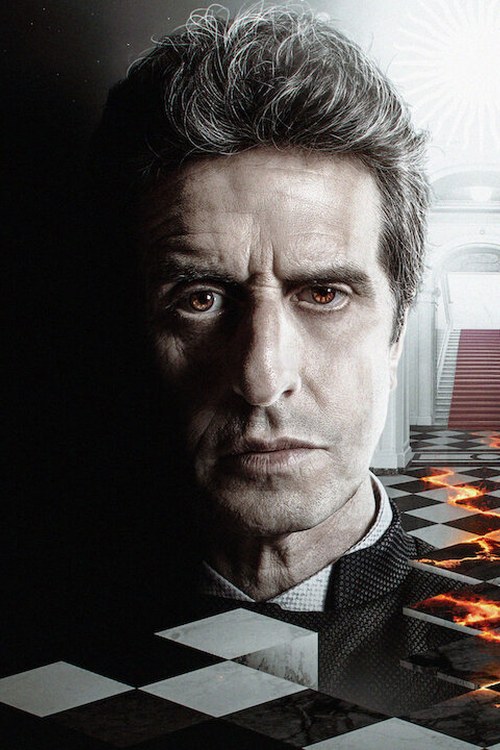
El reino · Season 1 · Episode 1 · 13 August 2021
S1E1 Episode 1
A tense opener where campaign logistics become crisis machinery, sharpened by assassination but thinned by underdefined emotional anchors.
THE MOMENT The assassination in the final moments of the campaign reframes everything the episode set up about democratic normalcy.
The premiere establishes the assassination's political fallout with precision. The show takes no time to define Emilio as a man whose religiosity is inseparable from his appetite for power.
Full episode analysis below. Spoiler-light verdict above.
Updated
The rally is in trouble before the killing gives it a name. Security reports riots near the entrance. Someone calls for a doctor. The people on stage and behind it keep reaching for the next instruction, the next speech, the next person who has to be found before the machine can move. Then a man says, "Listen, Badajoz is dead." That is the pilot's cleanest move. It treats catastrophe as logistical collapse before moral reckoning. Power here is paperwork with blood on it.
Julio Is the Missing Center
The hour opens its emotional ledger around Julio, before the campaign machinery takes over. A woman asks him, "Do you think I can be a good mother, Julio?" It is a soft question with heavy placement. Before the episode becomes about a dead candidate, a public event, or an investigation, it asks whether Julio belongs in someone's life and whether that life can protect him.
That makes Emilio's contradiction useful. He wants Julio removed when "all this is over," but he needs him nearby now so the speech can proceed. The phrasing matters because the episode is built on delayed rescue. Safety is acknowledged, then postponed. Emilio can see danger. He still treats the immediate public task as the more urgent problem. That is not a random character wrinkle. It is the pilot's political grammar.
Elena sharpens the conflict when she presses Emilio about getting Julio out and says she needs him around. The scene does not separate care from convenience. It lets them overlap. Julio is a person being worried over, and he is a necessary component in a public operation. The open loop that follows, where Julio is during the rally chaos and whether he will be found in time, has weight because the episode has already made his absence practical and dangerous.
The weakness is that the pilot asks Julio to carry a lot before giving him much personal texture. He is central because people need him, fear for him, and speak around him. He is less central as a shaped presence. The choice works for a premiere, but the early emotion depends more on urgency than intimacy.
The Speech Becomes a Machine
The political side of the episode is strongest when it stays procedural. A campaign aide reads Rubén's highlighted parts of a speech, and the conversation turns to edits. That small beat does real work. It shows politics as revision under pressure: emphasis chosen, language tuned, moral force packaged for a crowd.
"The time of making promises is over" gives that machinery a mission statement. It sounds like action replacing rhetoric, but the episode places it inside a world obsessed with speeches. Everyone wants to move beyond promises while still building the sentence that will announce the movement. That contradiction gives the pilot its sharper political bite. It does not need a lecture. A highlighted draft says enough.
The backstage call for Julio to finalize a speech folds him back into the machinery. Whatever else he is in the personal story, he is also needed to complete the public script. The hour keeps tying human dependency to institutional timing. Someone needs Julio as an emotional anchor. Someone else needs him because the speech is unfinished. Emilio needs him now, even while imagining his later removal.
That crowding works. The dialogue density through the rally build is not decoration. It creates the sense of a campaign that has mistaken motion for control. People talk, edit, summon, correct. The more they speak, the less command they seem to have.
The Rally Refuses to Read the Room
The security chief's report of riots near the entrance is the pilot's first hard interruption. The sensible move is to call off the event. The group does not. The chilling confidence of "Jesus will happen" captures the decision: the plan will proceed because the plan has acquired sacred momentum.
This is where the episode locks faith into politics without explaining the whole structure. The rally is not a neutral campaign stop. It carries religious conviction, public spectacle, and organizational stubbornness in the same breath. Once the event is framed as something that must happen, risk becomes background noise. That is a dangerous sentence for any crowd scene, and the pilot knows it.
The call for a doctor turns chaos from theoretical to physical. The earlier warning about riots becomes a body-level emergency. The episode's tonal design helps here. The dialogue-heavy build gives way to violence and hard breaks, with lulls that force air back into the room after the crush. That rhythm matters. The rally does not escalate in a clean line. It stutters, swells, pauses, then reorganizes around damage.
The pilot's best craft choice is refusing to make the assassination feel isolated. By the time Badajoz is declared dead, the public event has already been shown as unstable. The killing does not arrive from nowhere. It lands inside a system that ignored warning signs because cancellation would admit weakness.
Death Turns Noise Into Procedure
"Listen, Badajoz is dead" is the episode's hinge. Before it, the scenes move through campaign preparation, backstage need, security warnings, and crowd trouble. After it, the language changes. The dossier points to a shift toward administrative and legal procedural dialogue after the assassination, and that change gives the back half its colder flavor.
The pastor being approached by the district attorney as the killer confession erupts is exactly the kind of collision a political thriller wants in its first hour. Faith has no room to remain separate from law. Guilt becomes public material almost immediately. The district attorney's arrival means the machinery of investigation is already claiming the moment.
The confession matters as structure as much as information. A killing demands a culprit, but a confession does not end the story in a show built on damage control. It creates a new queue of questions. Who is responsible for Badajoz's death? What motive will the district attorney establish? What decisions will be made internally after the assassination? The episode plants those loops clearly enough to make the premiere feel like a launch rather than a closed incident.
The late pivot into procedure risks flattening some of the shock. The hard scene breaks and slower exposition help the story reset, but they also cool the immediate emotional temperature. That may be the point, given the episode's interest in systems swallowing crisis. Still, the transition asks the audience to trade impact for architecture very quickly.
The Verdict
"Episode 1" is a solid, controlled opener with one sharp idea: public power collapses first as logistics. The episode's best beats are practical, from speech edits to security warnings to the search for Julio. They make the assassination feel less like a twist and more like the point where every postponed decision comes due.
The hour is less successful when it leans on Julio's importance before giving him enough texture beyond other people's need for him. Even so, Emilio's timing contradiction gives the premiere a clean moral crack, and the post-assassination shift into legal procedure sets up the season's central engine. As a season opener, it plants Julio's whereabouts, Badajoz's killer and motive, and the coming damage control with sturdy intent. BollyAI's score: 7.4.