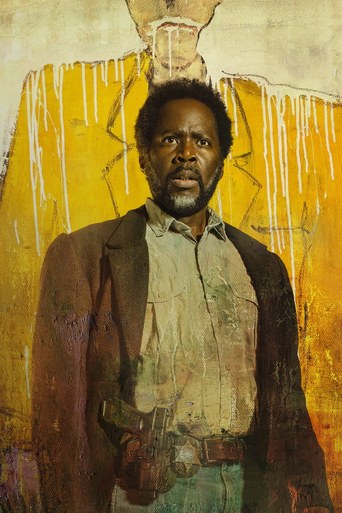
From · Season 1 · Episode 2 · 20 February 2022
S1E2 The Way Things Are Now
A tense doorway episode that turns survival rules into character tests, even when its exposition shows the seams.
THE MOMENT Boyd's sister story, delivered flat and exact. What the creatures do to a face is described once, and the show never needs to show it.
The first full night in town, and the script's smartest decision is letting Jim ask the questions a sane person would ask, then refusing him a single satisfying answer. Boyd can state what the creatures are not, but when pressed on why a gun is useless he has nothing: the survival system here is inherited, not understood. Boyd's count of...
Full episode analysis below. Spoiler-light verdict above.
Updated
A child is breathing, but the room does not relax. Someone has noticed blood. Something is in Ethan's leg. The practical questions arrive first, pulse, wound, stitching, sedative, but the episode keeps dragging panic back toward the door. Outside means danger. Inside means trust. That is the clean pressure point of "The Way Things Are Now": survival in this town arrives less as mythology than as a social test. Who gets let in? Who gets the rules before they get comfort?
The Door Becomes the Moral Problem
The hour's strongest idea is simple enough to work immediately: a closed door can save a life and condemn one. Jim begins from the most understandable place in the world. He wants to protect his family, and protection here means refusal. Keep the door shut. Keep strangers out. Keep fear on the other side of the wood.
Then the episode makes him break his own rule. Jim wants the door closed, yet helps force it open to let strangers in despite his fear. That contradiction drives the scene and turns exposition into behaviour. The viewer does not need a lecture about the town to understand its sickness. The people inside are trapped between caution and decency, and either choice can look monstrous from the wrong angle.
Donna sharpens that pressure with the line that defines the episode's survival logic: "Never open the door after dark." It lands because the hour has already made the door feel less like furniture and more like a verdict. Once that rule exists, every knock, shout, and hesitation carries weight. The show is still building its mythology, but this episode works best when the threat stays at the level of a hand on a latch.
Panic Speaks in Bursts
The pacing is deliberately jagged. Long stretches of silence sit beside frantic eruptions, including a gap that lets tension pool before dialogue breaks it. That rhythm mirrors characters who do not know whether to whisper, run, plead, or obey. Calm never settles. It only marks the pause before someone realizes they are exposed.
Julie gets one of the hour's clearest panic beats when she yells, "Go inside! Go, go, go, go, go!" The repetition matters. This is terror turning into instruction. In a weaker version of the scene, the show would have left her screaming. Here, the command tells us she has absorbed the town's basic law faster than she has processed the town itself.
The same uneven rhythm sometimes works against the episode. Silence creates dread, but the transitions between stillness and explanation can feel blunt. The hour is sharpest when action teaches the rules. It is less elegant when characters stop and prepare others for information the audience already understands in outline. The tension survives those handoffs. The machinery shows.
A Family Crisis Inside a Monster Story
The episode refuses to let the supernatural threat swallow the domestic one. Before the rules of the town settle, the family is already carrying its own fracture around Norman's death. The question of what happened to Norman, and who is responsible, gives the hour a smaller wound to place beside Ethan's physical one.
That pairing matters. Ethan's survival is confirmed early, with practical reassurance that he is breathing and stable, and then the episode moves him through medical care: sedative, stitching, the leg wound treated as an immediate emergency. The body is handled in concrete terms. Pulse. Blood. Pain. The emotional damage around Norman is murkier. No one can stitch that in a room.
This is where the title earns its keep. "The Way Things Are Now" refers to the town's rules after dark, but also to the family's new arrangement after accusation. Julie wants to see her mother, and she is made to wait and talk first. That delay is cruel in the moment and useful dramatically. The show understands that reunion is more than reward. In this place, even reunion has to pass through procedure.
Donna's Hard Mercy
Donna could have played as a wall, and for a while she does. She wants to keep strangers out. She controls access. She insists that talk must come before comfort. Yet the episode gives her a contradiction that keeps her from becoming a simple obstacle: she eventually lets people in.
That is the stronger version of authority in a survival drama. Donna is not softened into niceness. Her harshness has a function. When she tells Julie they have to talk first, the scene withholds what Julie wants, but it also protects the show's central dread. Information here is shelter.
The offer of something "to take the edge off" belongs to the same texture. The hour keeps finding small ways people manage fear when the larger situation cannot be fixed. A drink, a rule, a locked door, a sentence delivered firmly enough to sound like control. None of these things solves the town. They help people make it through the next minute.
That is where the writing feels most confident. It does not rush to answer what the monsters are, why they attack, or whether the talisman protects anyone. It lets human systems form around unanswered terror. Donna's authority, Jim's fear, Julie's urgency, and Ethan's injury all run through the same problem: survival depends on people who may resent the rules they need.
A Quiet Sketch of Normalcy
The Ellis and Julie beat is small, but it matters because it gives the hour a breath that is neither medical nor tactical. Ellis compliments Julie's drawings, and the gesture briefly changes the register. After so much focus on entry, injury, and rules, a comment on art feels almost strange. That strangeness is the point.
The scene does not erase Julie's separation from her mother or the danger outside. It places a human detail next to them. In a town where survival depends on hard rules, a compliment becomes a tiny act of welcome. The writing does not overplay it, which helps. Julie is not healed. Ellis is not turned into a saviour. The scene lets someone be seen for something other than panic.
Still, the episode's limited scale leaves some emotional beats underdeveloped. Julie's wait to see her mother has power, but the hour leans more on the situation than on a fully shaped exchange. The open loops are doing a lot of work: monsters, talisman, reunion, Norman. That is acceptable this early, but the score cannot ignore the slight thinness. The show is planting well. It has not harvested yet.
The Verdict
"The Way Things Are Now" is a sturdy pressure-cooker hour built around a clean survival dilemma: the door that protects you also tests what kind of person you are becoming. Jim's fear, Donna's rule, Julie's panic, and Ethan's wound give the episode enough concrete stakes to avoid pure mystery bait. The jagged pacing works when silence becomes dread, but some exposition lands with visible effort, and a few emotional turns need more room. As a season step, it wisely keeps the biggest answers out of reach while planting the monsters, the talisman, Julie's reunion, and Norman's death as problems that can keep tightening. BollyAI's read: strong rules, sharp fear, slightly rough stitching.