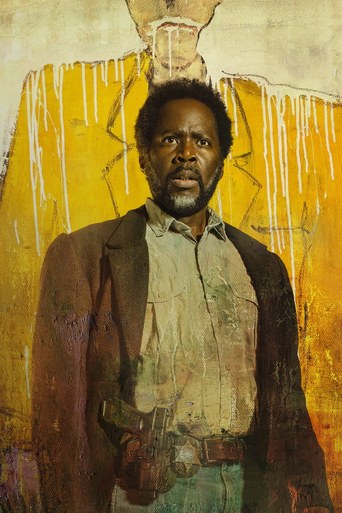
From · Season 1 · Episode 4 · 27 February 2022
S1E4 A Rock and a Farway
A tense moral-pressure hour where the town’s rules start looking almost as frightening as the things outside.
THE MOMENT Victor mentioning that the farway trees are temperamental, sometimes leaving you inside a mountain, seconds before anyone can react to what he has said.
A grief episode wearing a mystery's clothes. The cold open holds 174 seconds without dialogue, the longest hush of the season, and the script spends the hour proving Boyd's stoicism is a costume: he visits a grave, confesses the tremor in his hand, and asks a dead woman for permission to act. The Matthews family fractures along the name Thomas,...
Full episode analysis below. Spoiler-light verdict above.
Updated
Frank is pushed toward the box, and the hour refuses to treat it as routine town business. Someone has to enforce the rule. Someone has to live with enforcing it. That is the knot "A Rock and a Farway" keeps tightening. In a place built on fear, order arrives as pressure. The episode's best material comes from watching people who want safety reach for uglier tools, because the town has made decency feel impractical.
The Box Turns Law Into Punishment
The opening moral problem is simple enough to bruise. Frank is being forced into the box, and a character refuses to carry it out. The beat matters because it frames the episode as civic breakdown more than monster-hour. The creatures outside define the town's danger. The box defines its bargain. Survive together, then decide what survival has made acceptable.
That gives the episode its spine. The question is not whether Frank deserves consequences in some abstract sense. The question is who gets damaged when punishment becomes ritual. The refusal at the start lands because the show slows down around it. Long silences early in the hour do useful work. Nobody needs to explain the horror of the box. The pause does it.
This is the episode testing whether the town's rules can still pretend to be moral. The answer keeps slipping. Once a community builds a punishment device and calls it order, every argument after that comes with splinters. The hour understands that. Its restraint gives the opening more weight than a louder confrontation would have.
The box also clarifies why this place is so dangerous even before nightfall. The monsters force the town into survival mode, but the residents choose what shape that survival takes. That choice is where the rot starts.
Tea Before the Walls Close In
The morning tea beat is small, but it is not filler. A character makes tea and offers light in the morning, and the episode briefly lets ordinary care enter the frame. In another show, that kind of moment could turn decorative. Here, it works because it sits beside the box. The hour places ritual against ritual: tea on one side, punishment on the other. One keeps people human. One keeps people obedient.
That contrast makes "A Rock and a Farway" more than a run of survival beats. The town's terror is not constant screaming. It is the effort required to hold a normal conversation after the night has already taken something from everyone. The tea does not solve anything. It cannot. But it gives the episode a necessary domestic counterweight, a reminder that these people are still trying to build a morning inside a trap.
The show is sharpest when it lets normalcy look slightly absurd without mocking it. Tea in this place is almost an act of rebellion. Not a grand one. Just a kettle, a cup, a little light. The episode knows that panic becomes more frightening when routine keeps happening beside it.
That is why the quiet scenes matter. They keep the town from becoming a generic horror enclosure. People still make gestures. They still tend to each other. The sadness is that none of it can stop the next demand.
Visions Make Certainty Expensive
The uncanny thread enters through denial: a character insists they were not hallucinating despite strange visions. The conflict is clean. In this town, seeing something impossible does not automatically make a person unreliable. It may mean they are paying attention. That is a smart horror pressure point, because it removes the comfort of disbelief. If the strange thing might be real, then sanity stops being a safe border.
The episode also plants two strong open loops. The trees have moved only four inches, and the boy living outside remains tied to the show's larger symbol mystery. Both details work because they are small enough to feel wrong before they feel explained. Four inches is not spectacle. It is measurement as dread. A boy outside is not an answer. He is a walking question.
This thread exposes one of the hour's limits. The mysteries compel, but the episode sometimes leans on their presence more than their escalation. The moving trees and the boy outside have charge as images, yet the hour treats them more as clues than as dramatic turns. The mystery box is working, but this episode occasionally polishes the lock instead of turning the key.
Even so, the restraint fits the season's larger design. "From" is building dread out of partial information, and this hour understands that a small wrong detail can be more unnerving than a full explanation. The risk is repetition. A clue can hum for only so long before it needs to cut.
The Family Wants Peace, Then Reaches for a Gun
Jim carries the episode's clearest contradiction. He wants to protect his family and keep peace, but by the later stretch he escalates violence with guns. That is not lazy character inconsistency. It is the point. The town has a way of making protection look like aggression, then letting the protector pretend the difference still matters.
The leadership tension sharpens that idea. A character is accused of being used as a punching bag, exposing how blame moves through the group when nobody has enough control to deserve it. The phrase matters because it is not about policy. It is about exhaustion. Leadership here is less command than impact absorption. People need someone to hold responsible, and the person standing nearest the rulebook becomes the target.
Julie adds another strain to the domestic side of the hour. She wants stability, yet repeatedly leaves and questions whether the town is safe. The emotional beat where someone expresses missing the others gives that conflict a human floor. The family material works because the episode does not flatten it into disobedience or fear. Everyone wants shelter. Nobody agrees on what shelter is worth if it requires silence, submission, or a loaded weapon.
That is the episode's cleanest argument in miniature: fear does not erase love, but it changes its instruments. Sometimes it changes them into something dangerous.
The family scenes also keep Jim from becoming a simple hothead. His panic has a source. His choices still matter. "A Rock and a Farway" is more interesting when it lets those truths rub against each other rather than choosing one.
Victor Becomes the Question the Town Cannot File Away
By the end, concerns about Victor and a missing child reach Boyd, and the episode opens another corridor instead of closing the room it started in. The choice works because Victor sits at the exact intersection this show likes: possible threat, possible witness, possible survivor who knows the map better than anyone else. The missing-child concern gives the mystery a sharper human edge. Symbols, trees, and visions are ominous. A child who may be in immediate danger turns ominous into urgent.
The late timing is a mixed blessing. As a final turn, it gives the hour forward motion. As drama inside this specific episode, it arrives after stronger moral material has already claimed the center. The box, Jim's escalation, and the leadership strain all belong to the same argument about order curdling under pressure. Victor's thread intrigues, but it functions more as a door to the next hour than the payoff to this one.
That does not sink the episode. In serialized horror, a good door matters. But "A Rock and a Farway" is strongest when the fear is social before it is supernatural. The monsters may be outside. The episode's real bite comes from watching the town rehearse becoming its own threat.
Victor remains useful because he resists easy filing. The town wants categories: safe, dangerous, guilty, useful. Victor keeps slipping out of them, which makes him one of the show's better pressure points. He turns suspicion into a test of whether anyone here can still tell caution from cruelty.
The Verdict
"A Rock and a Farway" is a tense hour built around a strong moral engine: the town wants rules to save it, then has to face what those rules demand. The Frank box material gives the episode gravity, the morning tea beat gives it contrast, and Jim's turn toward armed escalation makes the protection theme sting. The mystery elements remain compelling, especially the moving trees and the boy outside, though the hour sometimes plants more than it pays off. This is a transition episode with a sharper conscience than momentum, and it earns its place by making survival look costly before the next nightmare arrives.