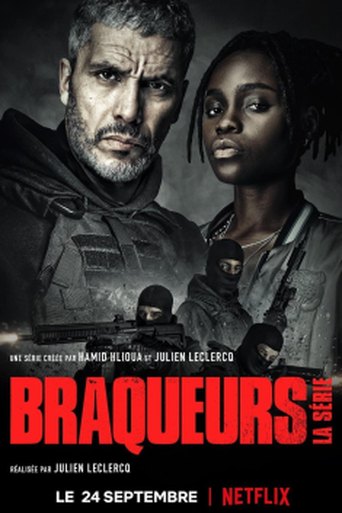
Ganglands · Season 1 · Episode 1 · 24 September 2021
S1E1 Episode 1
A sharp opener where one stolen bag controls everyone, even when talk-heavy resets dull the incoming violence.
THE MOMENT The moment Mehdi realises what his niece has stolen and what that means for everyone she is connected to - the plot machine engaging.
The premiere establishes the crew's professional competence in an opening heist and then immediately destabilises it through the niece subplot. The shift from controlled professional crime to chaotic personal stakes is handled efficiently if not elegantly.
Full episode analysis below. Spoiler-light verdict above.
Updated
The robbery is already moving when the hour grabs its shape: people on the ground, intruders barking orders, time leaking away. Crime here plays as bad math. A crew has minutes, a room full of fear, and no margin for improvisation. Then the bag reveals itself. Cash would have ended the job. Coke turns the job into ownership, leverage, and debt. That is the episode's best idea: every character thinks control is something they can seize, until the product starts controlling them.
The Bag Becomes the Boss
The first episode builds its engine around a simple switch. A robbery is underway, the commands are hard, and the scene carries the pressure of a planned job. Then the bag turns out to be coke, and the plan collapses. That reveal changes the genre of the problem. Stolen money can disappear. Eight keys of coke demand an owner, a market, and a punishment.
That is where the opener works best. Criminal plots do not need mystery boxes when the object in the room is dangerous enough. The coke is valuable, portable, and instantly radioactive. The crew's first instinct is movement. Get out. Cash out. Convert danger into money before anyone with a claim arrives. The decision to go right now to a dealer cousin gives the episode its forward shove, and the haste matters. Nobody is thinking like a strategist. They are thinking like people who have accidentally stolen from a larger system.
The writing is blunt in a useful way. It lets the bag redraw the room. What began as a job with a clock becomes a chain of claims: who took it, who owns it, who can sell it, who must answer for it. BollyAI's read: the episode finds its sharpest pulse when it lets the stolen product behave like the main character.
Liana Sees the Trap Before the Men Admit It
Liana gives the hour its clearest practical intelligence. After the crew is busted, she confronts Mehdi because the risk has already outgrown the reward. Her contradiction is useful: she wants control of the cash plan, yet resists turning the robbery into a wholesale drug operation. That tension gives her scenes a charge the episode needs. She reads the room faster than the room wants to be read.
Her push against reassurance matters because the episode is full of people trying to talk danger into smaller shapes. The minute the product is identified, others keep looking for a workable route. Sell it. Move it. Explain it. Bluff through it. Liana punctures that fake calm. She understands that a bag of coke does not become safer because someone has a cousin or a next stop. It becomes a debt with legs.
This is also where the hour earns some of its dialogue density. The household, dinner, and negotiation stretches slow the impact after the high-command opening, but Liana's resistance gives those scenes purpose. They show panic settling into conversation. The problem is length. Urgency thins when everyone circles what the audience already knows: the coke has moved the story into a harsher economy. Still, Liana keeps the middle from becoming pure explanation.
Eight Keys Missing, One Room Exposed
The turn at the safe-house move is clean: the coke has been jacked. All eight keys are gone. The theft of the stolen product is a strong escalation because it refuses to let the crew cash out their mistake. The episode punishes them for thinking possession equals control.
From there, the standoff over ownership gives the hour its most combustible shape. Everyone's position is suddenly exposed. If the coke belongs to someone else, the crew has stolen trouble. If it is missing, they cannot return trouble even if they want to. If they cannot return it, someone will demand collateral. The plot tightens because every option has already curdled.
Mehdi is interesting in this stretch because his instinct is proof. He wants to secure evidence of the coke hostage situation, yet later denies knowledge when asked where the coke is. That contradiction reads as survival under pressure. He knows that information is power. He also knows information can become a confession. The episode places him between documenting the threat and distancing himself from the object that created it.
This section is also where the writing's bluntness cuts in two directions. The escalation works because the beats are clear: product stolen, owner angry, deadline coming. The dialogue-heavy passages around it occasionally flatten the rhythm. The hour has a strong crime mechanism, then sometimes pauses to state that mechanism again. A leaner cut could have made the same trap feel more suffocating.
The Hostage Turns Coke Into a Clock
The hostage exchange demand is the episode's nastiest conversion. Until then, the coke has been money, risk, and stolen property. Once a hostage is introduced, the product becomes a clock. A deadline lands. The phone call ends with that cold little goodbye to the uncle, and the threat stops being theoretical.
That move personalizes the consequences without abandoning the mechanics. The hostage is how the criminal economy enforces itself. If the eight keys are missing, a body becomes the receipt. The episode's best tension comes from that ugly substitution.
The alternating rhythm helps here. High-intensity command scenes are followed by quieter negotiation stretches, and those gaps let the dread reset. The longer silences make sense as breathers between confrontations. The risk is slack, and this episode touches that line. Still, when the deadline arrives, the structure snaps back into focus. Tomorrow is close enough to hurt. It is far enough for desperate people to make bad choices.
As a first episode, that is a strong plant. The open loop is direct: will the eight keys return before violence follows? The hour also leaves questions around where the coke actually went after being jacked, who took it during the move, and why the earlier tunnel bullet event lines up with the later disruptions. Those questions give the season a working fuse rather than a decorative puzzle.
Bluffing Is Modi's Religion
The late pivot belongs to Modi, and it sharpens the episode's view of control. He wants the stolen eight keys returned. He wants the situation managed. His method is performance. He claims he returned the eight keys by bluffing in order to make the coke come back. The logic is absurd, which makes it useful. If everyone believes the product is moving, maybe the product starts moving. If the bluff holds, control returns. If it fails, the whole room learns the difference between nerve and power.
Modi's contradiction is the episode in human form. He wants to regain control of the deal so he can stay in the game, insists he can handle the coke situation through bluffing, then denies knowledge when pressed. That denial is strategy stripped to its bones. He wants the authority of knowing without the liability of knowing.
The episode gives him the right kind of slippery space. He does not solve the crisis. He changes the pressure around it. That distinction matters. A weaker opener would make the bluff a magic trick. This one makes it a temporary patch on a leaking pipe. The coke is still missing. The deadline still exists. The hostage demand still hangs over every claim of confidence. Modi can act, and acting can buy time, but time is not safety.
The Verdict
"Ganglands" opens with a sturdy crime hook and a clear craft idea: one stolen bag can reorder every relationship around it. The episode is at its best when the coke keeps changing function, from loot to debt to hostage clock. Liana's skepticism, Mehdi's defensive knowledge, and Modi's bluffing push the same pressure point. Everyone performs control until the next threat exposes the act.
The weaknesses are real. Some dialogue-heavy stretches soften the urgency, and a few negotiations circle information the plot has already made obvious. Yet the opener leaves enough live wire on the floor to earn its slot. The missing eight keys, the deadline, and the unexplained alignment of earlier disruption with later failure give the season a clean fuse.