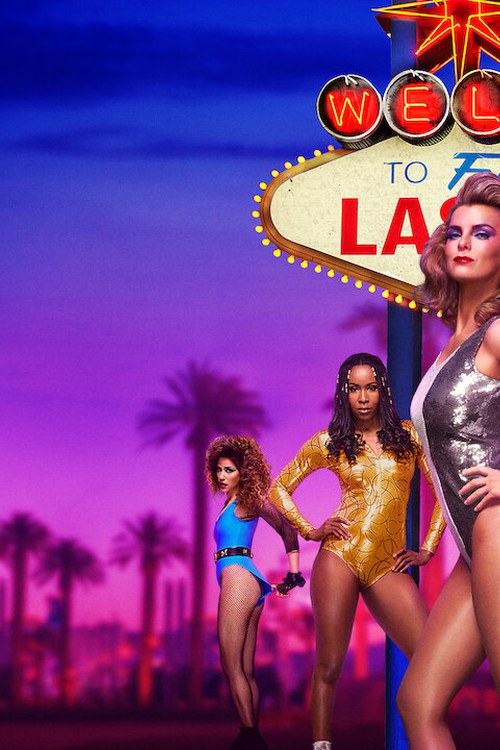
GLOW · Season 1 · Episode 1 · 23 June 2017
S1E1 Pilot
A sharp pilot that turns fake wrestling into the hour’s most honest room, with Ruth’s hunger doing the heavy lifting.
THE MOMENT Ruth's first disastrous line reading in the audition room - the gap between her self-image and what the camera sees is the whole show in miniature.
The premiere establishes Ruth's professional desperation without making it pitiable - she is trying to audition her way out of a decade of small roles and failing in specific, recognisable ways. The wrestling audition arrives as both absurdity and lifeline, and the show commits to both readings simultaneously.
Full episode analysis below. Spoiler-light verdict above.
Updated
A speaker sorts the world into good guys and bad guys, then calls it justice. The hour keeps testing how cheap that sentence becomes once rent, casting rooms, bathrooms, and bedroom windows get involved. Ruth Wilder wants real parts. The industry keeps handing her smaller boxes with worse lighting. Then GLOW arrives, sold as a wrestling television show, and the joke lands clean: the fake fight may be the first audition in the episode honest enough to admit it is a fight.
Real Parts, Fake Power
The pilot’s sharpest idea is Ruth’s contradiction. She wants casting success, but she does not want the version of success being offered. The dossier pins her hunger early. Ruth asks if Mallory would consider erotica, then draws the boundary that matters to her: she is interested in real parts. That line carries weight because the episode has already shown how easily a woman’s ambition can sound unreasonable in a room built to reject her.
The writing understands casting as a place where power disguises itself as taste. Ruth keeps showing up despite financial stress and the humiliations attached to showing up. The pilot does not frame that persistence as inspirational machinery. It plays closer to muscle memory. She needs the call, the line, the chance to be considered. Even the phone beat, where a caller is told Ruth should be on line two, has the sting of a life arranged around being reachable for other people’s decisions.
The pilot works because it refuses to make Ruth’s ambition cute. She is not chasing fame in the abstract. She is trying to get past rooms that keep offering her proximity to meaning instead of meaning itself. That makes the arrival of a wrestling show less random than it first appears. GLOW is absurd, but it is blunt. It does not hide the spectacle.
The Bathroom Has Teeth
The threat of being blacklisted from casting calls in Los Angeles gives the episode a hard edge. A bathroom confrontation could play as broad chaos, but the wording of the threat matters. This is an industry warning delivered in a small room. Behave wrong in the wrong place and the whole city can close its doors.
That is where the pilot’s rapid dialogue earns its pressure. The tone notes point to dense talk and short silences, with one major silence window later in the episode. The result is an hour that rarely gives Ruth a clean emotional pause. People talk over the space where reflection might go. Calls are made. Auditions move. Warnings land. Nobody has to block a doorway for the episode to feel trapped.
The writing’s best move here is scale. It starts with the language of justice, then drags that idea down to the petty cruelty of access. Blacklisting is a big word attached to a cramped room. That mismatch is the point. In this world, a bathroom can become a professional border crossing.
The weakness is density. A few secondary beats feel like sharp fragments rather than shaped turns. The episode’s rhythm has snap, but some confrontations arrive as collisions before the emotional road into them has been paved. Still, the speed suits Ruth’s condition. She is always already late to someone else’s verdict.
GLOW Turns the Joke Around
When the audition explains GLOW as Gorgeous Ladies of Wrestling, the title sounds like a punchline waiting for Ruth to reject it. That would be the easier pilot: serious actress meets ridiculous show, sneers, then learns a lesson. The episode is smarter. It places GLOW inside the same machinery that has already been shrinking Ruth, then lets the absurdity expose that machinery.
The Strindberg headshot beat is the cleanest comic knife. Someone reacts to Strindberg by asking who that is, with profanity doing the work of taste-making. The laugh comes from more than the missed reference. Ruth’s idea of seriousness has entered a room where seriousness may have no currency. Her headshot becomes a little museum label nobody asked for.
Here, the pilot finds its personality. Wrestling, at least as introduced here, is performance without the polite costume. It is body, type, attitude, selection. The audition’s stated boundary that it is not porn matters because the episode keeps circling the line between performance and objectification. GLOW may be selling spectacle, but the casting rooms before it were never pure temples of art.
The episode’s joke is that the “less respectable” audition may be the one most willing to name what it wants. That does not make it safe. It makes it legible.
The Window Scene Breaks the Air
The Mallory and Mark material shifts the pilot from professional humiliation to private exposure. A character confronts someone climbing in through a window and tells them to climb out and go. Mallory obeys the physical demand, but insists that the relationship cannot be found out. The contradiction is precise: she wants discretion, while the scene is built from the impossibility of staying hidden.
The window is a strong image because it turns secrecy into choreography. Someone enters wrong, exits wrong, and every movement admits there is already too much to conceal. The open loop around Mallory and Mark gives the pilot a second engine beyond Ruth’s audition path. It asks what kind of relationship needs a window, and what will happen when the house notices the draft.
This section gives the hour a useful tonal swerve. The casting material is public pressure. The window scene is domestic pressure. Together, they argue that performance does not stop when the audition ends. People keep playing roles in apartments, in bathrooms, on phone calls, in the lies they need protected.
The pilot wisely leaves this thread unresolved. It lets the discomfort sit as an active threat instead of converting it into immediate explanation. The hour is already busy. This strand plants trouble without trying to harvest it yet.
The Outburst Finally Says the Quiet Part Loud
The violent outburst near the end gives the pilot its ugliest punctuation. After an episode of constrained ambition, audition pressure, and secrecy, the language turns openly brutal. The threat is unpolished. It is rage with the casing cracked.
That matters because the pilot has spent much of its time around controlled performances. Ruth auditions. People evaluate. GLOW selects. Mallory manages concealment. Even the opening language of justice sounds like a speech trying to own the moral frame. The late outburst tears through that control and reveals the emotional cost underneath. The episode’s world may be built on roles, but the damage is real.
The cut-selection open loop around GLOW gains weight from this escalation. Who survives the cuts is not only a question of talent or image. The pilot has shown that survival in this ecosystem means absorbing humiliation, reading power quickly, and turning the room’s appetite into something usable.
The pilot is strongest when it treats wrestling as the honest mask. The ropes, bodies, and personas are coming, but the first episode has already staged several fights without a ring. That is the foundation worth building on.
The Verdict
"Pilot" is a strong opener because it finds a clean thesis and keeps testing it: Ruth wants real work in a world that keeps converting women into categories, secrets, threats, and cuts. The GLOW premise enters late enough to feel like a disruption, but early enough to reframe everything before it. The episode’s pace has bite, though a few secondary confrontations land more as sparks than flames. Its best craft choice is refusing to treat wrestling as the silly part. The supposedly serious system has no cleaner hands. As a season starter, it plants the right open loops: Ruth’s selection, Mallory and Mark’s exposure, and the rules by which GLOW will decide who gets to stay.