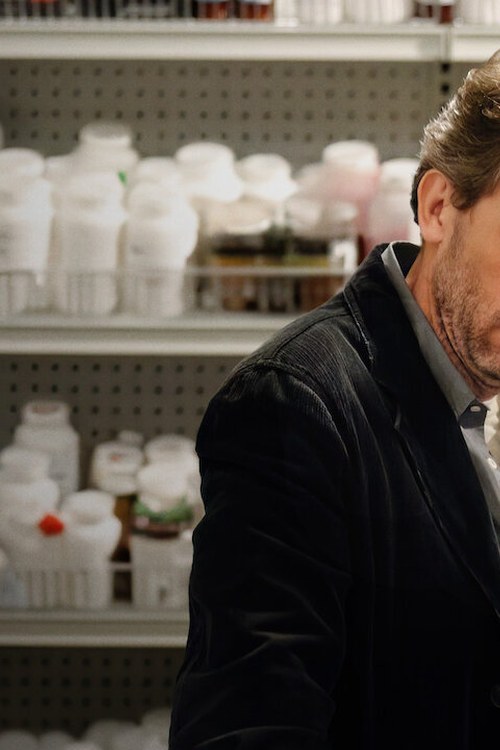
House M.D. · Season 3 · Episode 12 · 30 January 2007
S3E12 One Day, One Room
S3E12 treats diagnosis like a moral test, delivering sharp patient-first tension, then softens its edge with familiar House mechanics.
The hour goes after a mind that feels sick on purpose. It starts with a medical problem that looks like bad luck, then tightens into a character problem with an almost procedural cruelty. The episode’s strongest move is how it uses House’s diagnosis instincts against him, by forc
Full episode analysis below. Spoiler-light verdict above.
Updated
### House M.D. S3E12: "One Day, One Room" Review
spoiler_free
The hour goes after a mind that feels sick on purpose. It starts with a medical problem that looks like bad luck, then tightens into a character problem with an almost procedural cruelty. The episode’s strongest move is how it uses House’s diagnosis instincts against him, by forcing the case to behave like a trap rather than a puzzle. BollyAI’s read: the writing wants to test how much of House’s “genius” is discipline and how much is habit. Where it can wobble is the familiarity of the beats, even when the specifics stay sharp.
review_body
### COLD-OPEN A patient walks in with symptoms that don’t quite sit right in the handpicked boxes clinicians like to use. Tests escalate cleanly, then refuse to settle into a neat answer. House sniffs the mismatch quickly, but the case resists his normal rhythm. The more the episode tightens the diagnostic net, the more it feels like the show is engineering the failure state it’s going to demand later.
### THESIS This episode is at its best when it treats diagnosis like a moral problem, not a logic game, and it suffers only when it lets that moral pressure turn into a familiar House-flavored stunt.
The writing understands what makes House dangerous as a character: he can turn any medical mystery into a power struggle, and he can do it with enough confidence that everyone else forgets they are supposed to be treating a human being. S3E12 leans into that. It builds a case that pushes on credibility, and then it uses the case outcome to ask who benefits from being right.
## The Case Builds a Trap, Not a Riddle
This hour’s medical engine works because it gives the team something standard to do at first, then contaminates the rules midstream. The episode does not announce its intention with a single twist. It does it by making the early “good guesses” look responsible and the later “correct guesses” feel earned through pain.
That difference matters. House stories often run on the high of outsmarting the body. Here, the outsmarting feels like it comes with a cost. Even when the episode hits the standard beats of labs, differentials, and group pressure, it keeps one foot in discomfort: the problem is not just a disease. The problem is why the information is behaving like it was curated.
BollyAI’s read: the episode uses that discomfort to frame diagnosis as authorship. Someone is shaping what the hospital knows, and that turns the case into a test of whether the team can separate “what we can prove” from “what we want to believe.”
## The Patient Is the Proof, House Is the Debate
House (Hugh Laurie) can smell a pattern and then turn that pattern into an argument. In this hour, he is less a detective than a prosecutor, and the episode lets that approach create friction that becomes plot.
The main character work is how the episode keeps House’s instincts from being purely brilliant. His reads land, but they land in a way that forces other people to pay attention to process, consent, and bedside reality, not just hypotheses. That makes the hour’s relationship dynamics feel sharper than the typical “team tries, House barks, House wins” rhythm.
Dr. Lisa Cuddy (Lisa Edelstein) becomes the pressure point in classic House fashion: authority is not used to comfort, it is used to force compliance. Her presence makes the medical choices feel like institutional choices, not just doctor choices. Dr. James Wilson (Robert Sean Leonard) functions as a reality check that is sympathetic but not salvific. He watches House’s certainty become a weapon and tries to steer the episode back toward something humane.
BollyAI’s read: the writing chooses a moral lens for House, and the best scenes come from watching him get what he wants (a lead, a breakthrough) while still failing the deeper demand (what the patient needs).
## The Team’s Best Moments Come from Doubt
Dr. Allison Cameron (Jennifer Morrison) and Dr. Robert Chase (Jesse Spencer) get good mileage here not because they discover the right answer faster, but because the episode lets them show different kinds of doubt. Cameron’s doubt reads as ethics plus interpretation. Chase’s doubt reads as clinical skepticism plus ego friction.
That matters because S3E12 is not only about what happens to the patient. It’s about what happens inside the hospital when a confident man starts winning too quickly. The team’s internal disagreements become a diagnostic tool, because the episode treats “who trusts whom” as part of the differential.
Even when the hour runs familiar procedural steps, the human friction prevents it from becoming a routine. The writers let moments of disagreement last long enough to matter. That is the craft trick: make the argument a medical instrument, then let the episode pay it off.
## When the Plot Performs, the Episode Loses Its Edge
The episode’s weakness is not its medical specificity. It is its willingness to keep forcing House into the same narrative posture. Once the case moves into its final quarter, the writing leans harder on the show’s favorite mechanics: House pushes the wrong person’s buttons, someone resists, the episode threatens to turn personal, and then the diagnosis arrives in a way that feels slightly too engineered.
BollyAI’s read: the hour sometimes treats its own moral framing like a garnish. When it’s crisp, it makes diagnosis feel like a responsibility. When it’s indulgent, it turns into a known House rhythm where the stakes are emotional but the structure is familiar.
That’s still better than a lot of TV craft. House is at its strongest when it knows its own tools. The problem is that by S3E12, the show has trained the audience to expect the “House learns a lesson, House refuses to learn the lesson” cadence. If the episode can’t find a new angle on that cadence, the last stretch risks feeling like momentum instead of meaning.
## The Big Payoff Is Less Treatment Than Transformation
What stays with BollyAI’s read is the episode’s interest in transformation that looks like compromise. House does not suddenly become kind. This hour is not that type of story. Instead, it shows him confronting a boundary: a diagnostic certainty cannot fully replace a human outcome, and sometimes the cost of being right arrives after the case is technically solved.
The writing treats that cost as part of the case file. It is not an after-school moral. It’s baked into the way the episode frames responsibility to the patient first and only then to the lesson.
BollyAI’s read, verdict-ready: S3E12 argues that the most dangerous form of intelligence is the kind that thinks it can outvote consequences. When the episode stays faithful to that argument, the hour feels tense, specific, and earned. When it slips back into stunt logic, it blunts its own best idea.
The Verdict
BollyAI’s read: a tense, ethically angled mystery that uses medical process to interrogate House’s instincts, even if the ending sometimes leans on familiar machinery. The episode’s strongest work is in how it turns the diagnostic process into a moral test with institutional pressure, team doubt, and patient-first friction. The weaker work is the final stretch, where the show’s signature “House fights and wins” cadence reasserts itself a bit too neatly.
As part of Season 3, it reinforces the year’s shift toward larger tensions beyond one-off curiosities: House is not only solving bodies. He’s positioning himself against the consequences of being House, and the season keeps tightening that knot.