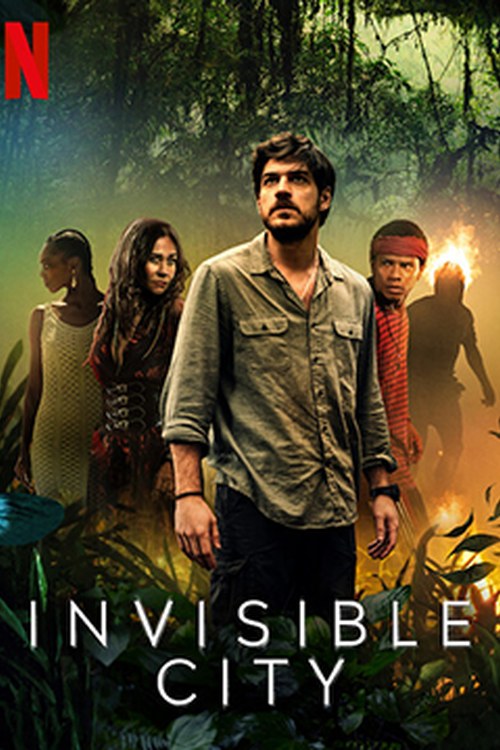
Invisible City · Season 1 · Episode 1 · 5 February 2021
S1E1 The River
A sharp pilot where folklore infects procedure, held back by abrupt emotional jumps before Luna fully lands.
THE MOMENT The moment a river creature transforms in front of Eric and the show commits fully to its folkloric world rather than treating it as ambiguous.
The premiere establishes both the procedural layer and the folklore layer with efficiency. The dead pink river dolphin is one of the more arresting inciting images in recent genre television - specific enough to feel real, strange enough to signal that something mythological is at work. Eric's grief and professional instincts run together without the show needing to separate them.
Full episode analysis below. Spoiler-light verdict above.
Updated
The warning comes before the fire. In this world, Curupira is consequence: destroy the forest, harm animals, and the forest answers. Then a casual wish floats through the scene, someone says they wish another person were there, and the shout arrives. Fire. Leave now. The pilot’s first hard move is placing myth and emergency almost side by side, then making Eric live in the gap between them. A tale has logic. A fire report has none. That mismatch drives the episode.
A Forest Warning With Teeth
“The River” puts its supernatural premise before its procedural plot. The early explanation of Curupira is blunt, almost storybook simple: the forest has a protector, and violence against it invites punishment. The episode does not overdecorate the idea. It drops it in, lets it sit, then lets panic crash into it.
The fire sequence works because it turns a mythic warning into a practical emergency. A shout breaks the gathering. People are ordered to leave. Someone heads toward Toré Village. Dulce says she has not seen Luna, narrowing the chaos into a personal search. The hour’s mythology starts with trees and animals, but its first emotional hook is smaller: a child’s whereabouts in a dangerous moment.
The pilot is strongest when folklore behaves like pressure rather than decoration. Curupira is not a fantasy flourish to admire from a distance. The name arrives before the fire, and that order matters. The episode asks whether a disaster can be filed away as an accident when the world has already supplied another grammar for consequence.
That is a clean opening argument. The weakness is density. The fire is carried through crowded dialogue clusters, which gives the scene urgency and makes the emotional geography choppy. The panic lands. The relationships around it need more room.
Eric Meets the Wall of Paper
The strongest dramatic beat comes after the flames, when Eric wants answers and the system gives him closure. the investigation is declared closed. The cause is unknown. A possible sky lantern is offered as an explanation. For a man trying to make sense of his wife’s death, that is less an answer than an insult with official formatting.
Here the pilot finds its shape: grief against bureaucracy, myth against procedure, refusal against paperwork. Eric is not chasing spectacle. He wants progress, updates, responsibility. What he receives is a dead end. The contradiction defines him. He is being told to accept an unknown cause, and he accepts none of it.
The episode makes the official version plausible enough to be maddening. A sky lantern blown into the forest belongs to the ordinary world. It is also thin enough to leave a grieving investigator staring through it. That tension matters. If the answer were absurd, Eric’s disbelief would be easy. Because it is merely inadequate, his refusal has more bite.
That gives the pilot a solid spine. Episode one does not ask Eric to solve the supernatural. It asks him to reject the comfort of an incomplete explanation. That is a better engine than instant revelation.
The Dead Dolphin Makes the Case Smell Wrong
The river dolphin plot is the pilot’s strangest and most useful turn. Before the episode confirms the animal was found dead, it locks the situation into procedure: the only way it leaves is in an Environmental Police vehicle. That detail does real work. It keeps the supernatural from floating away into mist. A dead animal still has to be moved. Someone has to sign off. Someone has to explain how it got there.
Then the hour adds a physical clue: something is dripping, and it smells bad. Elegant would be wrong for this mystery. The clue has texture. The pilot’s world is full of unseen forces, but the detail that pushes the next track forward is bodily, unpleasant, and concrete.
The open question is simple: how did a river dolphin get into the Albuquerque and Toré Village context, and what does it connect to? That links the episode’s environmental premise to Eric’s investigative drive. The fire may be officially closed, but the animal case opens a second door. If the first wall is paperwork, the dolphin is a leak through the wall.
The risk is obvious. A pilot with fire, folklore, a missing child thread, official obstruction, and a dead animal mystery can feel like a stack of hooks. “The River” mostly avoids that because the hooks point in the same moral direction: harm done to nature refuses to stay buried.
Luna Turns the Panic Domestic
Luna’s material is quieter, but it gives the episode a necessary second scale. The fire asks where she is after she enters the forest. Dulce’s statement that she has not seen her turns absence into alarm. Later, Luna’s reply to her father after being questioned about cookie stealing gives her another pressure: she wants to avoid being singled out or controlled, yet she is immediately placed under scrutiny.
That beat could look small beside a closed investigation and a dead dolphin. It matters. The pilot needs Luna because Eric’s grief cannot stay professional. His need for answers is tied to a family rupture, and Luna’s evasiveness gives that rupture a living presence. She is a child negotiating attention while adults try to impose order on events they do not understand.
The episode has not fully cashed this in yet. Luna’s thread is planted more than developed. The hour gestures toward her interior contradiction, but the cut from fire to aftermath to domestic friction leaves connective tissue missing. Luna is the sharpest future question in the pilot, though episode one gives her function more clearly than shape.
The Time Jumps Cut Hard
Abruptness defines the hour’s tone. The episode moves from fire and aftermath into a one month later stretch with notable silent gaps in the middle. That choice gives the pilot a bruised, discontinuous feeling. It also creates the hour’s main craft problem.
The gaps mimic Eric’s state. Grief does not always move in clean progression. A case closes before the person inside it is ready. A month can pass and still feel like the same night. The structure understands that emotional time and calendar time are different animals.
The same structure leaves certain beats underfed. The fire sequence has density. The later investigative confrontations have clarity. The space between them is where the episode could have let Eric, Luna, and Dulce breathe. Without that, some transitions feel like the plot dragging the characters into position.
The pilot’s best craft decision is restraint around the supernatural. It names Curupira, shows a fire, closes an investigation, then lets the dead dolphin contaminate the ordinary world. Its least convincing move is pace management. It trusts silence, which helps. It also leans on jumps that make the emotional aftermath feel partially skipped.
The Verdict
“The River” is a sturdy opening chapter with one clear central idea: official explanations cannot contain a world where the forest may answer back. Eric’s refusal to accept the closed investigation gives the hour its human motor, while the dead dolphin gives the mystery a physical, ugly charge. The mythology works because it is tied to procedure, evidence, vehicles, smells, and unanswered forms.
The flaws are real. Luna and Dulce need fuller dramatic space, and the abrupt passage into the one month later material cuts away from feelings the story has earned the right to examine. Still, the pilot plants useful season questions: where Luna went, what caused the fire, and why the dolphin belongs to the same chain of damage. BollyAI’s score: 7.2 out of 10.