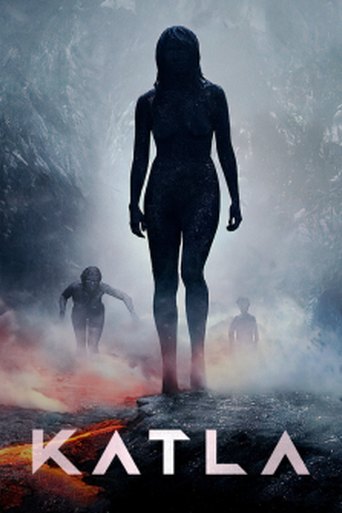
Katla · Season 1 · Episode 1 · 17 June 2021
S1E1 From Under the Glacier
Katla opens with eerie logistics and one strong human mystery, though its early setup moves slower than its best crisis beats.
THE MOMENT The emergence of the first changeling from the ash - a scene that sets the series' entire tonal contract: restrained, uncanny, deeply sad.
The premiere establishes the near-emptied town of Vik with quiet precision - the ash, the skeleton crew of residents, the volcano still erupting in the background. The first ash-covered figure arrives at the episode's end, and the show wisely refuses to explain anything.
Full episode analysis below. Spoiler-light verdict above.
Updated
A woman comes in from the glacier injured, cold, and wrong for the weather around her. Gísli moves into crisis mode: calls, transport, medical instructions, the immediate question of whether she can even remain in Vík when her lungs cannot take the climate. The episode has spent its opening minutes on restricted duties, tourists, scientists, generators, and samples. Then the body arrives under a blanket, and the administrative world suddenly has blood pressure. "From Under the Glacier" works best when disaster stops being scenery and becomes paperwork with a pulse.
A Village Reduced to Duty
A year after Katla's eruption began, Vík has the shape of a town stripped down to function. The remaining duties are blunt: keep tourists away from danger, serve the scientists, stop restricted movement from becoming another emergency. That is a strong opening idea because it refuses easy eruption spectacle and begins with maintenance. The volcano has already happened. The question is what living beside it does to the people who stayed.
The early stretch is spare by design. A generator needs fixing for the scientists. A scientist plans another trip up to the glacier to examine Katla samples. People speak in practical terms because practical terms are how this place survives. These are not flashy beats, and the hour risks feeling too procedural before it finds its hook. Still, the flatness has a purpose. The episode builds a world where danger has become scheduled, logged, and normalized.
That normalization matters. Nobody behaves as if the impossible is waiting nearby. They behave as if the next problem will require a call, a vehicle, a permit, or another trip through ash and weather. The premiere understands institutional fatigue: after a year of eruption, fear has curdled into routine. People still worry, but they also have forms to fill and jobs to finish.
That is the smartest foundation in the opener. Katla does not sell mystery as fireworks. It sells it as a job nobody can quit.
The Body Turns Procedure Into Panic
The injured woman changes the hour's temperature. Once she is found and wrapped in a blanket, the earlier logistics begin to matter. Gísli is told she may need to be moved to Reykjavík because her lungs cannot handle the climate, and the later confirmation that she is hypothermic gives the crisis a grim physical clarity. The glacier is no longer a distant research site. It has delivered someone back to the village in a condition that makes every practical choice urgent.
This is where the episode tightens. Calls interrupt. Medical handling takes over. The dialogue becomes denser, and the rhythm shifts from setup to triage. The premiere's cleanest craft move is letting ordinary systems fail to contain an extraordinary arrival. Gísli wants to manage restricted glacier emergencies, and for a while management is all he has. He can arrange pickup, process instructions, and respond to worsening conditions. The woman herself brings a question no procedure can answer.
The physical presentation helps. She does not arrive as a clean puzzle piece. She arrives as a medical emergency, which keeps the mystery from floating away into abstraction. Her body has to be warmed, moved, assessed. Her presence forces everyone to act before they understand. That order is important. The town does not get the comfort of interpretation first. It gets responsibility.
The weakness is pace. The long setup makes sense for a season opener, especially one trying to define an evacuated, half-functioning Vík, yet the episode only starts to feel dangerous when the woman is inside the frame and the village has to react. Before that, the glacier remains more concept than threat. After her arrival, every background detail gains charge. The hour needed that charge sooner.
Recognition Is the Real Contagion
The most interesting mystery centers on recognition: who knows the woman, who denies knowing her, and who wants the past to stay sealed. The central contradiction belongs to Dad. He wants to avoid acknowledging that he guided or participated with Gunhild Ahlberg's group, and he keeps denying knowledge while being pressed about the glacier guide and Gunhild. That is stronger than a simple identification puzzle because it turns the supernatural hook into a domestic argument.
Gríma adds pressure from another direction. She wants private matters kept hidden, yet she indirectly confronts her father about what is happening with Gunhild. The episode uses that contradiction well. Instead of gathering everyone around the mystery as a clean investigative unit, it lets the arrival split the room. Some people need answers. Some need distance. Some need their version of the past to remain usable.
That tension gives the premiere its human engine. Vík may be dealing with an impossible body from the glacier, but the immediate damage comes from the way people look at each other. Denial becomes active. Silence becomes suspicious. A name spoken at the wrong moment carries more force than another shot of ash or ice.
The woman's distress points toward Thór and the word "Daddy," which makes the mystery more intimate than the glacier-sample thread. The danger has a family shape. That is where "From Under the Glacier" finds its better hook: the eruption may have opened the ground, but recognition opens the wound.
The episode is strongest when it lets that wound complicate procedure. Gísli can call for help. Doctors can assess lungs and temperature. No one can calmly process why this woman seems tied to old relationships, old trips, and an identity that should not fit the present. The premiere keeps the supernatural premise close to embarrassment, guilt, and family secrecy. That choice gives the mystery weight beyond the mechanics of how she appeared.
Bergrún Gives the Ghost a Date
Bergrún is the hour's most useful instrument of context. She identifies that Gunhild Ahlberg worked at the hotel in 2001, using photos to tie the injured woman to a specific past. That detail matters because it moves the mystery out of pure atmosphere and into a record. A name can be misheard. A face can be doubted. A hotel timeline is harder to shrug off.
The episode is careful about what it confirms. It plants the question of whether the Gunhild in Vík is the same Gunhild Ahlberg from the 2001 hotel photos in Uppsala, but it does not solve that question. That restraint helps. The premiere gives enough to make the contradiction legible without cashing out the premise in its first hour. Gunhild becomes a problem of identity, memory, and denial, rather than a body in a blanket with a single obvious explanation.
Bergrún's function also matters structurally. She keeps the mystery from becoming only emotional chaos. Her information gives the episode a spine: an apparent present-day emergency now has an old date attached to it. Once 2001 enters the conversation, the question changes. The village is no longer asking only how someone survived the glacier. It is asking what version of the past has returned with her.
The writing gets blunt when the recognition conflict has to be forced into speech. The accusation around whether someone knows her is necessary, but the scene mechanics are visible. Characters push the issue because the plot needs the pressure raised. The hour earns the confrontation more through the strength of the situation than through elegance in the dialogue.
Even so, the pressure lands. Every answer creates a worse question. If Dad knows more than he admits, his denial becomes part of the danger. If Gunhild is connected to the 2001 record, the glacier has returned more than a survivor. If Gríma's guardedness is tied to a larger family fracture, then the arrival has not introduced a new problem so much as exposed an old one under impossible conditions.
The Verdict
"From Under the Glacier" is a solid, chilly opener with one strong engine: catastrophe as routine until the routine meets a woman it cannot explain. The first stretch is slower than it needs to be, and the setup around scientists, generators, and glacier samples carries more function than charge. Once the injured woman enters, the episode sharpens. Gísli's emergency management, Dad's denial, Gríma's guarded confrontation, and Bergrún's 2001 connection give the premiere a clean dramatic ladder.
As a season opener, it plants the right loops: Gunhild's identity, Dad's hidden connection, and whether Katla's changing glacier will force Vík into another evacuation. The premise has grip. The atmosphere is controlled. The character conflicts are already more compelling than the science-thread setup. The episode just takes too long to reach its best material, and some of its dialogue presses too hard on what the situation already makes clear. Still, when the woman from the glacier turns procedure into panic, Katla finds its pulse.