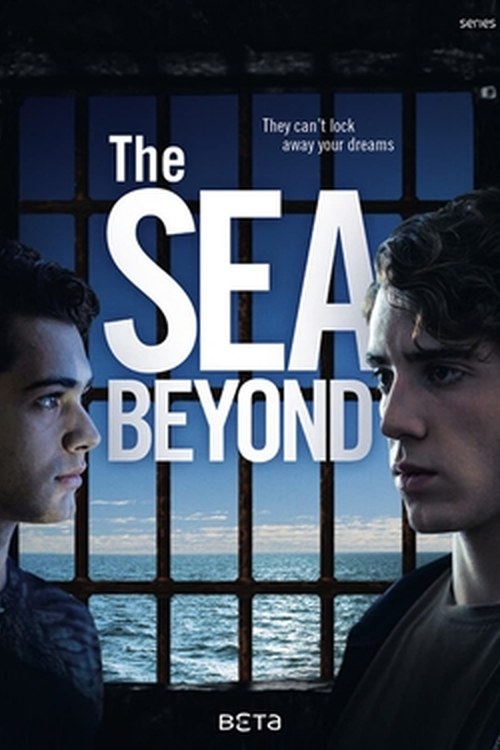
Mare Fuori · Season 1 · Episode 1 · 19 February 2020
S1E1 Broken Lives
A command-driven opener that turns rules into threats, even when its connective tissue feels a touch thin.
THE MOMENT The first view of the sea from behind the facility's walls - the image that gives the show its title and its recurring emotional anchor.
The premiere sets up the institution's social architecture efficiently - the hierarchy among inmates, the staff members trying to do meaningful rehabilitation work, the way the facility sits physically at the edge of the sea it cannot reach. The dual-arrival structure of Carmine and Filippo grounds the ensemble in contrast rather than similarity.
Full episode analysis below. Spoiler-light verdict above.
Updated
Someone orders the crew to open the genoa, and the hour begins with bodies responding to command. No warm hand on the shoulder. No long welcome mat. A voice gives an instruction, people move, and within minutes another voice reports that Vito has been stabbed. The wound is superficial, but the episode has already set its grammar: orders first, consequences second, explanations later.
The premiere works best as a pressure chamber where language keeps becoming violence. Every major beat is someone telling someone else where to stand, what to do, who stole, who stabbed, who matters.
Commands Before Consequences
The opening does not begin with biography. It begins with force. Unknown says, "Guys, ready to open the genoa! Force!" That line could have played as quick activity before the drama arrives. Instead, it becomes the episode's operating system. Movement happens because someone barks. A group takes shape because someone commands it.
Then comes the report: Vito has been stabbed. The medic's update, that the injury is superficial, gives the scene restraint. The show does not need a dying body for the environment to feel dangerous. It gets more from the gap between medical fact and social meaning. If the wound is shallow, the act still cuts into the order of the place. Someone has crossed a line, and the hour makes that line matter more than the blood.
That is the premiere's sharpest instinct. It treats violence less as spectacle than as proof of a system already running hot. The stabbing is an alarm. Every later argument about rules and respect now happens inside a place where threats have turned into action.
There is a cost to the speed. Because the episode moves so quickly from command to injury to procedure, the stabbing functions more as a trigger than a fully shaped dramatic event. Still, as an opening strike, it does the job. It tells the hour to stop standing still.
Carmine Is Pushed Into Someone Else's Code
Carmine gives the episode its cleanest contradiction. He wants to be left alone, to avoid being forced or abused, but the environment gives him no neutral corner. The work-area confrontation makes that plain. "This is not your area" is territorial, and it is also a warning that space has owners. Carmine has entered a map where he did not draw the borders.
The rule language tightens around him. Unknown asks, "Didn't your brother teach you the rules? Do you understand?" That is a nasty line because it frames violence as education. Carmine is being told he has failed to know something everyone else claims to know. The appeal to his brother makes the threat personal without requiring a full backstory. It turns family into leverage.
The episode's best work here is escalation. Carmine's denial and appeal do not slow the machine. They feed it. The stated drive to "make ourselves respected" becomes the ugliest phrase in the hour because respect is presented as something extracted through fear. By the time the confrontation reaches lethal intent, the moment has an awful logic. The command "Kill him" is blunt, almost stripped of drama, which is why it lands. The language has been reducing Carmine to an object in someone else's lesson.
The limitation is clear. The episode sketches Carmine's trap more sharply than it shades his interior life. The contradiction is strong, but the beat material leans hard on external pressure. For a premiere, that can work. It makes him a body caught in the gears. Later episodes will need to let him become more than the person those gears grind against.
Ezio's Discipline Comes With a Locked Jaw
Ezio enters through control. His concern is household behavior, rules, readiness, coffee, work demands. That sounds ordinary on paper, almost domestic, until the premiere places it beside the wider pattern of commands and punishments. Discipline stops being background texture. It becomes another version of the same question: who gets to tell another person how to live?
The hour does not need Ezio to mirror the violence beat for beat. His function is more precise. He gives the episode a grounded form of control, the kind that arrives through routines rather than attacks. Coffee must be ready. Work must be met. Rules must be observed. In a less charged episode, that could play as simple strictness. Here, it resonates because the hour is built on the friction between obedience and survival.
That makes Ezio useful to the structure. The prison-related beats could have swallowed the premiere, but this domestic-control thread suggests that the demand for compliance extends beyond one setting. Carmine's problem is not just that one confrontation turns violent. His problem is that every authority he encounters seems to have a script ready for him.
This is where the episode shows discipline in its less cinematic form. No stabbing, no shouted lethal order, just a person insisting that life has rules and that Carmine had better be ready for them. The show is sharper when it lets that ordinary hardness sit next to open threat. It understands that control does not always announce itself with blood.
Theft Turns Suspicion Into Traffic
The stolen wallet accusation arrives and gives the hour a second current of conflict. "He stole my wallet" is a smaller claim than a stabbing, but the episode knows how accusations move in a confined environment. A theft claim creates noise. It asks for witnesses, allies, targets. It also gives people permission to test power under the cover of grievance.
The later open loop around stolen watches and wallets matters because it suggests the premiere is laying a network of suspicion rather than a single mystery. The stabbing asks who committed violence. The theft dispute asks who can be blamed, who can be cornered, who can turn a complaint into leverage. That is a different kind of danger, and the episode benefits from the contrast.
Then the business walkthrough begins with instruction and attention. The placement is telling. After accusation comes organization. After panic comes a guided procedure. The show keeps returning to chaos feeding procedure. One person shouts theft, another starts explaining how things work, and the hour keeps moving as if each impulse belongs to the same engine.
This is also the stretch where the premiere feels thinnest in the available beats. The pivot from theft claim to business walkthrough is conceptually clean, but emotionally less forceful than the Carmine confrontation. It functions. It plants. It does not hit with the same pressure. Still, as setup, it has value. The hour is mapping a place where property, blame, work, and threat travel through the same corridors.
Massimo's Order Meets the Hour's Last Question
Massimo Esposito is the episode's institutional counterweight. He wants to run the prison arrival and procedures, organizing meetings and establishing his role as director or commander. That matters because the premiere is full of people trying to control smaller territories. Massimo's territory is the system itself.
His introduction through procedure gives the episode a spine. If Carmine is being pushed through rules he did not choose, Massimo is the figure trying to make rules hold. The hour does not present control as automatically successful. It presents it as a performance that must be repeated, organized, enforced. Meetings have to be arranged. Arrival has to be managed. Authority has to be made visible.
That is why the late killer-identification beat is a smart door to leave open. The line, "Who is that asshole?", points toward Nazario and keeps the final movement from becoming tidy. The question is crude, immediate, and unfinished. It does not close the case. It sharpens the next one. In an episode built around commands, the final energy comes from uncertainty.
As a season opener, this is the correct kind of incompletion. The premiere plants four workable engines: Vito's stabbing, Carmine's forced respect ordeal, the stolen watches and wallets dispute, and the identity connected to Nazario. Carmine's engine is the most vivid because it has the clearest body in danger. But the hour understands pilot construction: give enough answers to define the world, and enough questions to keep it unstable.
The Verdict
"Mare Fuori" S01E01 is a solid, forceful opener with a clear craft idea: command is the first form of violence. The episode is at its best when Carmine is trapped inside other people's rules, because those scenes turn abstract words like respect, area, and discipline into immediate danger. Massimo's procedural control gives the hour shape, while the theft and killer-identification threads plant useful season business.
The weakness is connective weight. Some transitions feel more functional than felt, especially around the theft and walkthrough material, and Carmine's interior life is still thinner than the pressure placed on him. Even so, the premiere earns a strong foundation. It starts with motion, escalates through language, and leaves its final question hanging.