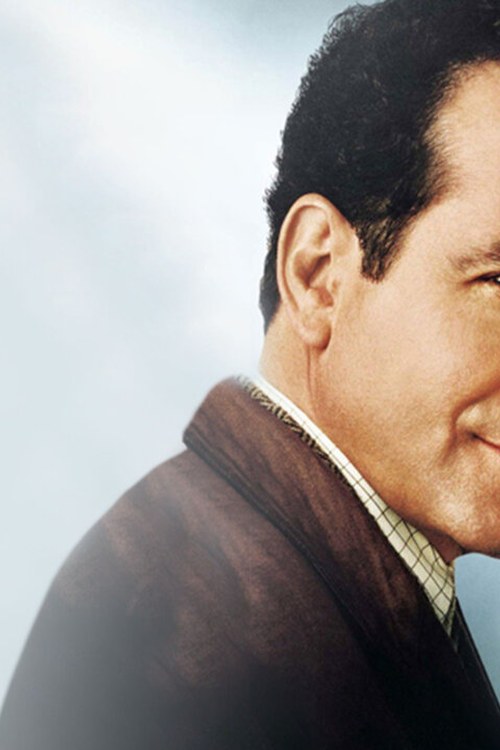
Monk · Season 1 · Episode 1 · 12 July 2002
S1E1 Mr. Monk and the Candidate
A sharp pilot that turns Monk’s restrictions into engine, even when the campaign suspects behave like puzzle pieces.
THE MOMENT Monk solving the case through an observation no other detective would have noticed - and then being unable to shake the hand of the person he just saved.
The two-part premiere establishes Monk's world with confident economy: his OCD rituals, his assistant Sharona's exasperated loyalty, his relationship with the SFPD, and the unsolved murder of his wife Trudy that runs as the show's long-form emotional thread. The pilot case is credible and the character dynamic is fully formed from the first scene.
Full episode analysis below. Spoiler-light verdict above.
Updated
The stove might be on. The gas might be leaking. The apartment might have been entered, but not for burglary. In the first minutes, Adrian Monk turns panic into procedure: knob checks, smell checks, behavior checks, the tiny forensic weather of a room everyone else would hurry past. That is the pilot's cleanest idea. Monk arrives as a man trapped inside the same attention that makes him useful. Every limit placed on him becomes a clue machine.
The Detective Who Cannot Stay Quiet
The episode's sharpest conflict arrives before the campaign case fully opens: the captain wants Monk close enough to be useful and quiet enough to be manageable. At the campaign event, Monk is allowed in with a condition. Once inside, he cannot speak. It is a deliciously impossible order for this character, because the hour has already taught the grammar of his mind. He notices, sorts, corrects, interrupts. Silence functions as a muzzle.
That tension gives the pilot its spine. Monk wants reinstatement, or at least a path back through consulting, while the institution wants only the parts it can control. The captain's instruction sounds practical and reveals the larger bargain: the police want deductions without disruption. The episode keeps proving that bargain cannot hold.
The writing earns its central engine by showing Monk's process first through domestic alarms: the stove, the smell of gas, the insistence that an intruder behaved in a specific way. By the time he reaches the political space around Warren St. Claire, the rhythm is clear. Monk sees behavior as residue. People leave fingerprints even when they do not touch anything.
The hour is less elegant when it has to explain the campaign machinery around him. Some candidate material moves like plot furniture being pushed into position. But the character engine is exact enough that the furniture lands where it needs to.
The Room Says No Burglary
The opening deduction sets the terms of the whole episode. Monk says the incident was not a burglary and describes what the intruder actually did. The case turns on his refusal of the wrong category.
That is an underrated pilot move. Many first episodes sell a detective through a spectacular reveal. This one sells Monk through correction. A burglary is a convenient label. An accident is a convenient label. Later, when Monk rejects the accident framing and insists the victim was killed elsewhere, the pattern sharpens: the official explanation keeps arriving too quickly, and Monk keeps slowing it down.
A procedural lives or dies by how satisfying its pivots feel. Here, the line from stove anxiety to crime-scene skepticism is clean. Monk does not switch modes. His private fear and his investigative gift run on the same circuitry. When he concentrates because he thinks he smells gas, the beat is anxious, funny in its precision, and useful to the larger portrait. The man cannot turn it off. The case benefits. Monk pays.
That cost matters. Without it, the pilot would risk making him a neat eccentric device. The hour avoids that by keeping his attention abrasive. It irritates authority. It slows rooms down. It makes simple answers look lazy. The pleasure is not that Monk is always right. The pleasure is that he makes the wrong answer feel embarrassed to be there.
A Candidate Built From Control
Warren St. Claire enters as a man trying to manage the story around him. He wants threats minimized, the shooting contained, and his own movements protected. The key contradiction is blunt: he lies about where he was and withholds cooperation. That gives the plot enough friction, even when the hour gives him less interior charge than Monk.
The political setting is a smart pressure cooker for this pilot. Campaign spaces depend on performance. People manage entrances, language, optics, and access. Monk is terrible for that ecosystem. He follows the irregularity. He cares about the thing that does not fit. The room wants message discipline. Monk wants the truth of the floorboards.
Mrs. St. Claire gives the hour another kind of resistance. She wants the case treated seriously without Monk, pushes back against sending him in, and later says she knows the shooter. Her skepticism helps the episode avoid making Monk's return feel too easy. He is not welcomed as a savior. He is a risky instrument, and the people around the candidate understand the risk even when they disagree about where it points.
This section also exposes the pilot's weaker mechanics. The campaign players sometimes operate more as pressure points than as people. Warren's evasions do the job. Mrs. St. Claire's pushback does the job. The mystery needs them to take turns opening and closing doors. The seams show, but they serve the main argument: in a world built to control narrative, Monk is valuable because he cannot leave a false one alone.
Trudy's Keys, The Case's Heartbeat Monk insists on retrieving Trudy's key chain keys. It is a small object beat with more emotional weight than a longer speech would have carried. The pilot does not need to explain the whole grief map. It places the key chain in Monk's hand and lets persistence become personal.
That matters because the episode could have reduced him to habits. Stove. Gas. Order. Clues. Instead, the key chain gives the investigation human gravity. The same mind that catalogues intruder behavior also clings to an object tied to loss. His attention is wounded, not decorative.
The hour uses this emotional note with restraint. It does not stop the case so Monk can announce pain. It lets the pain travel through action. He retrieves. He continues. He sees the investigation through. That makes his later certainty about the supposed accident feel less like cleverness and more like moral refusal. If the facts say a person was killed elsewhere, the easier story has to die.
The open loops around Nicole Vasques, Ian Sykes, and the question of who hired whom give the pilot a larger investigative net. The episode plants the possibility of a shared perpetrator or hiring chain without pretending every answer has landed. That is good serial discipline for a first hour: close enough to reward the case, open enough to make Monk's return feel necessary beyond one campaign crisis.
The Gunfire Finally Catches Up
The final tactical stretch accelerates into shooting, hostage pressure, and search beats. After an hour built on observation, the shift into action could have felt like a costume change. It mostly works because the episode keeps Monk's logic alive inside the chaos. he explains why he told them to shoot: he was aiming high. The detail is practical, odd, and perfectly aligned with the hour's character thesis.
Monk does not become a different kind of hero under pressure. He remains precise. The final beat pays off the pilot's interest in angles, categories, and small distinctions. High versus low. Accident versus murder. Burglary versus intrusion. Cooperation versus control. The episode trains the eye to respect difference, then turns that respect into survival.
The pacing shift is not seamless. The early stretch is dense with investigative micro-detail, and the later movement jumps into louder tactical exchanges. The silence gaps in the hour's structure help, giving the episode space before it speeds up, but the back half still carries the feeling of a pilot proving it can handle more than one register. The ambition shows at the seams.
Even so, the ending understands the character. Monk's value is not brute courage, though the episode gives him a crisis to stand inside. His value is calibrated perception under conditions that would make cleaner heroes flatten the room. He notices. He insists. He survives by turning exactness into action.
The Verdict
"Mr. Monk and the Candidate" is a strong pilot because it builds its mystery out of its hero's limitations instead of decorating a standard case with quirks. The captain's order that Monk stay silent becomes the perfect first conflict: the department wants the answer without the disturbance that produces it. The campaign plot is sometimes more functional than rich, and a few supporting figures behave like puzzle locks waiting for Monk's key. But the hour's craft is sturdy where it counts. The stove anxiety, gas suspicion, Trudy's keys, false accident framing, and final high-aim explanation all point to the same idea: Monk's burden is his method. As a season opener, it leaves one clear question. Can this man return to the work without being destroyed by the attention that makes him brilliant?