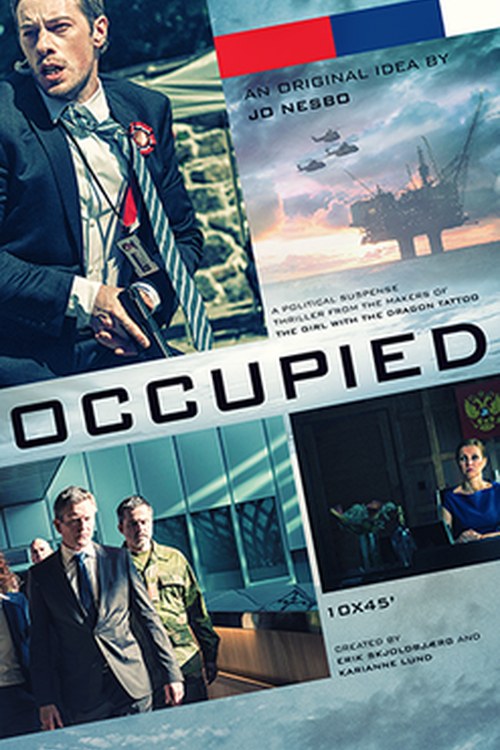
Occupied · Season 1 · Episode 1 · 4 October 2015
S1E1 April
A sharp crisis pilot where procedure creates fear, even when late policy exposition slightly slows the squeeze.
THE MOMENT The first sight of Russian military presence on Norwegian soil, framed through the bureaucratic language of a 'joint security arrangement' - the show's thesis stated in a single scene.
The premiere builds its near-future Norway with enough mundane detail to make the occupation's arrival feel like a political inevitability rather than a sci-fi event. The show is most interested in the institutional capitulation - how governments, diplomats, and journalists decide to accommodate rather than resist.
Full episode analysis below. Spoiler-light verdict above.
Updated
Oscar 3-0 disappears into the air, and the room below starts speaking faster than it can think. A kidnapping is announced. Djupvik catches sight of the helicopter, tries to turn observation into control, then the situation slips past the line of contact. The hour’s central trick is clean: it makes a national emergency feel like a paperwork fight conducted at gunpoint. Occupied opens by asking who gets to define a crisis when the facts are still moving. Its answer is bleak and politically nasty: the person with the procedure may matter more than the person with the truth.
A Helicopter Vanishes, Procedure Grabs the Wheel
The pilot begins with institutional noise before it becomes a thriller. A news report says PST has apprehended three men suspected of terrorism. At Government Headquarters, the Chancellor of Germany is on the line, and even that call is fenced by restricted access. Security rules have already narrowed the world before the kidnapping arrives.
That matters because the helicopter sequence does not play as a clean action beat. It plays as a communications failure. Djupvik wants to provide updates, to make himself useful inside the emergency, but his information is visual, partial, and vanishing. When asked for a perpetrator description, he says, “I see the helicopter,” and hangs up. The line is basic, almost clumsy, which is why it works. He has no theory. He has a moving object.
The episode’s strongest early choice is its refusal to make the crisis legible too quickly. The dense dialogue around the kidnapping and meeting scenes turns people into channels: reporting, asking, correcting, deciding. Nobody owns the full picture. That is the pilot’s real suspense. The question is where the helicopter is going, but the sharper pressure is whether a government built on procedure can move fast enough when procedure becomes the battlefield.
The Frøy Platform Widens the Trap
The hostage report on the Frøy platform escalates the hour. Until then, the kidnapping can still be processed as a contained crisis, a frightening event with a chain of response. The platform changes the threat. An armed group has taken over a strategic site, and the episode links personal danger to national infrastructure without pausing to underline it.
This is where the pilot shifts from rescue story to sovereignty story. The Norwegian continental shelf matters as prize and pressure point, the thing everyone speaks around while pretending to speak only about safety. The line “We must not escalate the situation” becomes the operational mood of the hour. It sounds sensible. It also sounds like a door being closed from the outside.
The writing understands how fear enters bureaucracy. Nobody needs a panic speech. The debate over help does the work. When one voice insists that they are not getting help, the episode snaps its argument into focus: independence is easy to declare until an emergency exposes the limits of your reach. The pilot is at its best when it lets that humiliation sit in the room without melodrama.
Where the episode strains is in the handoff from action pressure to policy explanation. The later sections slow down. Some of that calm is useful, but the gear change shows. The pilot has earned the right to talk geopolitics. It still talks a little too plainly once it gets there.
Jesper Berg Chooses Control Over Clarity
Jesper Berg is drawn through contradiction, the right approach for a political lead in this kind of story. He wants to control proceedings during the crisis. Later, he claims the kidnapping should not be pursued and speaks for the response procedure. That shift is the episode’s most revealing character pressure.
Berg’s instinct is managerial, and the pilot makes that instinct dangerous without turning him into a cartoon. During a crisis, control can look like leadership. It can also look like denial with better stationery. When the room follows the Prime Minister as the decision rule, the show places authority above certainty. People need someone to obey before they know what they are obeying.
That is the hour’s cold political intelligence. Berg does not need to be cowardly for his choices to carry risk. He only needs to believe that maintaining the process is the same as solving the problem. The kidnapping, the platform takeover, and the restricted calls push him toward a narrower version of power: say less, decide faster, keep the machine intact.
The pilot respects the seduction of that position. It understands why leaders reach for procedure when events become humiliating. It also understands that procedure can become a beautiful hiding place. Berg’s control has weight because it is plausible. The episode shows a man discovering that restraint can be used against him.
Thomas Eriksen Refuses the Official Silence
If Berg represents the official response, Thomas Eriksen is the itch the response cannot scratch. His central contradiction is blunt: he wants an exclusive, accurate story about the new situation, even if others want him to let it go. He says the earlier disappearance was no exercise, insists he will write anyway, and has photos. In a quieter episode, that would read as journalistic hustle. Here, it becomes another form of pressure.
Thomas wants access to information and an interview, then tries to claw his way back into the story after asserting that the event was real. His function is essential. The pilot needs him because secrecy cannot be dramatic unless someone keeps testing its edges. Without Thomas, the crisis rooms would collapse into official language. With him, the hour gains a public-facing nerve.
The writing gives him useful stubbornness. He is not framed as a pure truth machine. He wants the story. He wants the scoop. He wants to publish. That self-interest makes him more credible inside the episode’s moral weather. Everyone here has a procedure. Thomas’s procedure is pursuit.
His scenes also give the pilot a needed texture shift. After the dense crisis chatter, his push for access lets the episode breathe while keeping the stakes active. Information is treated as a contested object, not a neutral resource. The government wants containment. Thomas wants proof. The clash is simple, and the simplicity pays.
Russian Assistance Is the Calmest Alarm Bell
The final policy turn lands with unsettling quiet. By the end, the government leader says they have agreed to Russian assistance in reopening the Norwegian continental shelf. After the helicopter, the Frøy platform, and the debate over help, the decision arrives in slower, calmer dialogue. That tonal drop is the point. The episode begins with emergency motion and ends with a sentence that may be more consequential than the kidnapping itself.
This is the pilot’s strongest structural move. It converts a thriller incident into political dependency. The opening news report about suspected terrorism primes one expectation. The armed takeover suggests another. The final agreement points toward a bigger trap: a state may survive the immediate crisis by accepting the terms of a larger one.
The open loops do real work. The armed group’s identity and motive remain unresolved. What happened during the helicopter sequence after Djupvik loses contact remains unclear. Most importantly, the Russian assistance may avert escalation or trigger it under a cleaner name. The episode plants those questions without pretending to answer them.
There is a cost. The pilot withholds enough that some character edges remain functional rather than full. Petter, glimpsed early in a small domestic beat about eating on the way, registers more as everyday texture than as a developed force in the hour. Still, that ordinary detail helps the episode’s larger design. Politics interrupts normal life before anyone has time to finish breakfast.
The Verdict
Occupied opens with a disciplined, chilly pilot that understands the terror of partial information. Its action is modest, but its procedural tension is sharp: a helicopter disappears, a platform is seized, and the government’s language becomes a battlefield. The weakness is the late explanatory stretch, where policy dialogue slows the pulse after a stronger first half. The trade is worth it because the final turn reframes the crisis with purpose. BollyAI’s read: this is a very good opener, smart about power, secrecy, and the price of asking for help. As a season starter, it plants the essential question cleanly: whether Russian assistance is rescue, leverage, or the beginning of a longer occupation.