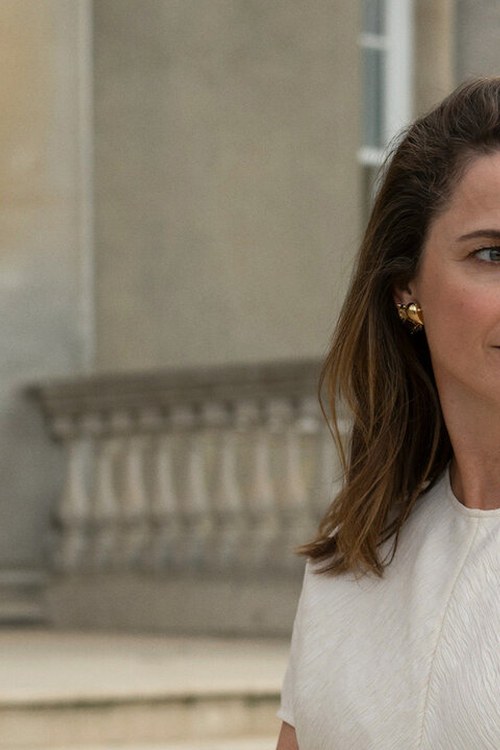
The Diplomat · Season 1 · Episode 2 · 20 April 2023
S1E2 Don't Call It a Kidnapping
S01E02 narrows the crisis to Kate’s leverage problem, proving her marriage is not background noise but the thriller’s operating system.
The hour lands on a deceptively domestic choice: **Kate Wyler** tries to control the narrative through protocol, then the marriage problem steamrolls the same space her diplomacy needs. The episode doesn’t broaden the geopolitical threat so much as it sharpens the pressure points
Full episode analysis below. Spoiler-light verdict above.
Updated
H1: The Diplomat S1E2: "Don't Call It a Kidnapping" Review
spoiler_free
The hour lands on a deceptively domestic choice: Kate Wyler tries to control the narrative through protocol, then the marriage problem steamrolls the same space her diplomacy needs. The episode doesn’t broaden the geopolitical threat so much as it sharpens the pressure points inside the embassy, where charm can look like strategy and leaks can look like “help.” BollyAI's read: this is the second episode doing the real work of Season 1. It teaches you that the crisis isn’t only the attack in the headlines. It is the one in the room with her husband.
review_body
### COLD-OPEN A sudden escalation in London is treated like an operational problem with an operational solution, and Kate Wyler moves with the confidence of someone who has never needed luck. Then the hour makes the correction that matters. The information she needs arrives through channels that are never truly clean, and the person who can clarify it is the same person who will complicate everything. Ethan Wyler is not introduced as a villain in a suit. He is introduced as a shortcut, and shortcuts cost you.
### THESIS S01E02 proves that Kate’s biggest threat is not the geopolitical timeline. It is her inability to firewall her private life from her public leverage. The writing builds this by repeatedly forcing her to choose between control and credibility, and by letting Ethan’s “help” poison the very methods she relies on.
The Polite Crisis: Protocol as Performance
This episode’s first trick is to make diplomacy feel like theater without letting it become parody. Kate Wyler is introduced and re-verified through action, not speeches: she anticipates what a briefing will sound like, she paces conversations to the tempo that makes her look prepared, and she uses process as armor. That’s the show’s core idea in miniature. Kate’s competence is not just in what she knows. It’s in how she makes other people feel like knowing the same thing as her.
But S01E02 uses that competence as the setup for humiliation. It shows the one place protocol cannot protect her. The embassy is a machine that runs on information. Kate treats information like fuel. Ethan treats it like a social currency. When his approach collides with her need for clean lines, the hour turns every “minor” interaction into a political event. The episode also makes a craft point: it keeps returning to the idea that credibility is a scarce resource. You can survive a mistake. You cannot survive repeated uncertainty.
So even when the episode touches the wider crisis, it does so through Kate’s lens. Not “What is happening in the world?” but “What does this mean for what I can truthfully say to whom, right now?” That is why the episode feels tight. It treats statecraft as human management, and then it tests how well Kate manages the one human she has to share oxygen with.
A Husband Who Treats Secrets Like Social Grace
Ethan Wyler in this hour is the perfect kind of problem. He is not loud. He is not cartoonish. He is charming enough to make his interference feel like a kindness. The writing leans into the danger of that vibe. Ethan’s meddling does not arrive with malice. It arrives with confidence. He steps into rooms as though he belongs there, and he speaks as if his instincts are equivalent to evidence.
This is where the episode gets its sharpest edge. Kate’s whole method is controlled disclosure. She parcels information, calibrates tone, and stays aware of what each person in the chain can weaponize. Ethan flips that. He shares, implies, and “connects” in ways that turn ambiguity into leverage for other people. S01E02 frames his charm as a geopolitical risk multiplier, because it erodes Kate’s ability to be the author of the narrative.
And the episode is smart about how it lands the blow. It does not punish Kate with a single dramatic reveal that instantly ruins her life. It punishes her with a slow mismatch between what she believes she has contained and what other people interpret as access. The marriage conflict here is not just romance trouble. It is a conflict between two operating systems. Kate runs on restraint. Ethan runs on improvisation, and improvisation is the first cousin of negligence in a crisis.
By the end of the hour, Ethan’s presence feels like a leak that never actually stops leaking. That is the episode’s real villainy: not Ethan doing something bad once, but Ethan doing normal Ethan-things inside a job that punishes normal.
The Embassy Learns Her Weak Spot
If the show’s season engine is Kate’s professional survival, S01E02 is where the engine gets a new sensor. Kate Wyler spends the hour trying to project authority, but the writing makes authority look fragile. The embassy staff and the allied figures around her respond to competence the way a system responds to stable input. Then Ethan injects noise into the signal. People begin to hedge. Conversations become performative. Requests come with subtext.
BollyAI’s read: this episode understands that political institutions punish unpredictability more than they punish errors. A wrong memo is bad. An unreliable briefing chain is worse. And because Ethan’s behavior invites interpretation, it makes Kate’s chain of trust look imperfect even when her facts are solid.
The episode also plays with how Kate tries to repair damage. She does not panic. That’s a strength. But her calm sometimes reads as denial, because other people see the consequences before she admits the problem exists. The writing gives Kate a few beats where she tries to “fix it” through additional control. That impulse is understandable. It’s also the thing that makes her least effective. In a thriller, the best way to catch someone like Kate is to give her a problem that looks solvable with the tools she trusts.
S01E02 ends up arguing that Kate’s real vulnerability is not ignorance. It is access. She is good at reading rooms, but she cannot read the way Ethan’s presence rewrites those rooms. The embassy stops treating her as an untouchable expert and starts treating her as a person who has to manage a variable she cannot discipline.
Pacing as a Weapon: Narrow the World, Sharpen the Knife
The geopolitical threat hovering over Season 1 is big by design: an external crisis with the potential to turn into war. S01E02 does not chase scale. It compresses it. The episode’s tension comes from sequencing. It sets up a problem as a matter of timing and then reveals the real antagonist is character-driven delay, where the wrong conversation happens at the wrong moment and the wrong person learns the wrong thing in the wrong tone.
This is why the hour feels like it’s building momentum without “going bigger” in plot terms. It treats time like an adversary. Kate thinks in deadlines. Ethan thinks in opportunities. The conflict between those tempos creates the thriller’s electricity. Even scenes that could feel like relationship beats keep snapping back into the question of operational consequence.
At its best, the episode’s pacing makes Kate’s competence more impressive and more tragic at once. Impressive because she can still operate. Tragic because she has to operate while the ground rules keep shifting under her. BollyAI’s read: the writing earns its tension by making the audience do the arithmetic Kate is forced to do in real time. Every small social beat is counted as information movement.
The one concrete criticism is that the episode occasionally leans on Kate’s frustration as a shortcut to stakes instead of letting the consequences fully emerge within the scene. Some moments land more as “proof of pressure” than “proof of transformation.” Still, the overall structure is clean. The hour’s narrow focus makes it easier to feel how a single compromised relationship can distort the whole diplomatic machine.
The Hero Stops Pretending
S01E02 has an understated character turn for Kate Wyler. She arrives with an implicit belief that professionalism can compartmentalize her life. By the end, the hour has shown that compartmentalization is a fantasy you can only afford when the people closest to you play by the same rules. Kate’s method is disciplined, and this episode tests whether discipline can substitute for control.
It cannot. Not fully. The show uses the marriage conflict as the mechanism that converts private risk into public consequence. That conversion is the transformation. The episode makes Kate less certain, not less competent. She remains effective. She just becomes more aware that effectiveness depends on boundaries, and boundaries are social agreements, not personal preferences.
Season-arc wise, this is crucial. Season 1 is built around Kate being the load-bearing asset, the person who understands how to keep the machine from breaking. S01E02 plants the idea that the machine will break in a way that is personal first. If she loses her leverage, it won’t be because she forgot protocol. It will be because she cannot control what protocol means when Ethan walks into the room.
The Verdict
S01E02 is a pressure-cooker episode that tightens the thriller’s spine around Kate’s real Achilles heel: her inability to firewall her marriage from her diplomacy. The hour doesn’t just add complications. It translates Ethan’s charm into operational damage, and it shows how institutions react when trust becomes negotiable. Where the writing is strongest is the pacing logic. It makes time and sequencing feel like weapons, so every seemingly small social beat carries weight.
If Season 1 is asking how a crisis can trigger war, this episode answers the more immediate question: how do you keep your credibility when your closest partner treats secrecy like a vibe? BollyAI's read: the season’s geopolitical plot is the headline. The emotional plot is the engine.