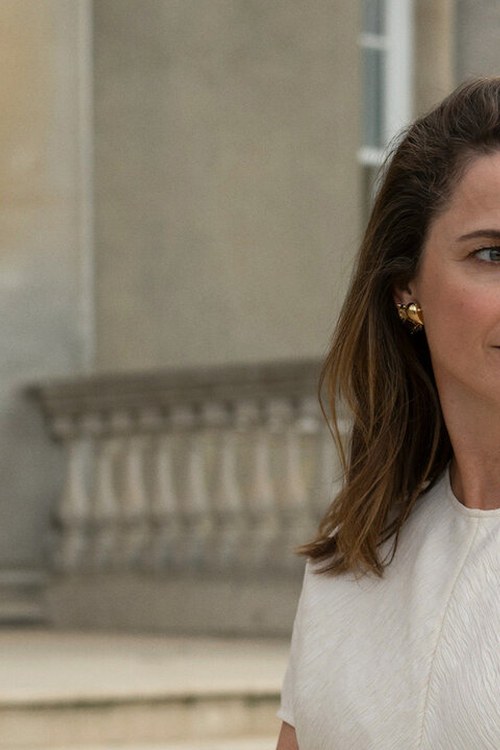
The Diplomat · Season 1 · Episode 6 · 20 April 2023
S1E6 Some Lusty Tornado
S01E06 turns diplomacy into a trust test, where Kate’s brilliance accelerates the danger and Stephen’s access quietly edits her reality.
The hour opens on **Kate Wyler** choosing speed over finesse. A message lands that is both urgent and oddly specific, the kind of political breadcrumb meant to control how fast you panic. Then the machinery of the embassy turns, not with a clean plan but with a chain of second-gu
Full episode analysis below. Spoiler-light verdict above.
Updated
The Diplomat S1E6: "Some Lusty Tornado" Review
Spoiler-light verdict above. Full episode analysis below.
### COLD-OPEN The hour opens on Kate Wyler choosing speed over finesse. A message lands that is both urgent and oddly specific, the kind of political breadcrumb meant to control how fast you panic. Then the machinery of the embassy turns, not with a clean plan but with a chain of second-guessing. In the background, Stephen Wyler keeps orbiting the crisis like a man who believes access is the same thing as leverage. The pressure is real. The question is whether Kate can stay the diplomat the job requires, or whether the personal cost finally becomes the plot.
### THESIS S01E06 works because it makes the diplomatic crisis feel like a relationship problem first: every strategic move is also a test of trust, and the episode’s tension comes from who Kate can afford to believe in the middle of war.
The Leverage Game in a Marriage That Won’t Behave
Kate Wyler has always been written as a woman who treats emotions like classified material. She wants control because control is the only way she can prevent chaos from taking her job, her husband, and eventually her credibility. This episode turns that instinct into the central battleground: her marriage is not a subplot. It is a rival agenda structure, always ready to re-route her priorities.
Stephen Wyler is charming in the way that makes people underestimate him, and dangerous in the way that makes Kate do the opposite. The episode presses on the same contradiction the series has relied on from the start: Stephen believes his social fluency can smooth the geopolitical edges, while Kate believes fluency is how you smuggle problems into the room and call it diplomacy. Here, that disagreement has consequences that don’t feel metaphorical. It shows up in decisions Kate has to defend, calls she has to make quickly, and boundaries she tries to hold while Stephen keeps treating boundaries as suggestions.
BollyAI's read: the writing is at its best when it stops pretending that “love and politics” are two separate story engines. They’re the same engine, just fueled by different lies. Kate is trying to win a war of information. Stephen is trying to win a war of access. The episode doesn’t let either win cleanly.
The Embassy as a Pressure Cooker, Not a Command Center
The Diplomat often stages its tension inside rooms where everyone speaks in careful sentences. This hour adds a different texture: the embassy feels less like a command bunker and more like a system that can misfire when one component hesitates. Kate’s competence is never in question, but the episode suggests competence is not the same thing as certainty.
The writing leans into how policy work actually feels in a crisis. People don’t just “know” what to do. They interpret signals, they bargain with risk, they trade favors to buy time. The episode uses that to keep the thriller momentum without relying purely on shocks. Even when the plot nudges toward escalation, the craft is in how Kate has to translate uncertainty into action.
BollyAI's read: the episode’s most chilling idea is that Kate’s job does not grant her immunity from misreading the room. Her advantage is that she notices how rooms lie. The drawback is that noticing doesn’t stop the lie from spreading. When the embassy becomes a place where the wrong assumption travels faster than the truth, the episode turns procedure into suspense.
When “Knowing” Becomes a Trap
Kate’s gift has been her ability to cut through noise. But in S01E06, the script plays a harsher game. It asks what happens when knowing is not power but exposure. Every time Kate turns a piece of information into a tactical plan, the episode frames an immediate follow-up threat: the plan may be correct, but it might still be compromised by intent she cannot see yet.
That is the episode’s mood shift. Earlier episodes make competence feel like a stabilizer. Here it becomes a blade. Kate can do the job, but she cannot fully control what other people are doing under her name, with her clearance, or through her relationships.
BollyAI's read: this is where the hour earns its thriller framing. The tension isn’t only “will the world explode.” It’s “will the person closest to Kate be the one who changes what the information means.” When the show treats facts as something that can be weaponized, the suspense stops being about action beats and becomes about interpretation beats.
The Episode’s Cruel Humor: Politeness as a Weapon
One of the series’ sharpest trademarks is how it treats manners like camouflage. People say the “right” things. They smile at the “right” moments. They hide behind diplomatic tone, and the tone becomes the weapon because it slows everyone else down.
S01E06 leans into that with Kate Wyler trying to outlast social strategy. She is not only negotiating with other officials. She is negotiating with the habits of institutions and the habits of a husband who can talk his way into trouble without seeming to notice the trouble leaving a trail.
BollyAI's read: the episode’s coldest comedy is that Kate keeps trying to solve the crisis with seriousness, while the people around her solve it with performance. She thinks seriousness is respect. The show keeps proving seriousness is also vulnerability.
Who Kate Can Trust When Everyone Wants to Be the Author?
The episode’s final stretch tightens the thesis. Trust becomes an actual story mechanism rather than a theme. Kate’s decisions begin to look less like “what is the best policy move” and more like “who is trying to author my next move.”
Stephen Wyler continues to function as a variable Kate cannot fully bracket. Even when he is technically aligned with her goals, his methods are destabilizing. He draws attention. He shifts power dynamics. He creates second-order consequences that do not show up in the official messaging.
By the end, S01E06 positions Kate at the most dangerous intersection of the series’ core promise: she is a policy professional thrown into politics-as-theatre, and now her personal life threatens to convert her into theatre as well.
BollyAI's read: the hour ends with a sense that the next escalation will not only be military or diplomatic. It will be relational. The geopolitical crisis may be the headline, but Kate’s credibility is the battlefield the show has been moving toward.
The Verdict
S01E06 is one of the season’s more efficient hours because it makes the thriller mechanics serve a character argument. Kate’s competence does not save her. It only makes her target clearer. The episode treats trust as the real currency in a diplomatic emergency, and it uses Stephen’s meddling charisma as the way the personal becomes geopolitical without changing the genre.
Season-arc payoff: this hour pushes Kate closer to the point where competence alone is not enough, because the conflict now includes not just a potential war, but the internal sabotage of how decisions are shaped around her. The series is tightening its spiral: the closer the crisis gets to resolution, the harder it becomes for Kate to control what “winning” even means.