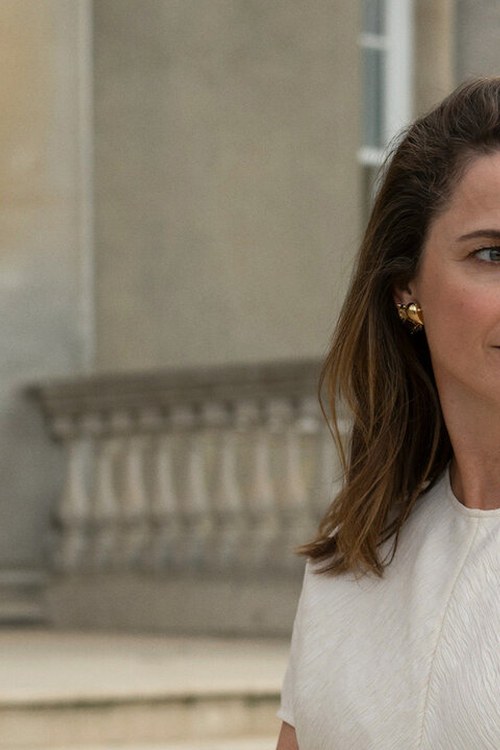
The Diplomat · Season 2 · Episode 5 · 31 October 2024
S2E5 Our Lady of Immaculate Deception
S2E5 tightens the thriller clock around a domestic fault line, proving that in this world truth without control turns into isolation.
The hour opens on the kind of diplomatic math that only becomes visible when it stops working. A plan is set in motion, the briefing language stays clean, but the situation refuses to behave. A phone call lands with just enough ambiguity to be dangerous. Someone makes a choice th
Full episode analysis below. Spoiler-light verdict above.
Updated
The Diplomat S02E05: "Our Lady of Immaculate Deception" Review
Spoiler-light verdict above. Full episode analysis below.
### COLD-OPEN The hour opens on the kind of diplomatic math that only becomes visible when it stops working. A plan is set in motion, the briefing language stays clean, but the situation refuses to behave. A phone call lands with just enough ambiguity to be dangerous. Someone makes a choice that sounds procedural in the moment and reads like a betrayal once the consequences start collecting. BollyAI’s read: S2E5 uses the thriller engine to sand down every comforting explanation the characters have been hiding behind.
Who Is This Episode Really About?
This episode pretends it is about policy pressure, then quietly proves it is about authority. Keri Russell’s character has been functioning as the show’s center of gravity since Season 1, but in Season 2 the story keeps testing what “control” even means when every lever is shared with a coalition of people who can veto each other. This hour makes a simple point in a messy way: the diplomatic machine runs on trust, and trust is the first thing that the geopolitical clock destroys.
You can feel the episode narrowing its lens. It treats the usual thriller beats as secondary and makes the character work primary. Kate Wyler does not suddenly become reckless. She becomes exposed. When the hour forces her to pick between an official line and an interpersonal truth, her blunt temperament stops reading as strength and starts reading as a liability. Her decision-making lands faster than it lands safely. That is the episode’s thesis in emotional form: the show is no longer interested in how she negotiates from power. It is interested in what happens when power is conditional.
And then the episode uses the season’s domestic threat as a geopolitical accelerant. Hal Wyler, the charming complication, keeps showing up not as a villain with a speech, but as a walking interference pattern. The show’s sharpest trick is how casually it frames his meddling as “help.” In S2E5, that framing strains under reality. The hour asks a question the series has been circling since the ambassadorship began: is the marriage a partnership or a second front?
The Fragile Line Between “Informed” and “Undermining”
Thrillers love secrets. The Diplomat loves paperwork. This episode uses that to make the tension feel intimate. It leans into the idea that an exchange of information is never neutral. In a normal drama, you would call it communication. In this show’s universe, you call it leverage, and leverage has an owner.
The writing makes the mechanics of political communication feel like a weapon without ever turning it into jargon salad. Decisions are routed through channels that are supposedly “standard.” But S2E5 shows the flaw in that comfort. Standard procedures do not protect anyone if the wrong person has already positioned themselves as a gatekeeper. The episode’s best scenes are the ones where everyone speaks like they are clarifying things, while the subtext screams that clarification is just another form of control.
This is also where the episode’s domestic and international plotlines stop feeling like parallel tracks and start acting like a single machine. Kate Wyler is trying to preserve institutional credibility. Hal Wyler keeps moving in a social and professional ecosystem that does not respect institutional hierarchy. The result is a constant friction loop: she tries to stabilize the official narrative, he introduces noise through his access and charm. Even when he does not directly “sabotage,” his behavior creates conditions where sabotage becomes possible.
BollyAI’s criticism, straight: the hour’s ambiguity sometimes lingers one beat too long. The show is good at withholding, but S2E5 occasionally stretches the gap between cause and recognition. The audience is forced to do extra work to connect dots the series could have made sharper earlier. That said, the payoff is real. When the episode finally forces characters to account for what their choices did to the system, it lands with the cold logic the series does best.
Pacing as a Weapon, Not a Luxury
S2E5 runs like the series respects its own compressed format. Season 2 is built for tight escalation, and this episode doesn’t waste its middle. It uses short stretches of momentum, then snaps to the next consequence before the tension can dissipate.
The episode’s rhythm is especially effective in how it stages disagreement. Instead of prolonged arguments that inflate into speeches, S2E5 favors exchanges that pivot mid-sentence. People do not “win.” They redirect. They delay. They steer. That makes every interaction feel like a contract being rewritten in real time.
BollyAI’s read: the episode’s pacing is doing thematic work. It keeps aligning time pressure with moral pressure. The faster the plot moves, the less room the characters have to be principled in ways that would satisfy them later. Kate Wyler cannot afford the luxury of regret, because the geopolitical crisis refuses to wait for her conscience to catch up. That is not just thriller mechanics. It is the domestic drama’s reflection too. Her marriage choices and her career choices become the same problem under different lighting.
This is also where the series’ tone shows its maturity. Season 1 had a tendency to let the diplomatic thriller engine idle while the domestic conflict caught up. S2E5 reverses that. The international situation drives everything, and the domestic consequences happen with the speed of collateral damage.
The Character Turn: Bluntness Becomes Isolation
If there is a central pivot in S2E5, it is how the show reframes Kate Wyler’s personality. Bluntness used to read as clarity. In this episode, it reads as a wall. She keeps telling the truth as if truth should function like a key. But the hour demonstrates that truth alone is not permission. In rooms full of competing agendas, honesty can look like disloyalty.
This is where the episode’s emotional temperature drops. It does not become “darker” through melodrama. It becomes darker through social consequence. When Kate is boxed into choosing between what she knows and what she can safely say, her bluntness stops helping her. It isolates her from the people she needs. That isolation then makes her vulnerable to the season’s larger trap: the crisis is too large for one competent person to manage alone.
BollyAI’s read is that S2E5 is the hour where the series starts treating her competence as tragic. She is still smart. She is still effective. But every effective action is also a temporary measure, because the system she is trying to stabilize has dependencies that she cannot fully control. The show’s bleakest insight is not “the world is dangerous.” It is “the world is dangerous even when you are right.”
And then Hal amplifies that isolation by being the kind of person who can charm his way through consequences he should not survive. His presence keeps reminding Kate that public coherence is not the same as private safety. In S2E5, that difference becomes unbearable.
The Verdict
S2E5 argues that The Diplomat is at its best when it collapses the distance between geopolitics and marriage. The hour keeps the thriller engine tight, but what it really delivers is a character indictment: Kate Wyler cannot “policy” her way out of a crisis that is also human, relational, and compromised by access. The writing is sharpest in the way it treats communication as leverage, where procedure is never protection.
As for the season arc, this episode strengthens the series’ central pattern of escalation. It plants the idea that the marriage subplot is not a side story. It is a parallel channel of risk that, once it leaks into official life, can accelerate the international disaster faster than any hostile actor.