The Watcher · Season 1 · Episode 1 · 13 October 2022
S1E1 Welcome, Friends
A sharp pilot turns property desire into surveillance dread, though its silences sometimes wait when they should tighten.
THE MOMENT The arrival of the first letter from 'The Watcher' - the moment that transforms the house purchase from aspiration to trap, staged with Murphy's precise understanding of domestic horror.
Ryan Murphy's The Watcher adapts the real-estate horror story of John and Jennifer Reeves Carroll - a New Jersey couple who received threatening letters from someone called 'The Watcher' after buying their dream house - as a maximalist limited series. The premiere establishes the escalating paranoia with Murphy's characteristic sensory overload and Naomi Watts and Bobby Cannavale as the couple...
Full episode analysis below. Spoiler-light verdict above.
Updated
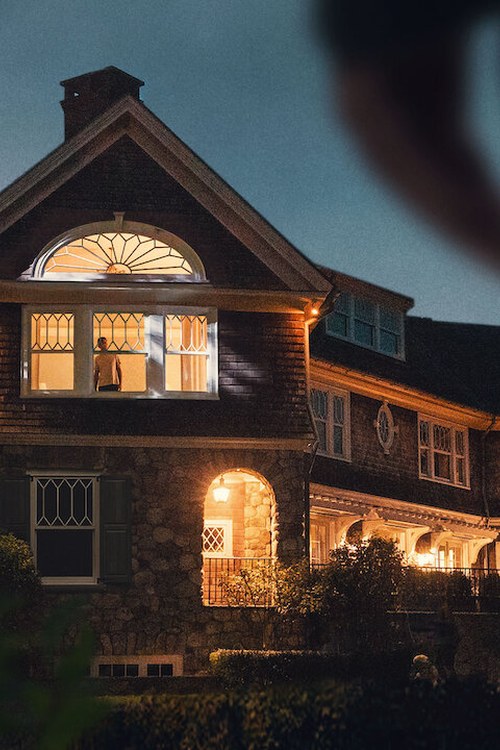
Someone wants to drive past the house fast and throw money at it. That is the first joke and the first diagnosis. 657 Boulevard enters the episode as an object of appetite before it becomes an object of fear, a place valued through access, history, old connections, and the kind of property detail that makes people lean forward. Then the letter arrives. "Welcome, Friends" works because it turns real-estate desire into surveillance anxiety without changing the room. The house stays still. Everyone else starts behaving strangely around it.
The Dream House Starts as a Sales Pitch
The opening stretch is chatter by design. Carter hears the impulse to speed past the house and fling money at it, a line that plays like rich-house fever and lands as early warning. The episode understands that the scariest version of a dream home has to work as a dream home first. Before the threat has a name, the property has features. Someone asks, "Did you say "lake access," Mr. Brannock?" and the confirmation matters because desire needs specifics.
That detail does more than showroom work. Lake access, the baby's skeleton trivia, the RISD recognition between Nora Miller and Nora Brannock. These are normal social beats, almost aggressively conversational. The episode crowds the early minutes with small talk so the later silence has something to cut through. It also makes the Brannocks vulnerable in an ordinary way: they are not walking into a warning sign. They are walking into a listing.
The weakness is that the chatter turns dense before the hook tightens. The early stretch stores air in its lungs, which helps dread, but it delays the blade. When the letter finally enters, the hour snaps into focus.
A Letter Turns Ownership Into Trespass
The first threat is written like a claim deed. the narrator announces, "It is now my time," then asks if the family knows the history of the house. A minute later comes the poisoned hospitality of "Welcome, friends." The phrase is polite enough to pass through a mailbox and sick enough to ruin a room.
That is the episode's sharpest move: The Watcher does not need to appear to control the frame. The letter lets the threat speak with intimacy, history, and ownership. The house the Brannocks want to possess is suddenly presented as something already possessed. The episode's central horror is the feeling that a private decision was never private.
The writing gives the sender useful restraint. The Watcher says enough to shape the fear, then leaves the family with questions. Who is behind the letters? Why the interest in "young blood"? Why does the house's past matter now? The threat is strongest when it behaves like a ritual instead of a rant. The hour resists explaining the voice, the right choice for a pilot. Mystery is the engine. Explanation would be exhaust.
The Detective Reassures With One Hand and Alarms With the Other
The detective beat is where the episode becomes properly slippery. An unidentified detective tries to calm the Brannocks, yet every reassurance arrives with a caveat. Off the record, they have a neighbor, Jasper Winslow. Some details are kept limited. DNA tests are proposed. Squad-car patrols are floated. Disappearances and the note's implications sit behind the conversation.
That contradiction gives the hour its adult texture. The official response is not useless, though it never becomes comforting. The detective's posture says manageable. The process says contaminated. The scene works because it refuses the easy safety of police procedure. A patrol car can sit outside the house, but the letter has already crossed the line that matters.
Jasper is a smart first suspect shape because his behavior is concrete. He wants to ride and play in the dumbwaiter, then later breaks in and is confronted when he rides it. A pilot needs details like that: odd, physical, memorable. A strange neighbor in dialogue can feel generic. A person inside the dumbwaiter gives suspicion a body. The episode uses him as a pressure valve too. The Watcher may be an unseen author, but Jasper is a local intrusion the family can actually confront.
The House Keeps Its Secrets by Staying Ordinary
The Preservation Society thread is planted lightly, but it matters. The open question about what they will do if the dumbwaiter is removed gives 657 Boulevard another kind of pressure: menace from an anonymous watcher, plus social ownership from people who think the house belongs to history, neighborhood rules, or their own idea of preservation.
That is why Nora Miller works beyond convenience. She wants to help sell and show the house, and her RISD reconnection with Nora Brannock makes the property feel socially legible. The Brannocks are not isolated at first. They are connected through school memories, real-estate rituals, neighbor chatter, and civic concern. The horror seeps in through those same channels.
The pacing wobbles here. The episode sometimes lets quiet function as waiting rather than tension, especially around the later threat and reporting beats. Still, the basic architecture is strong. First, make the house desirable. Then make desire feel observed. Then let every helpful person arrive with one more reason the house cannot be cleanly owned.
Control Is the Scariest Word in the Pilot
The ending returns to the voice, and the repetition matters. The Watcher identifies himself again and says he has been "in control of 657 Boulevard" for two decades. The line completes the pilot's argument. This stranger is not demanding entry. He is insisting he was there first.
That claim of control is more frightening than the name. "The Watcher" is a title. Control is a program. The episode has spent its time showing the Brannocks collecting reasons to want the house, then ends by saying their wanting changes nothing. The property detail, the social connection, the detective's half-comfort, the dumbwaiter intrusion. All of it feeds the same idea: every door in this house opens both ways.
The pilot earns its final chill because it avoids a full reveal. Its best image remains simple: a family inside a house, reading words from someone who knows how to make welcome sound like a warning.
The Verdict
"Welcome, Friends" is a solid, creepy opening chapter with a clean thesis: the dream house becomes terrifying the moment ownership feels like trespass. The episode's strongest craft is its progression from buyer's banter to written threat, then from police reassurance to deeper unease. Jasper in the dumbwaiter gives the mystery a physical jolt, while The Watcher's repeated self-identification gives the hour a clear hook. The weakness is pacing. Some quiet stretches build atmosphere. Others hold the episode in place before the next threat lands. As a season opener, it plants the right questions and leaves 657 Boulevard feeling less like a setting than a trap with good lake access.