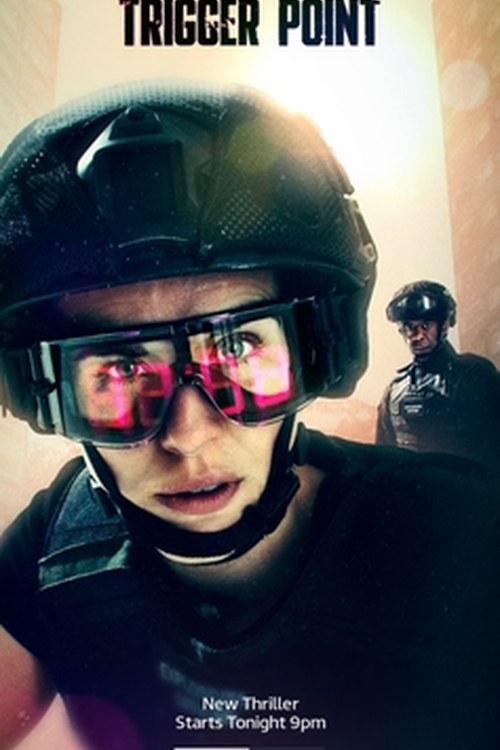
Trigger Point · Season 1 · Episode 1 · 23 January 2022
S1E1 Episode 1
A tense procedural opener where device mechanics carry the suspense, even when character depth lags behind the blast pattern.
THE MOMENT The first bomb disposal sequence establishes the show's unflinching commitment to practical tension over dramatic shortcuts.
The series opener drops Lana Washington into a London bomb threat scenario with immediate tension - McClure's physicality and focus make the technical procedural feel personal.
Full episode analysis below. Spoiler-light verdict above.
Updated
The first sound of the hour is procedure under pressure. Units stand by for EXPO. A high-risk IED is already in play. Within minutes, the alert narrows from city noise to leased flats, a possible bomb factory, and a woman and child who need medical attention before anyone can feel safe. Trigger Point opens by refusing comfort. The danger arrives early, gets logged, repeated, and worsened by each new piece of information. BollyAI's read: the premiere works because it treats process as suspense, then lets process start failing.
Procedure Becomes the Monster
The episode's smartest early move is that it begins with a job, not a mystery box. The language is all standby, risk, cordon, EXPO, device. That matters because the central tension is not whether there is a bomb. There is. The question is whether the people trained for this moment can keep the situation inside the limits of training.
Lana Washington is introduced through control rather than biography. Her need is clear: coordinate warnings, get near the danger, and help with the devices. That is enough for a premiere built around tactical compression. The episode does not need a life story when it can show a person measuring a threat while the room is still hot. Lana's authority comes from movement. She is inside the operation, and the hour makes that proximity its engine.
The radio and command chatter carry much of the tension. Dense dialogue during tactical sequences and quieter stretches between them give the premiere a useful pulse. Noise means procedure is alive. Silence means the operation has entered a different kind of danger. That rhythm works. It also exposes the opener's limitation: character definition is mostly job definition. For Lana, Trojan One, and Nut, the hour knows what they do under pressure more clearly than who they are away from it. In a procedural premiere, that is forgivable. It is also the ceiling.
The Light Switch Is the Lesson
The secondary trigger rigged to the light switch is the hour's best piece of craft because it changes the grammar of the episode. Until then, the threat can be processed as a known emergency: find the device, secure the site, move people out, work the problem. A light switch makes the ordinary hostile. It turns a room into a trap without spectacle.
That is where Trigger Point separates itself from generic incident television. The trigger teaches the viewer how to read the space. A door, a wall, a switch, a circuit, a phone, a vest. Every object becomes suspect because the episode has made the logic of suspicion tactile. The later preparation of a control shock after circuit priming continues that idea. The danger is not abstract terrorism in the background. It is a sequence of physical choices that can either hold or kill.
Trojan One is crucial here because the callsign's function is stability. Reports of secondary devices, radio silence, cordon work, robot coordination: these are not glamorous beats, but they give the episode its spine. The premiere is strongest when it lets the operation speak in verbs. Report. Clear. Prime. Hold. Fire. The pace comes from instruction, not running. Each new order changes what safety means.
The criticism lands where the praise does. The tactical density grips, but it can flatten emotional texture. The hour trusts the mechanics so much that human fear sometimes arrives as a device consequence rather than its own dramatic force.
Nut Stays Where Survival Says Leave
The contradiction around Nut gives the episode its most interesting human knot. Nut wants the team to survive and the device disarmed. The sensible version of that desire is clearance, distance, discipline. Yet he stays and argues over what to do while a trigger timing window remains active. That is not a logic flaw. It is the bad human math emergency dramas need.
A cleaner, less interesting version of this episode would make every trained person behave like a manual with a pulse. Trigger Point lets expertise and panic share the room. Nut performs manual checks and helps with triggers and ECM response, so his value is never in doubt. That is why the hesitation matters. He knows enough to understand the danger, and the moment still pulls him into debate. The scene makes procedure feel fragile because people can reason themselves into one more second near the blast.
This is also where the robot and jamming questions start to matter as more than plot mechanics. The open loops around robot failure, ECM problems, and possible deliberate interference create useful paranoia. If the tools cannot be trusted, training has to stretch. If the trigger can still be armed or called despite jamming, the enemy is present through the team's assumptions as much as through the devices.
That is the episode's strongest argument: bomb disposal is expertise fighting incomplete information.
Andy Phelan Narrows the Blast Radius
The possible suicide bomber beat around the half-hour mark shifts the premiere from object to person. Andy Phelan is identified, his name confirmed while the team responds to the device on his vest, and the hour suddenly has a human body at the centre of its design. The episode has already trained attention on circuits and triggers. Now it forces that attention onto custody, identity, and handling.
This is a strong escalation because it complicates the team's moral workload. A device in a room is terrible, but the story can frame it as technical. A device on a person changes the temperature. The question becomes how to keep someone alive while treating him as a threat. Lana's drive to control the situation gains sharper meaning here. Control is the thin line between procedure and panic response.
The episode earns this beat by placing it after the earlier trigger work. By the time Andy appears as an EXPO-related threat, the viewer understands that a single wrong touch can matter. The vest does not need melodramatic explanation to scare. The premiere has done the groundwork.
Still, the writing is more muscular in incident than implication. Andy's identity confirmation is effective, but the scene's deeper emotional charge depends heavily on the operational context around him. Momentum stays high. Some psychological weight remains untouched.
The Terror Cell Reframes the Hour
The trace near the end is the premiere's hard pivot. Two unregistered burner phones and a link to an organized terror cell take the episode beyond one dangerous flat, one vest, or one technical failure. The earlier beats are reclassified. The robot issue, the ECM and jamming problems, the secondary triggers, the call attempts: each becomes part of a pattern the season can chase.
This is sound first-episode architecture. The hour provides enough immediate incident to stand on its own, then leaves open loops with practical shape. Who is calling or arming the triggers despite jamming? How many communication paths exist? What evidence will connect the burner phones and call attempts to the attackers glimpsed through the operation? These are specific questions, not vague teases. They grow from the mechanics of what has already happened.
The risk is that the organized-cell reveal is a familiar genre widening. The episode avoids cheapness because the groundwork is specific. Burner phones are objects, not mood. Trace is a tool, not an ominous word floating over the ending. It connects the hour's messy fragments into a campaign. That specificity keeps the final turn from feeling pasted on.
BollyAI's read: Episode 1 earns its final expansion because it has spent the hour making small mechanisms matter. The bigger threat works because the small threats were built properly.
The Verdict
Trigger Point starts with a high-risk IED and builds a premiere around the terror of competence under pressure. Its best craft choice is procedural clarity: the light switch trigger, circuit priming, vest response, ECM anxiety, and burner phone trace all feel like linked parts of one tightening machine. The character work is leaner, sometimes too lean, with Lana, Trojan One, and Nut defined more by crisis function than inner life. For an opener, the trade is defensible. The episode knows its lane and drives it hard.
Score: 7.6 out of 10. The season arc is planted cleanly through the organized cell reveal and the unanswered questions around jamming, robot failure, and hidden communication paths.