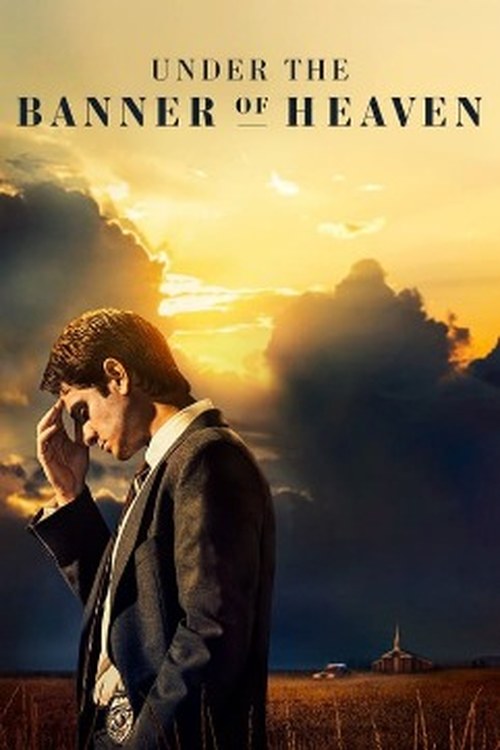
Under the Banner of Heaven · Season 1 · Episode 1 · 28 April 2022
S1E1 When God Was Love
A controlled pilot that turns prayer into procedure, then lets Allen’s contradictions poison every answer the case receives.
THE MOMENT Jeb's first encounter with the crime scene, where the calm domestic setting is at odds with the violence contained within it - an image the premiere returns to in memory throughout the season.
The premiere establishes Jeb Pyre's faith as an asset and liability simultaneously - before the crime is even fully framed, the show has positioned faith itself as the subject.
Full episode analysis below. Spoiler-light verdict above.
Updated
A phone rings inside an ordinary home, and the first instruction is simple: it is the station. Before the case has a shape, the episode places duty against family ritual. Caroline leads prayer, asking for blessings and help fixing what is broken, while the hour prepares to show damage prayer cannot tidy up. That is the pilot’s sharpest move. It refuses spectacle at the start. It opens with routine, then lets procedure, belief, and dread crowd the same room. The episode works best when faith is treated as daily language before it becomes evidence.
Prayer Before the Crime Scene
"When God Was Love" understands the power of order. The opening family prayer is the episode’s first argument. Caroline asks for blessings, for missionaries, for repair. The words are calm, familiar, domestic. Then the station call pulls the home toward violence, and the pilot starts building its central tension: what happens when the language that holds a family together becomes the same language used to explain harm?
That choice gives the episode a clean spine. The early scenes do not rush to make religion ominous. They make it normal first. The blessing is communal. The meal prayer later, when Robin Lafferty is told, “Robin, you'll say the blessing,” keeps that structure in view. Faith works here as practice, habit, command, comfort, and hierarchy. The hour keeps returning to prayer because prayer is where this world reveals who speaks, who obeys, and who gets to define what is broken.
The risk is clear: a pilot like this can flatten belief into mood lighting. This one avoids that by tying religious language to action. A prayer starts the day. A blessing organizes the table. An on-scene prayer is said during an arrest standoff. The same form moves from kitchen to investigation to confrontation. That progression is the craft. The episode lets ritual travel into darker rooms, and the travel matters.
It also gives the show a way to discuss faith without turning every believer into a symbol. The prayer scenes have social function before they have menace. People know the words, the order, the expectation. That familiarity makes the later intrusion of violence more disturbing because the episode has already shown how stable the room is supposed to feel.
The Detectives Want a Case. The Case Wants a Theology.
The procedural side arrives with a different rhythm. Detective Jeb Pyre and Detective Taba move through jokes, interruptions, chain of command, and the practical mess of a murder investigation. That workplace looseness matters. It gives the investigation a human temperature before the horror locks in. Then the tone hardens fast. A detective wants ten minutes alone with a suspect. Taba pushes for normal process, criticizes the decision to notify the victim’s father without approval, and keeps demanding the next step.
That is the episode’s smartest procedural pressure point. Taba wants evidence, sequence, authority, and approval. The case keeps dragging him into a world where motive is narrated through family belief, fear, and religious claims. The episode does not abandon procedure, but procedure feels under-equipped. There is a body of facts, and there is the language people use to make those facts survivable or useful.
The dialogue density spike around interrogation and process helps. When the detectives work through evidence, the hour tightens. People talk because talking is a tool: to force a confession, redirect suspicion, buy time, or define the crime before someone else defines it. The quieter transitions around domestic and police operations do the opposite. They let dread sit in the gaps.
The weakness is that the early detective aggression can feel blunt. “Give me ten minutes alone with him” tells the viewer exactly what register the scene wants. It works, but it is not subtle. The episode is stronger when it lets Taba’s procedural frustration rub against the case’s religious fog than when it underlines cop pressure in thick marker.
That friction is also useful because it prevents the investigation from becoming a simple competence machine. The detectives are not merely gathering clues. They are learning the rules of a family culture that may resist ordinary questioning. Every practical step opens into something larger than procedure expects.
Allen’s Panic Has Too Many Directions
Allen is the pilot’s unstable center. His need is urgent at first: the rest of his family must be found. That panic gives the investigation immediate propulsion because it turns the crime from a contained room into a spreading threat. The open question is practical and frightening: can the detectives locate everyone quickly enough to prevent more harm?
Then the interrogation shifts the ground. Allen wants the detectives to look beyond him, and the dossier’s central contradiction becomes the engine of the hour. He redirects blame toward “men with beards,” framing corruption as something from outside his immediate responsibility. Yet under pressure, he supplies blame narratives and religious-tinged rationales instead of clean factual evidence about those outsiders. He insists on his brothers’ safety while detectives continue connecting him to the core suspect role.
That contradiction gives the episode its best unease. Allen may be terrified. He may be evasive. He may shift between those positions as pressure changes. The episode does not let him settle into one readable function. The interrogation becomes less about whether he can perform innocence and more about whether his story can carry the weight he places on it.
The craft here is in the mismatch between his emotional urgency and his explanatory habits. A scared man asking for family checks is legible. A scared man routing responsibility through bearded outsiders and religious corruption becomes harder to read. The pilot uses that difficulty well. It makes Allen a source of information and contamination at the same time, without handing over the answer too early.
His panic also keeps the episode from turning the interrogation into a static puzzle. The detectives need him, distrust him, and have to keep listening. Each answer creates another practical demand. Find the family. Check the brothers. Follow the claim. Test the story. The scene’s tension comes from that imbalance. Allen sounds urgent enough to matter and slippery enough to poison the room.
The Family Name Enters Like a Command
Robin’s arrival changes the episode’s posture. Until then, “men with beards” can sound like a panicked phrase, a suspect’s attempt to push attention away from himself. By the arrest sequence, a group has arrived, and Robin steps into the moment with control on his mind. His identification, “My name is Robin Lafferty,” is plain, but the plainness is the point. It plays less like an introduction than an assertion.
The standoff around the arrest is where the pilot brings its religious and procedural tracks into open collision. An on-scene prayer is said during the operation, ending in Jesus Christ’s name. Police action and sacred language occupy the same space. The result is tense because nobody in the scene appears to be speaking the same kind of authority. The detectives carry legal force. Robin carries family identity and religious posture. The prayer carries communal certainty. The episode lets those authorities overlap without pretending they carry the same power.
The instruction to escort Robin to his car reinforces the control impulse. He does not arrive as a confused bystander. He arrives as someone who expects to direct movement, name himself, and manage the terms of contact. That makes the final stretch more than a suspect pickup. It is the first visible sign that the investigation may have to enter a family system with its own chain of command.
This is also where the pilot plants its larger questions most efficiently. Allen’s “beards” narrative, the Lafferty name, the crime’s connection to a nursery door and baby girl, and the blood atonement claim all begin pointing toward a wider structure. The episode does not explain that structure yet. It opens the door and lets the dread breathe through it.
Robin’s presence sharpens the premiere because it gives the family system a face beyond Allen’s panic. The show has spent the hour moving between domestic order and investigative disorder. Robin arrives carrying order of another kind: family rank, religious confidence, and the expectation that his name changes the room.
The Verdict
"When God Was Love" is a strong pilot because it makes its world legible before it makes it frightening. The episode’s best idea is simple and effective: prayer is not decoration here, it is grammar. People bless meals, ask for repair, invoke Christ during police action, and use religious language to frame motive. That continuity gives the hour weight without forcing every scene to announce its importance.
The craft has weak spots. Some cop-room pressure lands with a heavy hand, and a few procedural beats state their function too plainly. Still, the Allen interrogation, Taba’s frustration with broken process, and Robin’s command-heavy arrival give the premiere a sturdy investigative spine. As a season opener, it plants the right questions: who acted, who justified it, and how far the family’s belief system reaches.