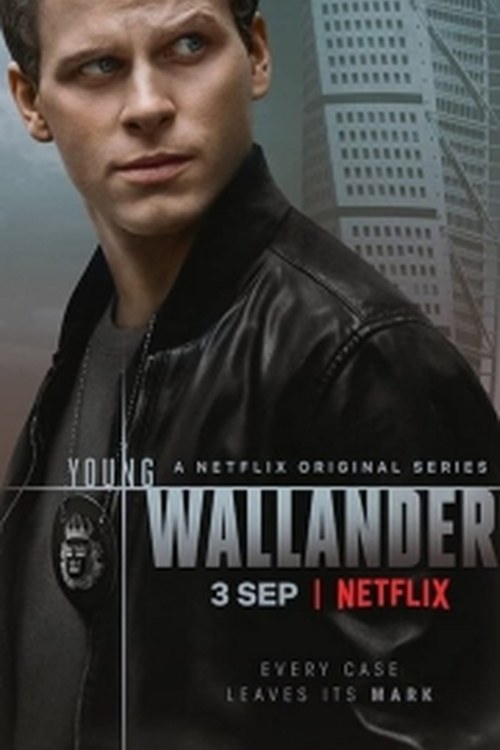
Young Wallander · Season 1 · Episode 1 · 3 September 2020
S1E1 Episode 1
A tense local-premise opener where Kurt's protective instinct becomes the case's sharpest tool and its biggest liability.
THE MOMENT Wallander's first case encounter establishes Adam Pålsson as a credible lead, even if the surrounding world feels generic.
The season opener drops young Wallander into a racially motivated murder investigation in modern Malmö - efficiently constructed but unable to replicate the bleak atmosphere of the original.
Full episode analysis below. Spoiler-light verdict above.
Updated
The party gets shut down before the murder arrives. Noise, authority, irritation, a public order problem that looks ordinary until Rosengaard starts burning and the street turns on itself. Kurt Wallander steps into the crowd as a police officer and as a neighbour, which is exactly the trap the episode builds for him. He wants to protect. Procedure wants statements, suspects, tape, motive. "Episode 1" works best when policing feels local and exposed. It loses some charge when it stops to explain the case instead of letting the street keep talking.
Authority Arrives Before the Crime
The opening move works because it treats authority as a daily disturbance before it becomes part of a murder investigation. A party shuts down after police cite illegal noise and order the volume handled. The beat matters. The episode does not introduce law enforcement through heroism or competence. It introduces uniforms through irritation, compliance, and friction. The police are already in the room before the case exists.
That framing gives the Rosengaard fire more bite. When an officer reports a fire and asks for clarification about smoke, the episode shifts from social control to emergency response without changing its basic question: who gets trusted when uniforms arrive? The answer is messy from the start. The crowd does not behave like a grateful public waiting to be saved. It becomes hostile, confused, and dangerous.
This is where Kurt gets his cleanest introduction. He declares himself and intervenes as a crowd attacks. The action is direct, but the character writing is more complicated than the movement. Kurt is trying to stop violence, yet his intervention places him inside the suspicion he will later have to navigate. The hour’s best idea is that doing the right thing in public can still make you procedurally useful, emotionally compromised, and politically exposed.
That idea gives the premiere its shape. Kurt is never allowed to be a clean observer. His proximity matters. His local knowledge matters. His relationship to the neighbourhood matters. The episode keeps putting him in positions where personal access helps the investigation while making his judgment harder to defend. That is the right kind of pressure for a Wallander origin story.
Kurt Wants to Protect, the Case Wants to Use Him
Kurt’s central contradiction lands early. He wants to help, protect Ibrahim, and understand the grenade attack. The case wants him processed. Detective questioning begins almost immediately, and the episode is sharpest when Kurt stops being the officer looking at chaos from outside. He becomes a witness, a link, and a pressure point.
Detective Frida Rask enters with purpose. She questions Kurt about signs of gang activity and the victim, and the scene turns street panic into procedural sorting. Rask has a real function. She wants to identify wrongdoing, and later she takes operational command by placing Kurt on the case. That creates a useful tension: the man with the personal connection becomes the man the investigation still needs.
The episode makes this arrangement uncomfortable rather than triumphant. Kurt’s account does not clear the air. It creates more air to search. He pushes the investigation through connections, especially around Ibra, yet every step toward explanation also tightens the procedural net. This is good early Wallander material: guilt and duty walking in the same shoes, with neither allowed to win cleanly.
Where the hour stumbles is its investigative exposition. The stretch after Rask’s introduction slows as questions stack around gang signs, the victim, and the likely suspect. The information is necessary, but the dramatic pulse drops because the scene moves like a briefing. The episode has a strong engine, then lets the manual sit in the passenger seat too long.
That drag matters because the opening has already taught the audience how alive the show can feel when information comes through pressure. A hostile crowd tells us more than a summary. A fire tells us more than a theory. When the premiere trusts incident, it has momentum. When it pauses for case orientation, it starts to feel more conventional.
The Grenade Is a Brutal Hook With a Procedural Aftertaste
The grenade detail is the hour’s ugliest image, and the show knows it. A conversation turns to a grenade with an M75 in the victim’s mouth, and the investigation begins connecting that horror to a suspect whose home has been searched. As a crime hook, it is blunt, cruel, and memorable. As a procedural clue, it risks becoming a label before it becomes a mystery.
That tension is useful. The episode plants the key open question cleanly: who placed the grenade, and how does the chain of events connect an outside arrival to the attack? It also threads in the video-related evidence through Ibra. Ibrahim denies involvement while describing filming a chained victim and urging Kurt to check the video. That contradiction gives the investigation its best uncertainty. Ibra wants to avoid incriminating himself, but his own account pushes him deeper into suspicion.
The writing gets the anxiety right. A video might identify a face. It might show nothing useful. It might protect Ibra, or it might place him closer to the crime than he can explain. The episode does not have to resolve that here. It only has to make the evidence feel unstable, and it does.
Still, the grenade’s shock value threatens to flatten the surrounding material. The premiere is strongest when it focuses on contested public truth: who saw what, who will speak, who already distrusts the police, and who benefits when panic hardens into certainty. The weaker version is a case file orbiting a grotesque object. For now, the stronger version stays ahead because Kurt’s personal involvement keeps the violence tied to consequence.
Evidence Catches Fire, Then the March Takes Over
The forensics beat at the thirty-five minute mark gives the hour a needed second gear. Evidence is found, tape or duct tape enters the workflow, and the planned fire becomes part of the investigation. The confirmation that the fire was deliberate matters because it moves the crime from eruption to design. Someone prepared, set, and covered. That is cleaner menace than the episode’s earlier exposition.
The hour then widens into the anti-immigration march, and the show reconnects procedure to public volatility. Reza Al-Rahman gains a practical role around the march, operating in the police and march space, and someone is detained or arrested during the event. The arrest order to stay still is simple, but it pays off the premiere’s recurring pattern: every public gathering becomes a test of who can command the moment.
This final movement works because it refuses to separate the investigation from the city around it. The march’s escalating violence is not background colour. It can distort arrests, witness movement, officer judgment, and the reading of threat. Kurt’s case is already tangled with community anger. The march gives that anger a route, a crowd, and a police line.
The criticism remains pacing. The episode has punch when bodies move, crowds press, and procedure happens under noise. It gets heavier when characters explain what the plot already has enough images to carry. A premiere can afford some table-setting. This one occasionally mistakes table-setting for suspense.
The Verdict
"Episode 1" is a solid premiere built around one clear idea: Kurt Wallander’s instinct to protect makes him useful to the case and vulnerable inside it. The party shutdown, the Rosengaard fire, the crowd attack, Ibra’s video problem, the deliberate fire, and the march all push in the same direction. Policing here is never abstract. It happens in public, under pressure, with neighbours watching and suspects close enough to know your name.
The hour earns a 7.1 because its strongest scenes have a tense local charge, while its procedural exposition slows the impact of the grenade investigation. As a season opener, it plants clean questions about the killer, the video evidence, and the march’s fallout without pretending Kurt can stand outside the damage.