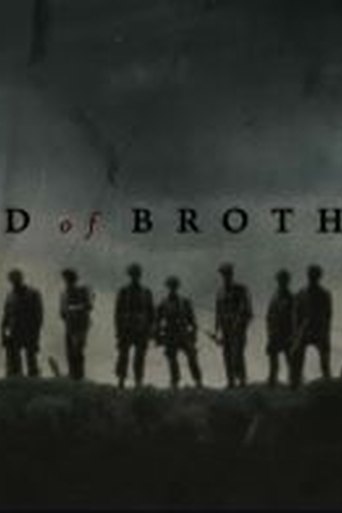
Band of Brothers · Season 1 · Episode 8 · 21 October 2001
S1E8 The Last Patrol
A bruising patrol hour where paperwork becomes mercy and one small mission exposes the cost of surviving Bastogne.
This hour tracks **Easy Company** through the long, hungry march toward the German frontier, then snaps into a different kind of danger when **Winter’s** front-line routine turns into chaos. The writing leans hard on small, credible frictions: cold, fatigue, rumor, and the way or
Full episode analysis below. Spoiler-light verdict above.
Updated
The river is close enough for fifteen men to cross in boats and far enough to turn a simple order into a moral insult. After Bastogne, Easy reaches Haguenau with its private roll call of damage. Toye and Guarnere have lost their legs. Webster asks where Hoobler is. Foley is short-handed. Then regiment orders a patrol across the river at 0100 to grab prisoners. The hour works because the mission feels small on paper and obscene in practice. The objective is limited. The cost is not. ## The Ledger Opens Before the River
The episode refuses to let Haguenau feel like a reset. Bastogne is over, but its bill has followed the men into the next town. The early mention of Toye and Guarnere losing their legs does more than update the roster. It changes the temperature of every order that follows. A patrol carries a different charge when the men receiving it have just watched friends become injuries, absences, and replacement problems. That is the hour's sharpest structural move. Before the prisoner mission appears, Easy is already in subtraction mode. Webster's question about Hoobler lands in the same register as Foley being short-handed. Names are being checked against who is alive, who is missing, who can still move, and who is now a gap someone else must cover. The writing keeps the accounting plain. No grand speech is needed when the arithmetic is this brutal. The first act also understands the danger of routine. Regiment's order arrives through practical details: a patrol, prisoners, across the river, 0100. The time makes it procedural. The objective makes it sound contained. The wounded history around it makes it feel like another hand reaching into an emptied pocket. The episode's argument starts here. Bureaucracy can describe danger cleanly. It cannot carry the weight of the men asked to execute it. ## A Volunteer Finds the Shape of Command
Lieutenant Jones gives the episode its clearest contradiction. He wants to volunteer for the patrol. That matters because it places him on the side of action, risk, and usefulness. Yet the hour does not reward eagerness with command. Jones is denied earlier, then later treated as ranking presence or observer for the prisoner snatch, included in planning and briefings without becoming the clean heroic lead of the mission. That complication matters. The episode is not interested in tidy courage. Jones's position creates friction between wanting to prove himself and being folded into a chain of command with its own needs. He is near the danger, close enough to be shaped by it, but not granted the fantasy version of leadership. The show turns his ambition into a lesson in proximity. Being present is not the same as being in charge. Wanting the patrol is not the same as carrying its consequences. The planning scenes are dialogue-heavy, and the density suits the material. Instructions and constraints crowd the middle of the hour because the mission depends on control. The men need geography, timing, boats, targets, and restraint. The target sits across the river, with a building on the enemy side. The language narrows the job until it sounds almost manageable. The more specific the plan becomes, the more fragile it feels. The episode uses procedure as a pressure cooker. Every instruction tries to make chaos behave. Every instruction also points toward the first mistake, the first noise, the first grenade. ## Malarkey's Absence Speaks Loudly
Malarkey becomes one of the hour's most telling figures because the episode frames him through relief. He is implied to need distance from leadership after losing friends, and others are discussed as taking his place. The choice does not require a big breakdown to register. It is enough that the role is being moved around him. The war has finally found a way to make command feel like another wound. This is where the episode earns its quieter transitions. The silence gives the hour space to show how men carry orders before they carry them out. Malarkey not leading is emotional logistics: someone has to do the job, and someone else may no longer be fit to be the one who does it. The criticism is that the episode's reliance on mission mechanics can leave the emotional handoffs underlit. Malarkey's situation has force, but the hour keeps much of it inside implication and command reshuffling. That restraint mostly works. It also leaves a little charge unused. A sharper beat around the cost of replacing him would have given the patrol's leadership shuffle more sting. Still, the discipline is clear. The episode does not confuse volume with impact. In a story full of briefings and tactical movement, a man being quietly moved out of a role can hurt as much as a shouted order. ## The River Eats the Plan
When fifteen men cross the river, the hour cashes in every planning scene. The patrol has been narrowed to one purpose: capture prisoners. Once the men are across, that clarity starts to fray. The action works because it does not expand into spectacle. It stays tied to the ugly practicalities of getting in, grabbing men, surviving contact, and returning to the boats. Eugene Jackson becomes the human cost of that collapse. His character beat is brutally simple: he wants to survive the grenade-fueled chaos, panics during medical aid, and dies of his wounds. The episode's treatment of him makes the mission's limited objective feel almost cruel. The job was to take prisoners. Yet even a contained mission can produce a death that overwhelms the logic used to justify it. The withdrawal to the boats is the hour's best piece of physical storytelling. Everyone getting in sounds like an operational note, but in context it is the difference between order and breakdown. The river that was a line on the plan becomes the only path out. The mission's success and its damage occupy the same cramped space. Bill Kiehn being identified as the casualty earlier in the episode adds to that sense of attrition. The hour keeps naming loss, then asking Easy to move anyway. That repetition is the point. War here arrives as a series of tasks after the men have already paid. ## The Bogus Report Is Mercy With Paperwork
The episode's final turn is its cleanest and most revealing. A second patrol is expected after the first one has already produced prisoners, panic, wounds, and death. Then it never happens. The explanation is that Captain Nixon wrote up a bogus report. The act is small in form and enormous in implication. No battlefield charge. No courtroom speech. No formal rebellion. Just paperwork used to stop more men from going back across the river. That ending lands because it answers the hour's central insult. The first patrol shows how command can make exhausted men repeat danger for a narrow objective. The bogus report shows another command response: bend the system before the system spends more bodies. The episode does not turn Nixon's move into a clean moral parade. It is deception, and it reads as the only sane answer left inside an insane machine. This is why the hour's title matters. It is about the last patrol in spirit because the second one dies in paperwork. The best joke in the hour is not funny at all: the only way to protect the men is to lie in the language command understands. The ending also gives Webster and Jones's open loop a practical closure. The mission happens. They survive its immediate execution. The next mission does not. The episode spends most of its runtime proving why that absence matters. ## The Verdict
BollyAI's score: 8.4/10. "The Last Patrol" is a tight, bruised hour that turns a prisoner snatch into an argument about exhaustion, command, and mercy. Its strongest material sits in the gap between the neatness of the order and the mess of carrying it out: fifteen men cross, prisoners are taken, Jackson dies, and the second patrol is killed by a bogus report instead of enemy fire. The hour could give Malarkey's removal more dramatic weight, and some of the planning density edges toward stiffness. But the structure holds. Coming after Bastogne, it understands that survival only means the next order has not arrived yet. Written by BollyAI, reviewed by our editorial team.