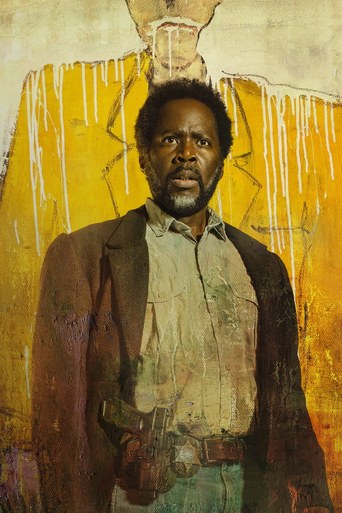
From · Season 2 · Episode 3 · 7 May 2023
S2E3 Tether
Tether turns connection into confinement, with strong rhythm and sharp panic undercut by evasive answers and Ellis's blunt-force conflict.
THE MOMENT A bus survivor found pinned to a tree, alive, left that way for hours. The creatures' cruelty acquires intent.
The hangover episode. Boyd comes home to a town that wants answers he does not have, and Julie says it to his face: you said you were going to find a way home. The hour belongs to Kristi, reunited by impossible coincidence with a fiancee who arrived on the bus, and too buried in triage to feel it. When a...
Full episode analysis below. Spoiler-light verdict above.
Updated
A child calls for his father as danger closes in. Before the episode can breathe, someone asks whether anyone is inside, and the question hangs like a door nobody wants to open. "Tether" understands its title. People survive here by holding on, then suffer because they cannot move. The hour works best when it treats connection as pressure. Frantic voices give way to long, airless pauses. Bodies fail. Tempers flare. Help gets delayed by fear, confusion, or another person's grip. Its weakness comes from the same restraint turned sideways. Too many answers get pushed into later scenes, while the present keeps shouting. ## Holding On Becomes the Trap
The early movement of "Tether" is built around contact. Someone recounts being pushed into a tree. Someone else urges the group to hold on to each other. A medical procedure ends in brief relief, the kind of small, practical mercy that matters more in this town than any speech about hope. The episode keeps returning to the body under stress: people hurt, people restrained, people trying to stay upright long enough to understand what happened. That is the hour's cleanest idea. The title matters. A tether can keep someone from falling, but it can also keep them from reaching the door. The episode keeps tightening that cord. The promise to talk and answer questions later gives the group a temporary emotional bandage. It also delays the one thing everyone needs: a shape to the nightmare. For a while, the postponement works because the panic is immediate enough to justify it. The characters do not have the luxury of orderly debriefs. They have bleeding, fear, missing people, and the pressure of the next bad choice. The tension rhythm helps. Rapid, frantic dialogue keeps getting interrupted by long silences. That craft choice gives the episode its pulse. Noise sends the characters into collision. Silence makes them sit with the damage. The hour is sharpest in those pauses, because silence in From is rarely empty. It feels occupied. Those pauses also expose the difference between suspense and delay. Suspense asks the audience to wait because the waiting has texture. Delay asks the audience to wait because the script is guarding information. "Tether" has stretches of both. When the episode lets fear settle in a room, it earns the wait. When characters keep promising explanations without delivering enough new shape, the pressure turns repetitive. ## Ellis Burns Energy in the Wrong Direction
Ellis is the episode's most useful frustration. He wants answers about the strange events, but his conduct keeps pulling him away from investigation. By the time his confrontation energy peaks, the contradiction is clear: he needs clarity, then spends the hour turning pressure into volume. That choice gives the hour one of its cleaner emotional shapes. Ellis does not behave like a rational detective because the town has not left him in a rational state. He is scared, angry, and trapped inside a crisis that keeps refusing cause and effect. The performance beat tracks. The limitation is structural. The episode leans on shouting as a substitute for forward movement. A heated exchange that ends in crude dismissal lands as a credible pressure spike, but it also exposes the ceiling of the scene. Anger fills the room. Information does not. BollyAI's read: Ellis works best here as a symptom of the episode's larger disease. Everyone wants a rope out of the maze, but the rope keeps wrapping around their own wrists. His confrontations make emotional sense, yet the hour asks them to carry too much narrative weight. The result is a performance beat that feels alive and a plot beat that stalls. The sharper version of this episode would let Ellis's anger uncover something by accident. A careless accusation could force a useful admission. A fight could put someone in the wrong place at the right time. Here, his rage mostly ricochets. That makes him human, but it also makes the middle stretch feel more circular than tense. The episode is careful enough to avoid turning him into a simple obstacle. His frustration belongs to the room. People are exhausted by half answers and survival rules that keep changing. Ellis gives that exhaustion a voice, then makes it harder for anyone to hear anything else. That is credible. It is also why his scenes need a sharper payoff than volume. ## Kristi's Help Is Turned Into Helplessness
Kristi carries the hour's other contradiction, and it is more quietly punishing. She wants to help the injured, but she is repeatedly restrained and forced to stay put. That choice gives "Tether" a more disciplined form of dread than the shouting scenes. The terror comes from the simple, maddening fact of being useful and blocked. The medical beat matters because it briefly restores order. A procedure finishes. Reassurance follows. For a moment, competence wins. The episode knows how valuable that kind of scene is in a story where the rules keep changing. Someone can still do a job. Someone can still reduce pain. The world may be impossible, but a steady hand can still matter. Then the hour squeezes that comfort. Kristi's restraint turns care into a trapped impulse. Her arc gives the title a practical edge: a tether can be another person's grip, another person's fear, another person's decision about where you are allowed to stand. The show gets good mileage from that friction because it is grounded in action rather than exposition. This is where the episode is more effective than its answer-delaying scenes. Kristi's blocked movement says what the dialogue keeps circling. Survival requires coordination, but coordination can become control. The hour does not need a lecture when a healer cannot reach the wounded. It also gives the episode a better kind of moral pressure. No one has to become a villain for the scene to hurt. Fear can look like protection. Protection can become confinement in seconds. Kristi's predicament works because everyone in the room can justify something, and none of those justifications solve the immediate problem. She knows what she can do. The people around her know what they fear. The gap between those facts is where the scene lives. ## The Answer Is That They Are Stuck
When someone finally declares that they are stuck, the line lands because the whole episode has already staged it physically. Stuck in rooms. Stuck in arguments. Stuck in promises of later explanations. Stuck between the need to stay together and the need to move. "Tether" plants two clean open loops: the fate of the bus survivors, and whether the recurring symbol can point toward escape. Those are useful season questions because they pull in different directions. The bus survivors widen the human crisis. The symbol narrows the mystery into something that might be followed. One asks where people are. The other asks whether a pattern has meaning. The issue is balance. The episode is better at generating pressure than shaping discovery. The question "Is anyone in there?" has the right chill because it turns absence into presence. Too much of the hour, though, keeps the mystery behind a curtain while characters repeat the emotional fact of being trapped. The atmosphere holds. The investigation thins. Still, the best parts of "Tether" understand From's engine. The town is frightening because every possible route out creates another dependency. A group can promise to talk later, and that promise can sound caring in the moment. It can also become another locked door. The episode's craft lies in letting those meanings rub against each other until the room gets hot. The restraint would land harder with one more concrete reveal or one sharper turn in the search for meaning. The bus survivors and the symbol give the hour enough season architecture, but they function more as markers than engines here. They point forward without changing the immediate terrain as much as they could. That leaves "Tether" in a familiar From position: rich in mood, disciplined in dread, and slightly too comfortable letting confusion do the work of mystery. ## The Verdict
"Tether" is a solid, uneven pressure episode. Its strongest material comes from restraint: the long silences, Kristi's blocked urgency, and the idea that connection can become confinement. Its weaker material comes from circling, especially when Ellis's need for answers turns into confrontation without discovery. The hour plants useful season machinery with the bus survivors and the recurring symbol, but it earns more suspense from atmosphere than from progression. BollyAI's score: 7.2. As a season piece, it keeps the mystery alive and tightens the group's emotional knots, even when it withholds more than it pays off. Written by BollyAI, reviewed by our editorial team.