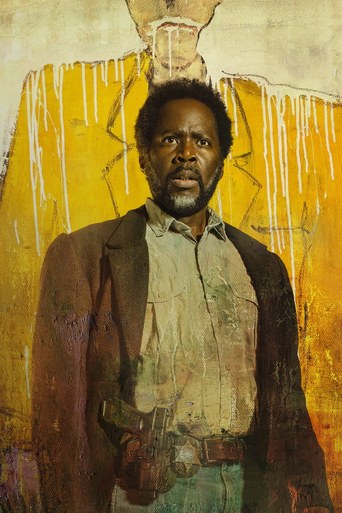
From · Season 2 · Episode 4 · 14 May 2023
S2E4 This Way Gone
A tense containment hour where Boyd's useful lies become the town's next danger, sharpened by Sara and the radio voice.
THE MOMENT Kristi noticing something move under the skin of Boyd's arm, and the episode declining to comment further.
The episode where Boyd's guilt gets a voice, literally: a hallucinated conversation with his dead wife who argues, reasonably, soothingly, that leaders sometimes have to make tough decisions. The script lets you decide whether this is grief or the place inside his head. Around it, the Sara secret detonates in stages, and Kenny's exit line to the man he called...
Full episode analysis below. Spoiler-light verdict above.
Updated
Boyd says the quiet part first: "I have Sara tied up in the basement of the church." The sentence should sound impossible. In this town, it lands like procedure. That is the cold trick of "This Way Gone": the episode takes a moral emergency and runs it through civic maintenance. A sheriff needs a secret. A deputy needs a truth. A girl needs to be heard. A father needs people to believe the voice on the radio. BollyAI's read: this hour studies leadership turning into concealment, with the scariest part being how practical the concealment looks.
The Sheriff Builds a Secret Cell
Sara being hidden under the church gives the episode its ugliest image: a person turned into evidence and locked beneath a sacred room. The show does not oversell the contradiction. The basement does the work.
Boyd's choice is clear from the start. He wants Sara close because she may be useful. She hears voices, and that connection may explain something about the place. The problem is that usefulness arrives covered in blood. Sara is tied to real harm, and the episode makes Boyd carry that in every conversation where he tries to keep her out of reach.
That is where the hour finds its spine. Boyd is no fool. His position has a brutal logic. If Sara is connected to the forces pressing on the town, throwing her into the Box may satisfy rage and destroy a possible lead. The episode lets that argument breathe, which is why Boyd's secrecy feels dangerous rather than convenient. He is hiding Sara because he has a plan.
The craft sits in that uncomfortable distinction. Chaos management has curdled into selected truth, rationed truth, sheriff's-office truth. Boyd turns one person's guilt into a tool for everyone else's survival, then has to pretend the tool is not sharp.
Kenny Is Asked to Guard the Lie
The episode's best pressure point is Kenny, because Boyd does not merely need his help. He needs his trust before giving him enough to make that trust informed. When Boyd asks for a deputy to watch his six, the line plays like old partnership language, the kind of request built on shared duty and hard-earned shorthand. It is also a trap.
Kenny wants the truth about his father's death. Boyd withholds it. That is the hour's cleanest moral fracture. The writing understands that betrayal can look calm when it comes from someone with authority. Boyd does not scream, dodge, or collapse. He manages. He insists Sara stays out of the Box. He keeps Sara's full role from Kenny. He makes the practical case while contaminating the personal one.
That tension works because Kenny's partial knowledge becomes the drama. Every beat around him carries a delayed blast. What will Kenny do when he learns the withheld truth? Has Boyd already made the future worse by trying to control the present?
There is a concrete criticism here: the hour leans hard on conversation as containment. Boyd explains, redirects, and absorbs anger, but the episode sometimes parks the conflict in dialogue when the situation is volatile enough to demand messier movement. Still, the writing earns the restraint by making Kenny's ignorance active. The lie drives the scene.
Julie Brings Another Crack in the Wall
Julie enters the episode from a different angle. She has seen something again, and she wants to understand it. Her instinct is to go to Boyd, which matters. In a town where information can kill and silence can rot, choosing a listener is an act of faith.
The episode places her concern against Boyd's Sara crisis, and that contrast sharpens both threads. Julie wants to help. Boyd warns her away. He knows Sara being back is, in his own words, "a shitstorm waitin' to happen." The line is blunt, useful, and pure Boyd: half warning, half weather report. He is telling Julie the truth about danger while keeping the larger truth fenced off.
That is the episode's recurring pattern. People bring Boyd fragments, and Boyd decides which fragments belong to the public record. Julie's experience has weight, but it cannot compete with the immediate volatility of Sara's return. The frustration is deliberate. Julie has a piece of the town's puzzle, but the adult in charge is busy hiding another piece in a church basement.
The scene also keeps the season's supernatural threat from narrowing too much into Sara alone. Sara hears voices. Julie has seen something again. Jim has the radio. The town is being contacted, watched, and manipulated from multiple directions. "This Way Gone" works because it lets those channels overlap without pretending they have the same meaning yet.
The Town Has No Private Rooms
The dossier's most telling detail is the long silence before Boyd complains that there is nowhere to be alone. That silence gives the town room to press in.
From is often at its sharpest when it treats geography as punishment. Houses, streets, churches, and hiding places do not offer comfort here. They offer temporary partitions. Boyd can tie Sara up in a basement, but he cannot isolate the consequence of that choice. Kenny's grief is upstairs, Julie's fear is nearby, Jim's radio warning is waiting, and the Box hangs over the town as a civic threat disguised as justice.
The 73-second gap before Boyd's complaint gives the hour a claustrophobic rhythm. It lets the viewer sit with the absence of relief. No private room means no private conscience. Every decision leaks. Every secret has footsteps above it.
That is why the church basement works as more than a plot location. It turns the town's moral structure upside down. The place that should hold confession now holds concealment. Boyd's leadership, usually tied to motion and command, gets forced into stillness. He cannot shoot this problem. He cannot evacuate it. He can only keep moving between people who each deserve a different truth.
The episode's limitation is that this claustrophobia is stronger as atmosphere than as escalation. The hour tightens its grip, but it does not always vary the squeeze. Still, the silence gives Boyd's exhaustion a physical shape, and that shape matters.
A Voice on the Radio Refuses to Stay Buried
Then Jim brings back the radio.
His confrontation with Boyd changes the scale of the episode. Sara's voices can be treated, however uneasily, as a known abnormality. Jim's voice on the radio cannot be tucked into that same drawer. He heard someone warn Boyd about his wife before the house collapsed. That detail pushes the town's danger out of rumor and into targeted knowledge.
Jim wants to warn people. Boyd pushes him to stay quiet. The scene mirrors the Sara conflict without copying it. Again, someone has information. Again, Boyd sees public panic as a threat. Again, the episode asks whether silence protects the town or poisons it.
This is where "This Way Gone" widens its argument. Boyd is hiding Sara's guilt from Kenny while trying to manage Jim's warning about the radio voice. His leadership becomes a pattern of containment, and the hour is smart enough to show why he chooses it. In a town strained by monsters, deaths, visions, and punishment rituals, raw information could detonate the group.
But the radio voice is too specific to be buried cleanly. It suggests intention. It suggests observation. It suggests that whatever is pressing on the town understands timing and leverage. Jim's anger has a purpose because the warning was personal, immediate, and tied to a collapse.
That gives the episode's final emphasis its charge. The supernatural threat is no longer confined to the night or Sara's head. It is in the wires, in the air, in the timing of a sentence spoken before disaster.
The Verdict
"This Way Gone" is a strong containment episode, built around Boyd's worst leadership habit: he mistakes controlled truth for controlled damage. The hour does not give him an easy villain edit, which is its best choice. His secrecy has logic. His lies still cost something. Kenny's withheld truth, Julie's interrupted warning, Sara's basement imprisonment, and Jim's radio confrontation all point to the same pressure. The town needs information, and information may tear it apart.
The episode is tense more than dynamic, and some of its conflict arrives as people explaining danger in rooms. Yet the moral geometry is clean, the claustrophobia lands, and the radio thread gives the season a sharper outside pressure. In season terms, it turns Sara from past-tense crime into present-tense leverage while keeping the voice on the radio alive.