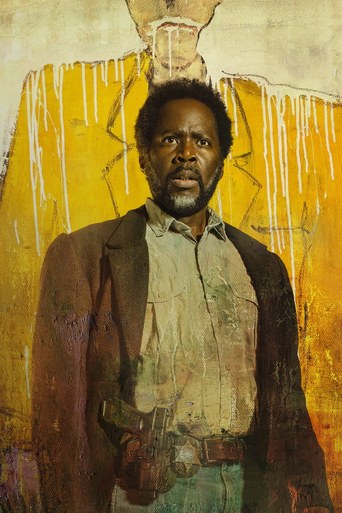
From · Season 2 · Episode 6 · 28 May 2023
S2E6 Pas de Deux
Boyd tries to contain the curse, then uses it to save Ellis, and the contradiction cuts clean.
THE MOMENT I got worms under my skin, said out loud at 16:31, the first time Boyd lets anyone see the whole truth.
Body horror as character study. Boyd's infection stops being a mystery and becomes a clock, and the episode's best scene is him asking Kristi for the favor no sheriff should need: you'll put an end to things before it goes too far. Then the show does something audacious with the cure, a purge scene that weaponizes the season's central wound,...
Full episode analysis below. Spoiler-light verdict above.
Updated
Boyd asks Kenny for the order a leader should never have to give: "I need you to kill me." No speech, no ceremony, no heroic glow. Just a man who believes the danger is inside him and sees death as containment. That is the brutal engine of "Pas de Deux." The episode takes Boyd's private terror and forces it through the town's public emergency. He begins the hour trying to stop his blood from becoming someone else's problem. By the end, that same blood is the only thing that can keep his son alive.
Mercy Becomes a Loaded Gun
The opening works because Boyd's request stays concrete. He asks Kenny to become the wall between his infection and the rest of the town. The forest encounter has left him convinced something is moving under his skin, and when he says there is something in him now, the episode sharpens supernatural dread into bodily horror.
That is a smart turn for the season. From has always had monsters at the door, but "Pas de Deux" pushes the enemy under the skin. The cans on the doors and the lock-up orders show Boyd still thinking like a protector. Secure the perimeter. Watch the thresholds. Make noise tell the truth. Then his body becomes the threshold he cannot secure.
The contradiction is clean and ugly. Boyd wants sacrifice to mean containment. If Kenny kills him, the infection ends with him. That is the moral math he tries to impose on a place that keeps breaking math. The hour's best idea is that Boyd's authority no longer separates him from danger. It makes his danger more useful, more tempting, and harder to refuse.
There is sharp cruelty in making Kenny the first witness. Kenny has to hear the command, hold the fear, and keep moving inside a town already near collapse. The scene needs no monster in frame. The monster is the request itself.
The Town Starts Eating Itself
The food-theft confrontation gives the episode its human rupture. Dale wants to hoard food, and the argument turns violent when he stabs Ellis with a knife. The timing matters. Boyd has just tried to organize defenses, so the stabbing feels like the town rejecting order from the inside.
That is where "Pas de Deux" earns its title. The dance has no grace. It is cause and counterstep: scarcity, infection, nightfall, then a blade in the room. The creatures may be outside, but the episode keeps circling the same idea. Pressure does not need claws to draw blood.
Dale's turn works as a pressure release, though the writing is bluntest here. The episode has established dwindling food and rising tension, but Dale's violence lands more as a trigger than a fully shaded collapse. He becomes the hour's matchstick. Useful, volatile, a little too neatly placed.
Still, the result hurts because Ellis becomes a body losing air and time. The stabbing yanks Boyd's private crisis into a father's crisis. Before this, Boyd can imagine his death as a controlled decision. After Ellis falls, control becomes a luxury the episode takes away.
Medicine Without a Safety Net
Kristi gets the episode's most practical heroism. Her chest decompression on Ellis is staged around necessity, not triumph. She has limited supplies, a collapsing patient, and no clean margin for error. When she says she needs to relieve the pressure, the line plays like procedure, which is exactly why it works. Panic fills the room. Kristi turns panic into steps.
The tone notes make sense here. Long silences give way to frantic dialogue, and the episode uses that stop-start rhythm to mirror the town's nervous system. Dread stretches. Crisis snaps. Then dread returns with worse information. The medical sequence sits at the center of that rhythm because it converts fear into action without making action feel safe.
Kristi's strength is movement under uncertainty. She performs the procedure because the alternative is watching Ellis die. That matters in an episode obsessed with contaminated choices. Boyd wants a pure answer at the start: kill me, stop it here. Kristi's world allows no pure answers. Cut. Decompress. Transfuse if possible. Risk the next consequence because the immediate consequence is death.
The episode is at its best when it lets that practical pressure speak. No one needs to announce that the town is running out of options. The room tells you. The body tells you. Kristi's hands tell you. From often thrives when survival feels less like bravery than maintenance during a nightmare.
Boyd Turns the Curse Into a Weapon
Boyd's taunt to the creatures is the hour's wildest pivot. He offers blood and fresh meat, then spits the kind of line that only works because it sounds half like a threat and half like surrender: "My blood is your blood now, motherfucker." It is defiance with a trapdoor under it.
That moment reframes the infection. Boyd has spent the episode treating his blood as a danger to contain. Now he tries to make it a weapon. He cuts his hand, grips the creature, and forces the thing inside him into something that might be able to take it. The risk is that he still does not know the rules. Are the worms poison, parasite, curse, protection, sentence? Boyd acts because waiting has become another way to lose Ellis.
The blood transfusion is the hour's moral knot. Kristi needs a donor to save Ellis, but Boyd's infected blood makes him dangerous. The man who asked to die so the infection would not spread now has to face the possibility that his blood is also Ellis's best chance. The episode does not cheat the reversal. Boyd is cornered into choosing which fear gets to win.
That is the strongest writing in "Pas de Deux." It understands that character is often revealed when two sincere vows collide. Boyd wants to protect everyone. Boyd wants to save Ellis. The town has designed a situation where those desires attack each other. His attack on the creature gives him a way through, but the victory feels provisional rather than clean.
A Secret After the Blood
The final turn with Fatima is quiet, which is exactly the point. After the stabbing, the decompression, the taunt, and the transfusion, she asks Kristi about pregnancy tests. The episode places that question after the blood crisis, and the placement does heavy work. Life enters the hour as another uncertainty, not comfort.
Fatima wants to know if she is pregnant while keeping the question from the group. That secrecy matters because the town is already failing at shared pressure. Food is being hoarded. Doors need cans. Boyd hides an infection until it becomes unavoidable. Now Fatima carries a possible new future that she cannot yet name in public.
The beat also widens the season without overplaying itself. Will Boyd's blood change Ellis? What are the worms? Is Fatima pregnant? Can this group survive a night when scarcity has already drawn a knife? "Pas de Deux" plants those questions through bodies rather than speeches: blood under skin, air trapped in a chest, a possible pregnancy kept quiet.
The flaw is pacing. The hour is so committed to crisis handoffs that some emotional transitions come fast. The stabbing, medical emergency, creature confrontation, transfusion decision, and pregnancy question all hit hard, but the chain can feel mechanical in spots. Even so, the design holds. The episode's central argument is stronger than its rough edges.
The Verdict
"Pas de Deux" is a strong From hour because it builds one merciless contradiction and keeps tightening it. Boyd begins by asking for death as containment. He ends by giving blood as rescue. Between those points, the town's external horror mutates into scarcity, panic, medical improvisation, and secrecy. The stop-start pacing can feel functional when Dale's violence arrives, but the central reversal carries the hour. BollyAI's read: the construction has rough seams, yet this is one of the season's sharper episodes about what survival costs when every answer contaminates the next. As a season piece, it pays off Boyd's infection fear while planting dangerous new questions around Ellis and Fatima.