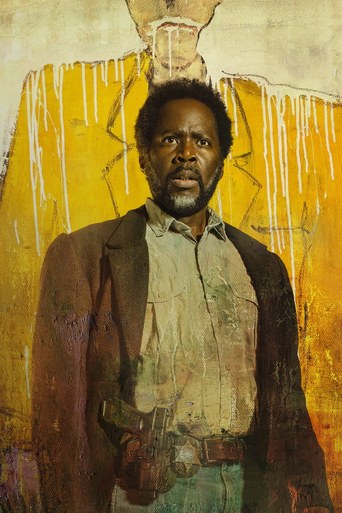
From · Season 2 · Episode 5 · 21 May 2023
S2E5 Lullaby
A tense, talk-heavy hour where silence cuts sharper than answers, even when the pattern starts to repeat.
THE MOMENT A resident screaming defiance at the creatures through glass, and the creatures walking away. Nobody knows why, which is the point.
The season's most patient episode, 71 words a minute, built on confessions traded like contraband. Sara says I killed my brother out loud for the first time, plainly, in a church. Victor shows Jade a field of buried cars, a graveyard he has tended alone, and the show recalibrates how much this man has survived. The thread tying it together...
Full episode analysis below. Spoiler-light verdict above.
Updated
A figure on the road sees two children standing still and staring back. That is all the hour needs. No chase, no explanation, no clean rule to file away. Just children where children should not be, a road that should carry escape but instead stages a vision, and a town trained to read every odd detail as a threat. "Lullaby" builds fear through interrupted certainty. People accuse, command, question, and plead, while decisive action stays out of reach. BollyAI's read: the hour is strongest when it treats helplessness as behavior, not mood.
The Road Puts Fear in Plain Sight
The opening image is simple enough to feel dangerous. Unknown says, "I saw two children standing in the middle of the road, staring at me." The line works because it refuses ornament. The children are standing. They are staring. In a show built around rules, traps, and things that wait outside, that stillness has force.
"Lullaby" understands the value of a clean unsettling image. The road should mean movement, direction, a way through. Here it becomes a display case. The episode places the children in the middle of it and lets fear arrive before information. That choice matters because the hour's larger design depends on uncertainty: the recurring symbol remains unresolved, and the Anghkooey entity sits as an open question rather than a solved threat. The children are the first note in that pattern. They do not explain the mystery. They make it harder to dismiss.
The title adds pressure. A lullaby is supposed to soothe. This one hums under the panic, keeping everyone calm enough to keep talking, then scared enough to say too much. That tension gives the hour its shape: fear arrives as a quiet image, then spreads through speech.
Orders Without Ownership
The episode's sharpest character contradiction sits with Boyd. He wants the colony safe and organized, and the dossier's key evidence has him trying to control movement with a blunt command: "Hey! You get back downstairs." On the surface, that is authority doing its job. Someone steps out of line, Boyd pushes them back into place.
The order matters less than the gap around it. Boyd wants protection and structure, yet the hour frames him as a man who repeatedly defers and leaves others to act. That makes the command feel smaller than it sounds. It has volume, but not enough follow-through. In a normal crisis scene, a line like that can steady the room. Here it exposes how fragile the room is. If the safest available tool is ordering someone downstairs, the larger machinery has already jammed.
That is where "Lullaby" earns its discomfort. It does not need Boyd to fail loudly. It lets him manage the edge of chaos while the center remains untouched. Authority becomes a staircase problem: keep people where they are, stop them from moving, preserve the appearance of control. Boyd can enforce rules in the moment, but the larger threat keeps slipping past the rulebook.
This is also where the hour risks repetition. Commanding, withholding, and waiting can become a loop if the writing does not give each pause a fresh charge. "Lullaby" mostly survives that risk through rhythm, but the Boyd material lands with more tension than forward motion. The episode makes his hesitation legible. It does not always make it new.
Responsibility Becomes the Monster
The killing accusation gives the hour its ugliest human beat. Someone says, "They tore him to pieces, and you knew!" That line turns supernatural terror into moral indictment. The monsters may tear bodies apart, but the accusation is aimed at knowledge, complicity, and silence. In this town, knowing something and failing to prevent it can sound like murder.
That pivot widens the fear. The threat moves from the outside, from visions, from symbols that refuse to translate, into the space between people who suspect someone has held back the one piece of information that might have saved a life. The line has the blunt force of grief looking for a target. It does not ask for nuance. It asks who knew, and why that knowledge did not become action.
The later question, "Did you do all this?", pushes the same pressure into a different shape. Now responsibility is about authorship. Did a person cause the recent events? Did they trigger them? Are they victim, witness, or source? The episode keeps those categories unstable, which suits a story where the symbol and Anghkooey entity remain open loops.
This is the hour's best argument: in "Lullaby," the town is trying to assign agency as urgently as it is trying to identify monsters. People want a name for fear because a name suggests a handle. The episode keeps handing them questions instead.
Silence Does the Cutting
The tone note is crucial: the episode alternates dense dialogue bursts with three long silences, each lasting roughly 59 to 83 seconds. That rhythm gives "Lullaby" its jitter. The dialogue scenes behave like pressure valves. Accusations fire, commands snap, questions land. Then silence opens underneath them, and the absence of speech becomes the thing the characters cannot control.
That construction suits an episode built around failed interpretation. A symbol is present but unexplained. The Anghkooey entity is a question without a clear face. A brief puzzled "Hmm?" sits in the middle of the chaos like a tiny crack in comprehension. The hour keeps returning to the same feeling: people know enough to be frightened, and not enough to act cleanly.
The long silences also keep the episode from becoming a wall of exposition. With this much accusation and uncertainty in play, dialogue could easily flatten into people announcing fear at one another. The quiet stretches let the fear breathe. They also create an uncomfortable contrast with the title. A lullaby uses repetition and quiet to comfort a child. This episode uses repetition and quiet to make the adult world feel less capable.
The pacing has rough edges. The dense bursts can feel cramped because the dossier's major beats cluster around confusion, blame, and control. The hour has a strong pattern, but pattern can become a cage. The best silences deepen the dread. The weaker stretches underline what the episode has already made clear.
The Plea at the Edge
The late desperate plea, "Look at me!", is the hour stripped down to its rawest need. After visions, accusations, commands, and questions of responsibility, the episode arrives at a demand for recognition. Someone needs to be seen. That is a small sentence carrying a large panic.
It also brings Jim into focus. He wants peace, yet he threatens violence toward those he deems special. That contradiction gives the plea extra bite. Peace in this hour is not gentle. It can curdle into control, suspicion, and threat the second someone appears to hold power or meaning that others do not. Jim's need for order bends toward aggression, and "Lullaby" is more interested in that bend than in clean heroism.
The phrase "Look at me!" lands because it is bodily. It asks for eyes, attention, proof that the speaker has not disappeared into the town's larger nightmare. The episode has spent its time making people uncertain about what they saw, what others knew, and who caused what. By the end, seeing itself becomes contested.
That craft move makes the hour work. "Lullaby" declines to solve its planted questions. It narrows the emotional demand. Before the symbol can be decoded, before Anghkooey can be understood, someone has to be acknowledged in the room. The show turns cosmic confusion into a face-to-face crisis.
The Verdict
"Lullaby" is a tense, uneven, carefully patterned hour that works best when it lets stillness and accusation carry the fear. The opening image of the children on the road, Boyd's command without enough decisive action behind it, and Jim's turn from peace-seeking to threat-making all serve the same argument: this town breaks people by making action feel impossible and inaction feel guilty. The three long silences give the episode a strong pulse, though the dialogue-heavy stretches occasionally press the same note twice. As a season chapter, it plants useful pressure around the recurring symbol and the Anghkooey entity without pretending to resolve either. BollyAI's score: 7.4 out of 10.